
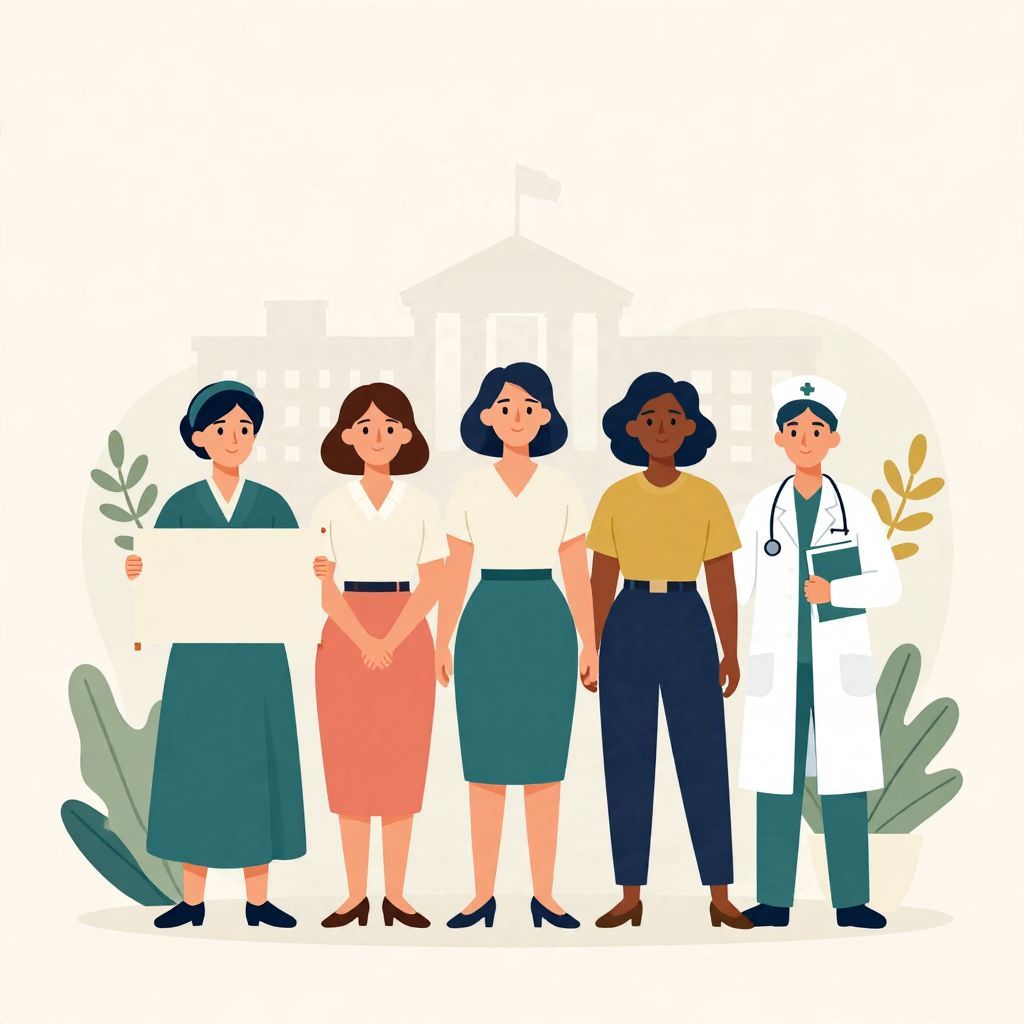
March is Women’s History Month in the United States, but the observance did not begin as a single national tradition. It grew out of local educational efforts, women’s history activism, and a broader late-20th-century push to make women’s contributions visible in schools, museums, and public life.
Its modern form reflects both celebration and correction: a month dedicated to recovering stories long left out of standard history narratives. Understanding its origins shows how public memory changes when citizens, teachers, and lawmakers decide that the past has been told too narrowly.
Why is March Women’s History Month?
March is Women’s History Month because the United States expanded an earlier local celebration into a national observance and then placed it in March to coincide with International Women’s Day on March 8. The month grew from school-based women’s history programs in the 1970s, then gained federal recognition in the 1980s and 1990s.
How Women’s History Month began
The observance began not with Congress, but with educators and activists who wanted women’s achievements to be taught more consistently. In the 1970s, women’s history was still underrepresented in textbooks and classrooms, even though women had shaped labor movements, reform campaigns, politics, science, and wartime work for generations.
From local celebration to national movement
One important early step was Women’s History Week, first organized in 1978 in Sonoma County, California. Local schools and community groups held programs around International Women’s Day, and the idea spread quickly because it answered a real educational gap. Teachers wanted materials; historians wanted visibility; students wanted fuller stories.
The success of that local observance encouraged advocates to push for broader recognition. Women’s history was not a new subject, but it had often been treated as a specialty topic rather than a central part of national history. The campaign for a dedicated week and later a month reflected a larger shift in historical scholarship during the later 20th century.
The timeline of Women’s History Month
The path from a county celebration to a national month can be traced through a few key milestones. Each step widened the observance and gave it more institutional support.
- 1978: Women’s History Week is first celebrated in Sonoma County, California.
- 1980: President Jimmy Carter issues a proclamation recognizing National Women’s History Week.
- 1981: Congress supports the observance, helping it gain national legitimacy.
- 1987: Congress designates March as Women’s History Month.
- 1995 onward: U.S. presidents issue annual proclamations reaffirming the month each March.
This chronology matters because it shows the observance was not invented all at once. It emerged through public pressure, educational reform, and political recognition. The month did not replace women’s history scholarship; it helped bring that scholarship into mainstream awareness.
Why March specifically?
March was chosen because it connects naturally to International Women’s Day, observed on March 8. That date had already become important in international labor and women’s rights movements. Aligning Women’s History Month with March linked the American observance to a broader global tradition of women’s activism and remembrance.
March also works well in the academic calendar. In schools and universities, it falls during a period when curriculum planning can include special lectures, exhibits, and classroom activities. But the symbolic reason is the stronger one: March places women’s history within a month already associated with public attention to women’s rights.
What was the historical significance of creating Women’s History Month?
Women’s History Month was significant because it challenged the older habit of treating women as exceptions in history rather than as historical actors in their own right. It encouraged schools, archives, libraries, and media organizations to highlight women’s labor, leadership, creativity, and political struggle across many eras and communities.
The observance also reflected a major change in historical thinking. By the late 20th century, historians increasingly asked not only what famous leaders did, but also how ordinary people lived, worked, organized, migrated, protested, and built institutions. Women’s history became part of this broader effort to write a more complete past.
Changing the historical record
Before women’s history gained wider attention, many standard narratives focused heavily on wars, presidents, diplomats, and businessmen. Those topics remain important, but they do not capture the full shape of society. Women’s history brought attention to areas that had often been overlooked: domestic labor, wage work, reproductive rights, education, reform movements, religious leadership, and community organizing.
That shift had practical consequences. Once women’s history entered classrooms and public commemorations, more biographies, exhibitions, and research projects followed. The observance helped normalize the idea that women’s experiences are not a side story; they are central to understanding the past.
How the observance broadened over time
Although the month began in the United States, its influence spread through schools, museums, libraries, and public history programs. The annual observance now often includes themes, exhibits, and lesson plans that highlight women in politics, science, art, medicine, labor, sports, and civil rights.
From commemoration to curriculum
One of the most important effects of Women’s History Month has been educational. It encouraged the creation of teaching materials that could be used beyond March. Over time, the goal shifted from a single commemorative week to a more enduring change in what students learn year-round.
This is why the month is historically important even for people who do not observe it formally. It helped push women’s history from the margins toward the center of public education. In that sense, the observance is both symbolic and practical: it honors the past while changing how the past is taught.
Women’s History Month in the context of broader women’s rights history
Women’s History Month belongs to a much longer history of women’s activism. It did not emerge from nowhere in the 1970s and 1980s. It grew out of earlier struggles for suffrage, labor protections, access to education, property rights, and bodily autonomy. The observance is a late-20th-century expression of a much older movement to claim public space and historical recognition.
Connection to earlier movements
Women’s rights campaigns in the 19th and early 20th centuries had already created a tradition of organizing around visibility and equality. Suffrage activists, settlement-house reformers, union organizers, and civil rights leaders all helped build the political and cultural groundwork for later commemorations. Women’s History Month can be seen as part of that same lineage of advocacy.
It is also important not to treat the month as a single, unified interpretation of women’s history. Women’s experiences have varied widely by race, class, religion, nationality, and region. Modern women’s history scholarship increasingly emphasizes those differences rather than presenting one universal story.
Why the observance still matters
Women’s History Month remains relevant because historical memory is never fixed. What societies choose to celebrate reveals what they value and what they have neglected. The month serves as a reminder that public history can be revised when evidence, scholarship, and civic pressure make a stronger case for inclusion.
It also has a continuing role in correcting imbalance. Even where women’s achievements are better known than they once were, many names and stories still receive less attention than they deserve. Annual observance keeps those histories visible and invites new research, teaching, and discussion.
Key facts to remember
- Women’s History Month in the United States is observed in March.
- It grew out of Women’s History Week, first celebrated in 1978.
- The month was officially designated by Congress in 1987.
- March was chosen in part because of its connection to International Women’s Day on March 8.
- The observance reflects a broader effort to include women more fully in historical education and public memory.
So, March is Women’s History Month because a grassroots educational movement, later backed by federal recognition, turned women’s history into a national observance tied to International Women’s Day. Its lasting significance lies in what it changed: not just one month on the calendar, but the way history itself is told. For more social and cultural history, see related articles like when women started shaving their armpits and what a lady-in-waiting was to the queen.