
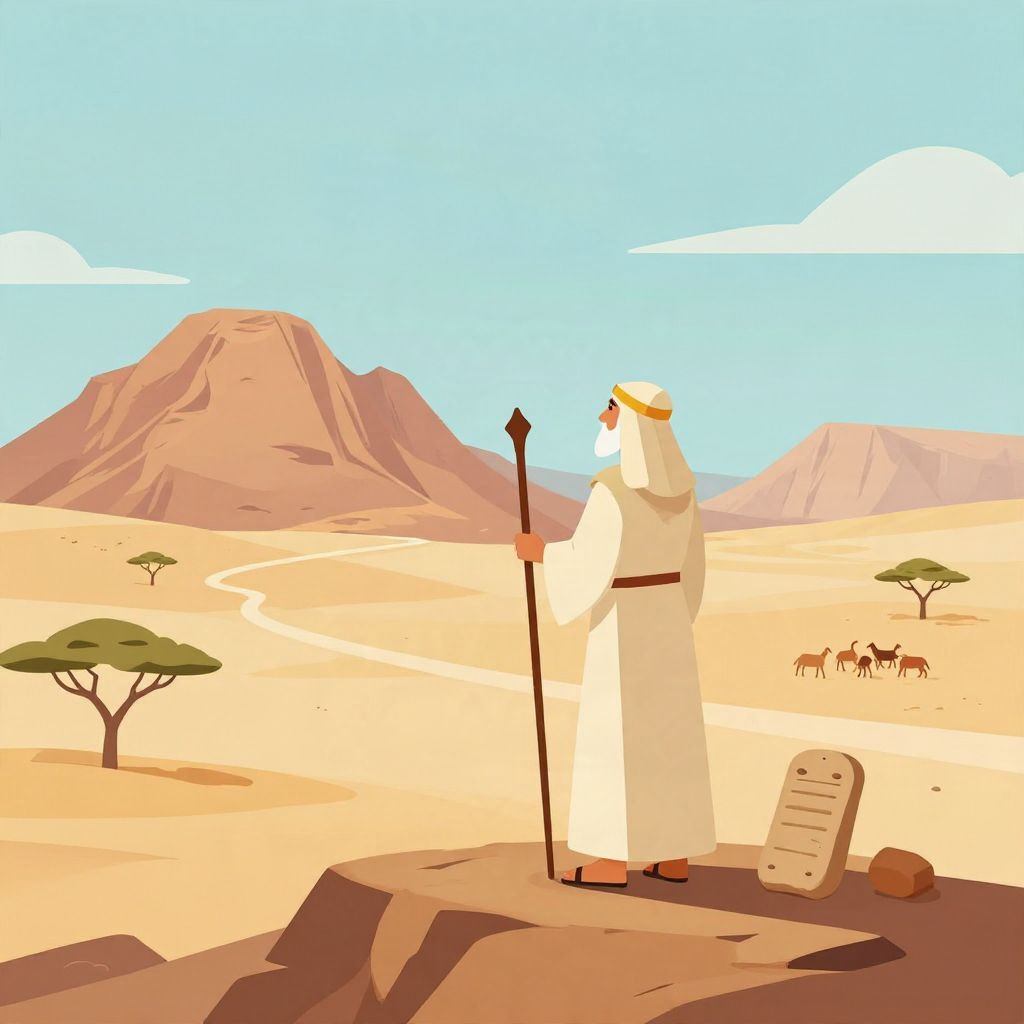
How long did Moses live? In the biblical tradition, Moses lived to be 120 years old. The Book of Deuteronomy says he died in Moab at that age, after leading the Israelites out of Egypt and through the wilderness. Historically, that number is best understood as a traditional and theological claim rather than a verifiable biographical fact.
Because Moses belongs to the world of ancient Israelite memory and scripture, historians approach his life differently from a modern documented figure. The question is still important, though, because Moses became one of the most influential leaders in Jewish, Christian, and Islamic tradition.
How Long Did Moses Live?
Moses is traditionally said to have lived 120 years. According to Deuteronomy 34:7, he was 120 when he died, with his eyesight undimmed and his strength not diminished. This figure appears in the biblical narrative as a sign of completeness and divine favor, not simply as a chronological detail.
The traditional biblical age
The Hebrew Bible presents Moses’ life in three broad periods of 40 years each: 40 years in Egypt, 40 years in Midian, and 40 years leading Israel in the wilderness. This structure is symbolic as well as chronological. In ancient literature, the number 40 often marks a period of testing, transition, or preparation.
What historians can and cannot confirm
There is no independent archaeological or documentary evidence that allows historians to verify Moses’ exact lifespan. Most scholars treat Moses as a foundational figure shaped by tradition, memory, and later religious writing. That does not make the story meaningless; it means the number 120 belongs to the religious text and its worldview, not to modern historical record-keeping.
The Origins of the 120-Year Tradition
The age of 120 likely reflects biblical symbolism more than literal census-style accuracy. In the ancient Near East, long lifespans in sacred texts often signaled wisdom, divine blessing, or a special role in salvation history. Moses’ age fits that pattern, linking his life to the covenant story of Israel.
Why 120 matters in the biblical text
The number 120 also appears elsewhere in the Hebrew Bible as a marker of human fullness or divinely set limits. In the case of Moses, it emphasizes that he completed his mission. He did not die as a defeated man but as a leader whose work had reached its appointed end.
Three stages of Moses’ life
- Early life in Egypt: Raised in Pharaoh’s household according to the biblical account.
- Life in Midian: A period of exile after fleeing Egypt, where he lived as a shepherd and married Zipporah.
- Leadership in the wilderness: The era of the Exodus, covenant at Sinai, and the long journey toward the promised land.
This three-part structure gives Moses’ life a clear narrative arc: birth, exile, calling, and fulfillment.
Moses in Historical Context
Even if Moses cannot be dated with certainty, his story is rooted in the broader ancient Near Eastern world. The biblical narrative places him in a setting shaped by Egyptian power, Semitic communities in the region, and the emergence of Israel as a distinct people. That historical backdrop helps explain why Moses became such a central figure.
Possible historical setting
Scholars have proposed different dates for the Exodus tradition, often placing it somewhere in the second millennium BCE, though no consensus exists. Some connect the story to memories of labor, migration, and political upheaval in Egypt and Canaan. Others view it as a later national origin tradition that drew on older memories and religious themes.
Moses as lawgiver and leader
Moses is remembered not only as a survivor or prophet but as the mediator of law. In the biblical account, he receives the commandments at Sinai and helps shape Israel’s covenant identity. That legal and religious role mattered enormously in later Judaism and also influenced Christian and Islamic interpretations of sacred history.
Why the Number 120 Became So Important
The age of 120 has endured because it captures the idea of a life brought to completion. In the biblical imagination, Moses did not merely live a long time; he lived long enough to fulfill a divine purpose. His death before entering the promised land adds emotional force to the story.
A life of preparation, not personal triumph
Moses’ death at 120 is significant because it closes the narrative with restraint rather than conquest. He sees the promised land from afar but does not enter it. This ending reinforces a recurring biblical theme: leaders may guide a people toward fulfillment without personally enjoying the final reward.
Symbolism in ancient biography
Ancient biographies often used numbers, speeches, and stylized scenes to communicate meaning. The life of Moses fits that literary pattern. The text is less concerned with modern-style documentation than with showing Moses as a unique servant of God whose life had a complete and meaningful shape.
How Moses’ Death Is Described
The Bible says Moses died in the land of Moab, and that God buried him in an unknown place. This detail underscores both his importance and the mystery surrounding him. No tomb is identified, which helped preserve Moses as a figure of reverence rather than a localized cult of burial.
Deuteronomy’s final portrait
Deuteronomy 34 presents Moses at the end of his journey, viewing the land he had led the people toward. The passage stresses his unmatched status as a prophet in Israel. That literary conclusion matters because it frames his lifespan as the completion of a singular vocation.
Why the burial place is unknown
The unnamed burial site has invited interpretation for centuries. Some readers see it as a sign that Moses belongs to all Israel rather than to one shrine or tribe. Historically, it also reflects the text’s concern with memory, holiness, and the limits of human access to the divine.
Historical Significance of Moses’ Life Span
Moses’ reported lifespan matters because it helped shape the way later communities understood leadership, endurance, and sacred history. The number 120 became part of a larger portrait of a man whose life bridged slavery and freedom, exile and revelation, wandering and covenant.
Influence on Jewish tradition
In Judaism, Moses is the central prophet and teacher of the Torah. His long life symbolizes patience, obedience, and completeness. The tradition of 120 years also became part of broader Jewish reflection on human life and moral responsibility.
Influence on Christianity and Islam
Christianity inherited Moses as a foundational biblical figure, especially as a precursor to later covenant and law themes. Islam honors Musa as a major prophet, though the Qur’an does not focus on the same biographical chronology as the Hebrew Bible. In all three traditions, Moses’ life is remembered for its spiritual significance more than for exact dating.
Why historians still study him
Even where evidence is limited, Moses remains historically important because traditions about him shaped law, identity, and memory across millennia. His story helped communities explain their origins, their suffering, and their relationship to divine authority. That is a major reason the question “How long did Moses live?” continues to matter.
Quick Timeline of Moses’ Life in Tradition
Although precise dates are uncertain, the biblical sequence is clear enough to summarize:
- Birth and early life: Moses is born under threat in Egypt and raised in Pharaoh’s household.
- Flight to Midian: After killing an Egyptian overseer, he flees Egypt and lives in exile.
- The burning bush: He receives his calling to confront Pharaoh and lead Israel out.
- The Exodus and wilderness years: Moses guides the Israelites through the desert and receives the law.
- Death at 120: He dies in Moab before entering the promised land.
So, How Long Did Moses Live?
According to the biblical tradition, Moses lived 120 years. Historically, that number should be read as part of a sacred narrative rather than a confirmed biographical statistic. What can be said with confidence is that Moses became one of the most enduring figures in religious history, remembered for leadership, law, and liberation.
If you want to explore the story further, see when Moses was born and what Exodus means. Together, they help place Moses’ lifespan in the larger history and meaning of the biblical tradition.