
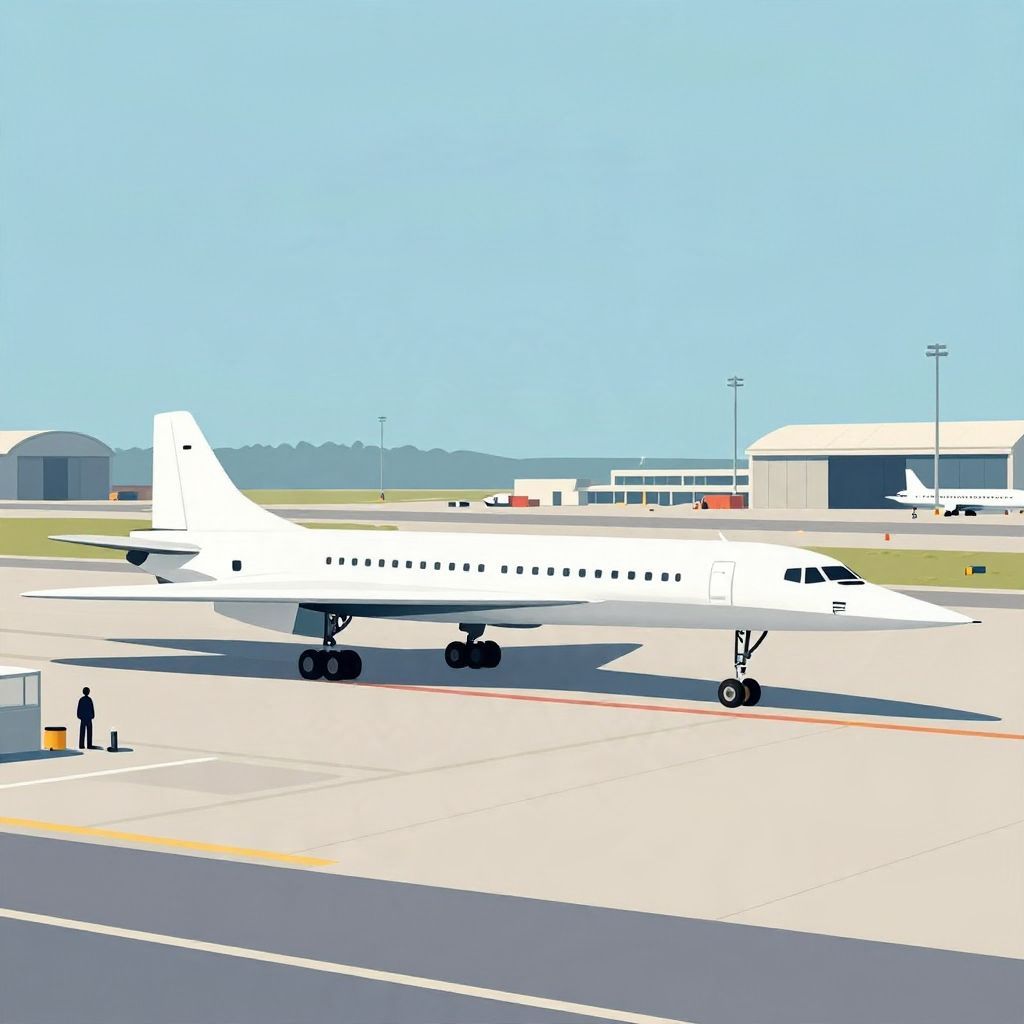
Why was the Concorde retired? The short answer is that the supersonic airliner became too expensive, too limited in use, and too vulnerable to changing economics and public confidence. Although it was a technological triumph, Concorde never became a practical mass-market aircraft.
After the fatal crash in 2000 and the post-9/11 collapse in premium air travel, the aircraft’s age, maintenance costs, and small fleet size made retirement increasingly unavoidable. British Airways and Air France finally ended service in 2003, closing a remarkable chapter in aviation history.
Why Was the Concorde Retired?
Concorde was retired because it was commercially unsustainable. It burned enormous amounts of fuel, carried relatively few passengers, required expensive specialist maintenance, and could only fly profitable routes on a narrow network. After the 2000 crash, then the sharp downturn in air travel after 2001, the airlines no longer saw a viable future for the aircraft.
The Concorde’s Promise and Its Limits
Concorde was one of the most famous aircraft ever built: a sleek, needle-nosed supersonic jet that could cross the Atlantic in about half the usual time. It entered commercial service in 1976 after years of Anglo-French development, and for a time it symbolized speed, luxury, and modernity.
But the same features that made Concorde extraordinary also made it difficult to operate. It was not designed as a high-volume airline workhorse. Instead, it was a niche aircraft aimed at wealthy business travelers, celebrities, and government passengers willing to pay a premium for speed.
A technological success, not a mass-market one
Concorde proved that supersonic passenger flight was possible, but it did not prove that it was economically scalable. The aircraft had a very small seating capacity compared with conventional long-haul jets, and its operating costs were high. That meant airlines had to charge premium fares, which limited demand.
In practical terms, Concorde could not compete with larger subsonic aircraft that carried many more passengers at far lower cost per seat. As the global airline industry expanded, efficiency mattered more and more.
The Main Reasons Concorde Was Retired
1. High operating costs
Concorde consumed far more fuel per passenger than conventional jets. Supersonic flight creates enormous aerodynamic drag, and the aircraft’s engines had to work hard to maintain high speed. When fuel prices rose, the economics became even less favorable.
Maintenance was also expensive. Concorde was a complex machine built in small numbers, which meant spare parts were specialized and costly. Because only a few aircraft existed, there was no large production base to spread those costs across many airlines.
2. Limited passenger demand
Although Concorde had a loyal following, the market for supersonic travel was always narrow. Most passengers preferred cheaper tickets over faster travel, especially once long-haul subsonic jets became more comfortable and efficient.
Concorde’s route network was also restricted. It mainly served transatlantic routes, especially between London, Paris, New York, and Washington. Noise rules, sonic boom restrictions, and airport limitations prevented wider use. A small route network meant fewer opportunities to earn revenue.
3. The 2000 Air France crash
The crash of Air France Flight 4590 on 25 July 2000 was a turning point. Shortly after takeoff from Paris, the aircraft struck debris on the runway, which damaged a tire and led to a catastrophic fuel tank fire. All onboard were killed, along with people on the ground.
The accident did not mean Concorde was inherently unsafe in every circumstance, but it shattered public confidence. It also forced airlines and regulators to reassess the aircraft’s future. Safety upgrades were introduced, yet the crash made the already difficult economics harder to justify.
4. Post-9/11 decline in premium travel
After the September 11 attacks in 2001, air travel changed sharply. Business travel fell, security procedures became more burdensome, and many airlines faced financial strain. Concorde depended heavily on premium-paying passengers, so any drop in luxury and business travel hit it especially hard.
By then, the aircraft was already aging. The fleet had been in service for decades, and continuing operations required major investment. The combination of lower demand and higher costs made retirement a rational business decision.
5. Aging aircraft and expensive upkeep
Even though Concorde was maintained carefully, every aircraft has a finite lifespan. By the early 2000s, the airframes were old, and specialist components were harder to source. Keeping the fleet airworthy required increasing amounts of labor, inspection, and replacement work.
For British Airways and Air France, the question was not simply whether Concorde could still fly, but whether it made sense to keep flying it. The answer increasingly became no.
What Happened After the Crash?
Following the 2000 accident, Concorde was temporarily grounded while safety modifications were made. Its return to service showed that the aircraft still had strong symbolic value and a devoted customer base. Yet the pause revealed how fragile the business model had become.
When Concorde resumed flights, it did so in a world that had changed. The airline industry was under pressure, public attitudes toward aviation safety had sharpened, and the aircraft’s operating costs remained stubbornly high. The return was real, but the long-term future was not secure.
The end of commercial service in 2003
In 2003, both British Airways and Air France announced the end of Concorde service. The final commercial flights took place that year, marking the retirement of the fleet. The decision was not caused by a single event alone, but by the accumulation of economic and operational problems over time.
In historical terms, Concorde did not fail because it was a bad aircraft. It retired because it was an exceptional aircraft built for a very specific era and market that did not last.
Was Concorde Retired Because It Was Unsafe?
Safety was part of the story, but not the whole story. Concorde had a strong overall safety record for much of its service life, and the post-crash modifications were meant to address specific vulnerabilities. However, the 2000 disaster made passengers, airlines, and regulators more cautious.
The deeper issue was that even a technically successful aircraft can become obsolete if it is too costly to operate. Concorde’s retirement was therefore driven more by economics than by a simple judgment that it was unsafe.
Why Supersonic Passenger Flight Struggles Economically
Concorde’s retirement also reflects a broader historical problem: supersonic passenger aviation is difficult to make profitable. The physics of flying faster than sound bring major trade-offs.
- Fuel use: Supersonic aircraft generally burn much more fuel than subsonic aircraft.
- Noise: Sonic booms and engine noise limit where and when they can fly.
- Capacity: Smaller cabins mean fewer paying passengers per flight.
- Infrastructure: Specialized maintenance and airport handling raise costs.
- Market size: Only a small number of travelers are willing to pay enough to cover expenses.
These problems did not disappear with Concorde. They remain the central reason why no other commercial supersonic airliner has matched its long-term service record.
Concorde’s Historical Legacy
Although it was retired, Concorde left a major legacy in aviation history. It became a symbol of international cooperation, engineering ambition, and the optimism of the jet age. Its elegant design still attracts attention because it represented a bold attempt to shrink the world through speed.
Concorde also demonstrated the limits of prestige technology. Governments and airlines can support a spectacular project for a time, but long-term survival depends on economics, infrastructure, and public demand. That lesson is one reason Concorde remains such an important case study in modern history.
Conclusion
Concorde was retired because it was too expensive to run, too limited in passenger capacity, and too dependent on a small premium market to remain viable. The 2000 crash and the post-9/11 downturn accelerated a process that was already underway. Its end was not the failure of an idea, but the end of a very specific historical moment in aviation.
If you are interested in the wider forces behind major transport and business change, you may also enjoy reading about why Pan Am went out of business and why the Silk Road was important.