
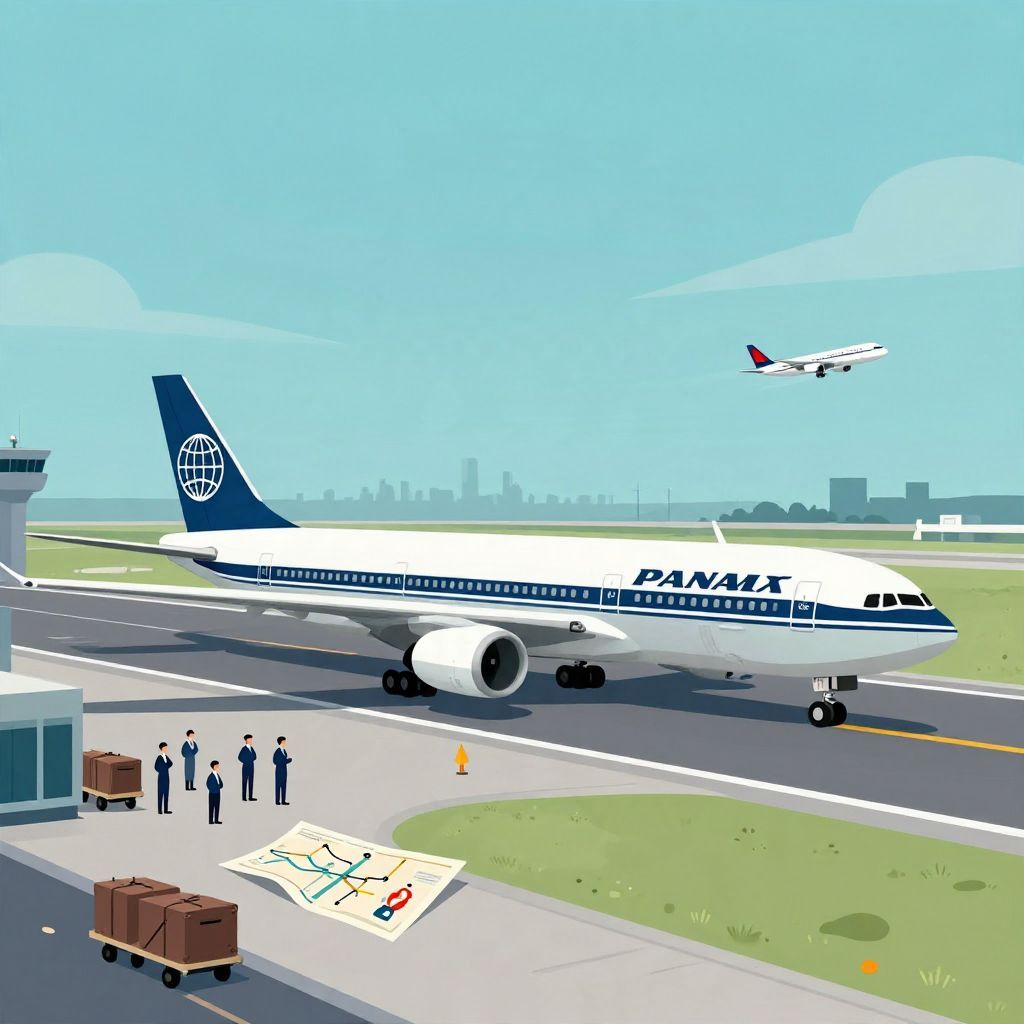
Pan American World Airways, better known as Pan Am, did not collapse because of one single mistake. It went out of business in 1991 after years of rising costs, intense competition, fuel shocks, labor troubles, and a series of costly strategic errors that weakened the airline’s finances.
Pan Am was once the most famous U.S. international carrier, but deregulation, changing travel patterns, and a few disastrous decisions left it unable to survive in a more competitive airline market.
Why Did Pan Am Go Out Of Business?
Pan Am went out of business because it lost money on a shrinking and increasingly competitive route network, carried heavy debt, and failed to adapt quickly after airline deregulation in the late 1970s. The airline also suffered from high operating costs, weak domestic feed, labor disputes, and major shocks such as the 1988 Lockerbie bombing, which damaged both its finances and reputation.
How Pan Am Rose and Why Its Model Became Vulnerable
Founded in 1927, Pan Am became the best-known American airline of the mid-20th century, especially on international routes. For decades it benefited from a privileged position in global aviation, but that success also made it vulnerable when the industry changed. The company had built itself around long-haul prestige flying, not the flexible, lower-cost competition that emerged later.
A global brand built for the regulated era
Before airline deregulation, U.S. carriers operated in a tightly controlled environment. Routes, fares, and market access were heavily regulated, which limited direct price competition. Pan Am excelled in that system because it was a flagship international carrier with strong brand recognition and a large overseas network. But once the rules changed, the old advantages no longer guaranteed profitability.
The problem of dependence on international prestige
Pan Am was famous for flying across oceans, but it lacked a strong domestic network in the United States. That mattered because domestic flights often feed passengers into profitable international routes. Without a large home-market system, Pan Am found it harder to compete with airlines that could connect travelers through extensive U.S. hubs.
The Main Causes of Pan Am’s Collapse
Several forces combined to bring Pan Am down. The most important were deregulation, high costs, weak route structure, debt, and a series of expensive business decisions. None of these alone would necessarily have doomed the airline, but together they steadily eroded its ability to compete.
1. Airline deregulation changed the industry
The U.S. Airline Deregulation Act of 1978 transformed the market. Airlines could now compete more freely on routes and fares, and price competition intensified. Large carriers with efficient domestic networks adapted better than Pan Am. The company had been built for a regulated world and struggled to reshape itself fast enough for the new one.
2. Pan Am had a weak domestic base
Unlike some rivals, Pan Am did not have a strong U.S. route system to support its international business. A healthy domestic network can help an airline fill seats, connect passengers, and stabilize revenue. Pan Am tried to fix this weakness by buying National Airlines in 1980, but the acquisition brought integration problems and financial strain rather than a clean solution.
3. The National Airlines acquisition backfired
Pan Am bought National Airlines to expand its domestic presence, especially in Florida and other U.S. markets. In theory, the purchase should have strengthened the airline’s position. In practice, it was expensive, difficult to integrate, and burdened Pan Am with added debt and operational complexity. Instead of creating a stronger company, the merger deepened its financial problems.
4. Fuel crises and rising operating costs hurt profitability
Airlines are highly sensitive to fuel prices, and the oil shocks of the 1970s made flying more expensive across the industry. Pan Am was already under pressure from competition and restructuring, so higher fuel costs hit especially hard. At the same time, labor and maintenance expenses remained high, making it difficult to match the lower fares offered in the deregulated market.
5. Debt and asset sales weakened the airline
To stay afloat, Pan Am sold valuable assets, including parts of its route structure and other holdings. These sales brought short-term cash but reduced the company’s long-term strength. Debt remained heavy, and the airline often had to make decisions that solved immediate financial problems while weakening future competitiveness. This is a common pattern in business decline: survival measures can become part of the collapse.
6. Management decisions were often inconsistent
Pan Am’s leadership faced a difficult environment, but the company also made a number of strategic moves that did not produce the expected turnaround. It tried to reinvent itself several times, shifting focus among domestic expansion, international service, and asset restructuring. These efforts reflected the seriousness of the crisis, but they also showed that Pan Am never found a stable, profitable model after deregulation.
7. Labor and organizational pressures added strain
Like many large airlines, Pan Am faced labor tensions, union negotiations, and the challenge of managing a large and expensive workforce. Such issues did not cause the collapse alone, but they made flexibility harder. In a period when rivals were cutting costs and adjusting quickly, Pan Am had less room to maneuver.
The Lockerbie Bombing and Its Impact
The 1988 bombing of Pan Am Flight 103 over Lockerbie, Scotland, was a devastating tragedy that killed 270 people and became one of the most infamous terrorist attacks in aviation history. While the bombing did not create Pan Am’s financial problems, it badly worsened them. The airline faced legal costs, reputational damage, and a further loss of public confidence.
Why Lockerbie mattered economically
Airlines depend on trust. After Lockerbie, Pan Am was associated in the public mind with vulnerability and crisis. Insurance, security, and legal pressures all increased. The disaster did not single-handedly bankrupt the company, but it arrived when Pan Am was already fragile, making recovery much harder.
What Happened in the Final Years
By the late 1980s, Pan Am was struggling to survive. It sold pieces of its business, cut routes, and sought new investment, but the underlying problems remained. The airline’s finances were too weak to recover fully, and it lacked the scale and efficiency of stronger competitors.
The end in 1991
Pan Am ceased operations in 1991 after years of losses and failed rescue efforts. The airline’s final collapse was not sudden in historical terms; it was the end point of a long decline. Its remaining assets were sold off, and its name became a symbol of both aviation glamour and corporate failure.
Was Pan Am’s Failure Inevitable?
Historians and aviation analysts generally see Pan Am’s collapse as the result of structural change plus management missteps, not fate. The airline faced real external pressures, especially deregulation and fuel costs, but other carriers adapted more successfully. Pan Am’s weakness was not that it was doomed from the start; it was that it could not transform its business model quickly enough.
What Pan Am’s story shows about airline history
Pan Am’s rise and fall reflect a broader shift in late 20th-century aviation. The industry moved from prestige and regulation toward competition, efficiency, and network strategy. Airlines that could adapt survived; those that could not often disappeared or were absorbed by competitors. Pan Am became the most famous example of that transition.
Historical Significance of Pan Am’s Collapse
Pan Am’s bankruptcy marked the end of an era in American aviation. It showed how quickly a dominant company could lose ground when market rules changed. It also left a lasting cultural legacy: even after the airline disappeared, its blue globe logo and transatlantic glamour remained powerful symbols of mid-century air travel.
In the end, Pan Am went out of business because it was a great airline for one era but not a flexible enough company for the next. Its story is a reminder that in history, even the most famous institutions can fail when economic conditions, technology, and competition change faster than they can adapt. For related business-history comparisons, see what happened to Pan Am Airlines and when Pontiac went out of business.