
When does Wuthering Heights take place? Emily Brontë’s novel is set in the late 18th and early 19th centuries, with the main action unfolding roughly from the 1770s through the 1800s and early 1800s. The story’s frame narrator, Lockwood, visits Thrushcross Grange in 1801, and the events he hears about reach back several decades before that.
Because the novel uses a framed structure and retrospective narration, its timeline is not presented as a neat year-by-year history. Instead, Brontë lets the past emerge through memory, testimony, and family history, which is part of what gives the book its haunting atmosphere.
When does Wuthering Heights take place?
Wuthering Heights is set mainly between the 1770s and 1802, with the first generation’s story beginning before 1771 and the second generation’s events continuing into the early nineteenth century. The opening frame is dated 1801, but much of the plot is told as a recollection of earlier decades in Yorkshire.
The novel’s time frame at a glance
- Before 1771: Catherine Earnshaw, Heathcliff, and Hindley are already children at Wuthering Heights.
- 1771: Mr. Lockwood arrives at Thrushcross Grange and begins the frame narrative.
- 1770s–1780s: The central events of Catherine and Heathcliff’s relationship unfold.
- Late 1780s–1790s: The second generation grows up.
- 1801–1802: The frame narrative closes, and the novel’s final resolution occurs.
How do we know the date of Wuthering Heights?
The clearest date comes from the frame narrative: Lockwood states that he arrives in the area in 1801. From there, the novel’s internal chronology can be reconstructed from ages, family relationships, and references to events spanning about thirty years. Scholars generally place the core action in the late eighteenth century because the characters’ ages and life stages fit that period best.
Brontë does not provide a full calendar timeline, and some dates remain approximate. That uncertainty is normal for a novel that is more interested in memory, inheritance, and emotional consequences than in exact chronology.
The frame narrative and the embedded past
The novel is told through layers of narration. Lockwood first encounters the world of the Heights and the Grange in 1801, then Nelly Dean recounts the earlier history of the two households. This means the book’s “present” is early nineteenth century, while its emotional and historical center lies in the previous generation.
The historical setting of the novel
Wuthering Heights belongs to a rural Yorkshire world shaped by landed property, inheritance, domestic service, and social hierarchy. It is not a novel about major national events such as the French Revolution or the Napoleonic Wars, but it is very much rooted in the social realities of late Georgian England. The characters’ lives are governed by marriage, property, class status, and the vulnerability of women and children in family conflict.
Why the setting matters
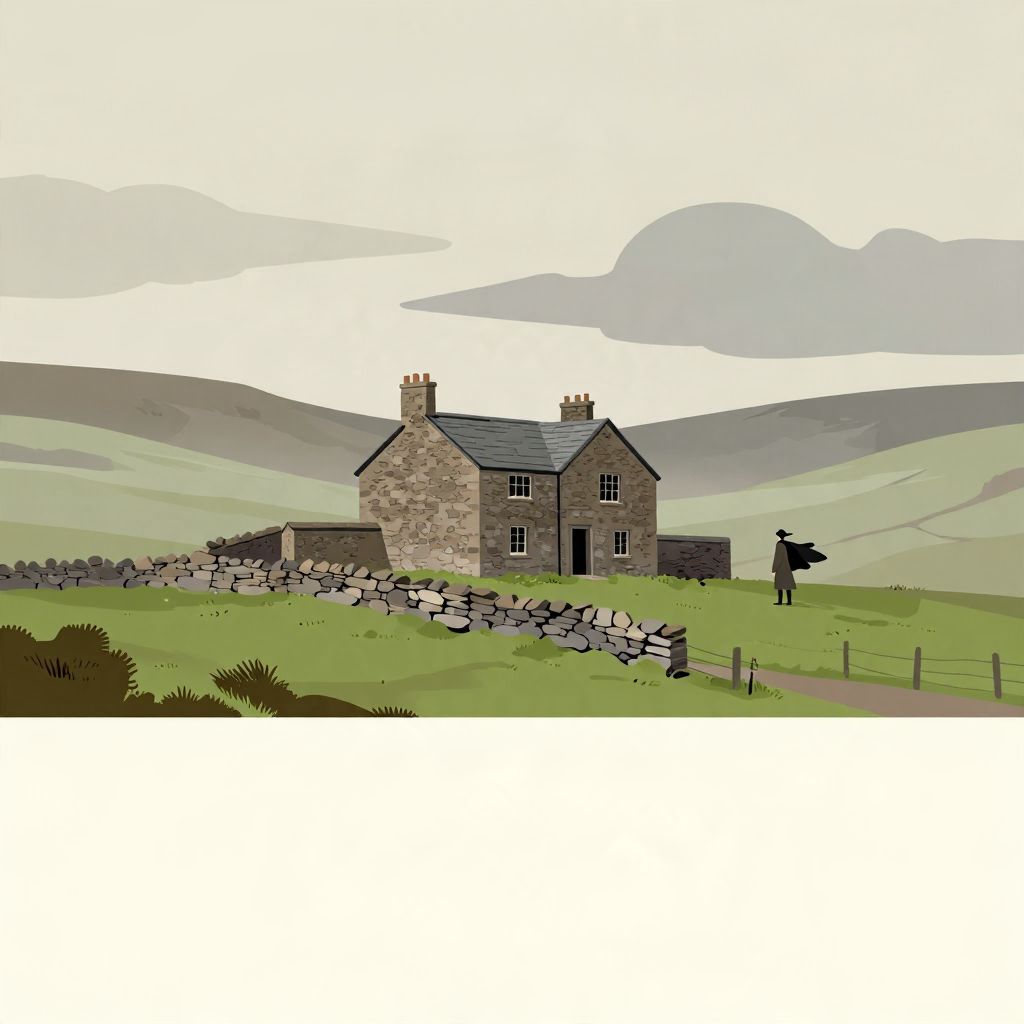
Brontë’s Yorkshire landscape is not just scenery. The isolated moors, harsh weather, and scattered houses reinforce the novel’s sense of separation and endurance. The setting also reflects a society where local families, tenants, and servants can remain bound together for decades, making personal grievances echo across generations.
What period of English history is this?
The novel is set during the late Georgian era, stretching into the early years of the nineteenth century. This was a time of agricultural change, expanding trade, and growing social mobility in Britain, though rural life still depended heavily on older landed structures. In the background, English society was also experiencing the broader pressures of industrialization, even if those changes are not central to the plot.
Late 18th-century life in the background
- Inheritance and property were central to family power.
- Marriage often had economic as well as emotional consequences.
- Servants like Nelly Dean could know intimate family secrets while remaining socially subordinate.
- Rural isolation could intensify dependence and conflict within households.
These conditions help explain why disputes in the novel become so destructive. In a society where land, legitimacy, and reputation mattered enormously, private emotion could quickly turn into long-term social damage.
A simple timeline of the novel’s events
Although exact dates are not always given, the story can be arranged into a broad sequence. This helps readers understand how the generations overlap and why the novel’s ending feels so dependent on the past.
- Early childhood: Heathcliff is brought to Wuthering Heights and grows up with Catherine and Hindley.
- Adolescence: Catherine and Heathcliff form their intense bond, while family tensions deepen.
- Young adulthood: Catherine marries Edgar Linton, setting the central tragedy in motion.
- Middle years: Heathcliff returns, seeks revenge, and gains control over both households.
- Second generation: Cathy, Hareton, and Linton become entangled in the consequences of the earlier conflict.
- 1801–1802: The frame narrative concludes as the younger generation begins to move beyond the older cycle of violence.
Why the exact date is less important than the period
Readers often ask when Wuthering Heights takes place because the novel feels both historically specific and strangely timeless. The exact year matters less than the period’s social logic: inheritance laws, household power, and class boundaries shape nearly every major decision. Brontë uses the late eighteenth and early nineteenth centuries to create a world where private passion collides with rigid social structures.
Historical realism and Gothic atmosphere
The novel is not a documentary account of Yorkshire life, but it draws on the material culture of its era. The houses, clothing, domestic routines, and social attitudes all belong plausibly to the late 1700s and early 1800s. At the same time, Brontë transforms that historical world into Gothic fiction, using the past to heighten mystery, obsession, and psychological intensity.
How the timeline shapes the novel’s meaning
The stretched-out chronology is essential to the book’s power. By placing the first generation in the past and letting the second generation inherit the consequences, Brontë turns family history into a kind of historical force. The novel suggests that emotional violence, once embedded in property and kinship, can outlast the people who began it.
Generational consequences
The younger characters do not simply repeat the older story; they live inside its aftermath. That structure gives the novel a historical dimension. It shows how one generation’s choices can shape the next through property, education, and social position, especially in a world where women and children have limited control over their futures.
Historical significance of the setting
Wuthering Heights is significant because it captures a transitional moment in British history: a rural, landed society on the edge of the modern nineteenth century. The novel reflects older patterns of hierarchy while also anticipating later Victorian concerns with family, morality, and domestic order. Its setting helps explain why it feels both rooted in history and emotionally modern.
For literary history, the novel is also important because it uses a clearly historical backdrop without turning into a conventional historical novel. Instead, Brontë makes the past feel alive through speech, memory, and conflict. That blend of period detail and psychological depth is one reason the book continues to attract historical readers.
So, when does Wuthering Heights take place?
In short, Wuthering Heights takes place mostly in the late 18th century, with its frame beginning in 1801 and its story extending into the early 19th century. The novel’s exact dates are not fully fixed, but its historical world is clearly Georgian England, especially rural Yorkshire. Understanding that setting helps explain the novel’s tensions over class, inheritance, and family power.
If you want to place the novel alongside other literary timelines, you may also find it useful to read about when Frankenstein takes place and when the 19th century begins and ends.