
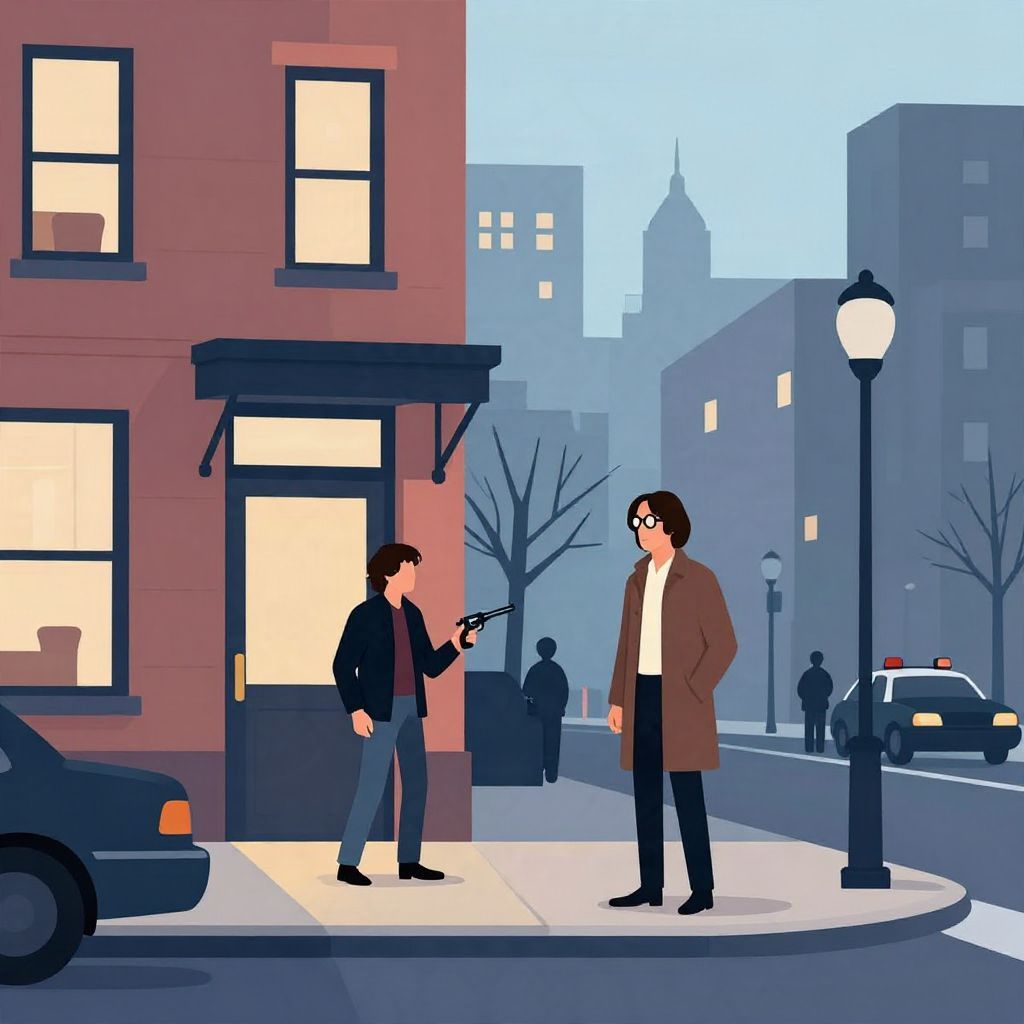
Who killed John Lennon, and why? The short answer is that Mark David Chapman shot and killed Lennon on 8 December 1980 outside the Dakota building in New York City. Chapman later said he was driven by a mix of obsession, resentment, and a desire for notoriety, though his motives have been interpreted in psychological and cultural terms as well.
The killing shocked the world because Lennon was not only a former Beatle but also a symbol of 1960s music, activism, and public celebrity. Understanding the crime means looking at the facts of the shooting, Chapman’s background, and the broader context of fame in late 20th-century America.
Who killed John Lennon and why?
Mark David Chapman killed John Lennon. On the evening of 8 December 1980, Chapman shot Lennon four times in the back and shoulder area as Lennon returned to the Dakota, his apartment building in Manhattan. Chapman’s stated reasons included anger at Lennon’s celebrity, a sense of personal grievance, and a fixation on The Catcher in the Rye; he also appeared to want attention and a lasting place in history.
The shooting on 8 December 1980
That night, Lennon and his wife, Yoko Ono, had left the Dakota for a recording session. When they returned around 10:50 p.m., Chapman was waiting outside. Earlier in the evening, Lennon had signed a copy of his album Double Fantasy for Chapman, who had approached him as a fan. Later, Chapman fired the shots that fatally wounded Lennon. Lennon was rushed to Roosevelt Hospital but was pronounced dead shortly after arrival.
Why did Chapman do it?
There is no single simple motive that fully explains the murder. Chapman’s own statements and the historical record suggest several overlapping factors:
- Obsessive resentment: Chapman admired Lennon but also felt betrayed by his wealth, fame, and public image.
- Desire for significance: He seemed to believe that killing a world-famous figure would make him important.
- Psychological instability: His behavior before and after the shooting indicated severe disturbance, though historians and clinicians avoid reducing the crime to one diagnosis alone.
- Symbolic anger: Lennon’s status as a former Beatle and outspoken public figure made him a target for Chapman’s rage against celebrity culture.
Who was Mark David Chapman?
Mark David Chapman was an American man born in 1955 in Texas. Before the murder, he had worked in various jobs, struggled with mental instability, and developed a deep fascination with Lennon. He was not a political assassin in the classic sense, nor was the killing part of a larger conspiracy. The evidence points to a lone gunman acting on personal obsession and delusion.
A troubled background
Chapman’s life before 1980 included instability, dissatisfaction, and a search for identity. He had become intensely attached to Lennon’s music and public persona, then turned bitter toward the man he had once admired. This shift from fandom to hostility is central to understanding the crime. It reflects a pattern seen in some celebrity murders: the attacker may feel both intimate with and wronged by the public figure.
The role of The Catcher in the Rye
Chapman repeatedly linked his thinking to J.D. Salinger’s novel The Catcher in the Rye. He carried a copy of the book and described himself in relation to its protagonist, Holden Caulfield. Popular accounts sometimes overstate the novel’s role, as if it caused the murder. In reality, the book was more a symbolic object Chapman used to frame his own identity and grievances than a direct cause of the crime.
What do we know about Lennon’s final hours?
Lennon’s last day has been carefully reconstructed from witnesses, police records, and later accounts. On 8 December 1980, he and Yoko Ono spent part of the day at the Dakota and then went to a recording session. They returned home in the evening, passing Chapman, who was still outside. The encounter before the shooting is one of the most haunting details of the case because it shows how ordinary the moment seemed before the violence.
The immediate aftermath
After the shots were fired, Lennon was taken to the hospital in a police car rather than waiting for an ambulance. Despite emergency efforts, the wounds were too severe. His death was announced soon afterward, and crowds gathered outside the Dakota and in public spaces around the world. Radio stations interrupted programming, and fans mourned in a way usually reserved for major political or national tragedies.
Was there a larger historical context?
Yes. Lennon’s murder happened at a moment when celebrity culture, media saturation, and public anxiety about violence were all intensifying. Lennon was not just a musician; he was a global figure whose life had long been scrutinized. By 1980, the Beatles had been broken up for a decade, but Lennon remained a powerful symbol of the 1960s, peace activism, and artistic independence.
Celebrity, fame, and vulnerability
The killing exposed the risks of modern fame. Lennon had become highly visible, yet he lived in a city apartment and interacted with the public in relatively ordinary ways. That accessibility helped create his image, but it also made him vulnerable. The murder forced a wider conversation about the dangers faced by public figures and the thin boundary between admiration and fixation.
New York City and public violence
The crime also belonged to the history of New York in the late 20th century, a period marked by concerns about crime and urban insecurity. While Lennon’s murder was exceptional, it resonated because it happened in a place associated with cosmopolitan life and artistic freedom. The Dakota, already famous as a landmark, became permanently tied to the memory of the shooting.
How was Chapman judged and punished?
Chapman pleaded guilty to second-degree murder in 1981 and was sentenced to 20 years to life in prison. Over the years, he has repeatedly sought parole, and those requests have been denied multiple times. The parole process has remained controversial, with public opposition often intense because of the symbolic weight of Lennon’s death.
Why the case still matters legally
The case is important because it shows how the justice system handles a notorious lone offender whose crime carries enormous cultural significance. Chapman was not treated as a political actor or a figure in a broader movement; he was prosecuted as an individual murderer. That distinction matters historically, because it keeps the focus on personal responsibility while still acknowledging the social meaning of the event.
Why does Lennon’s murder remain so significant?
The murder of John Lennon remains one of the most famous killings in modern cultural history because it combined celebrity, tragedy, and symbolic loss. Lennon represented more than a pop star. To many people, he stood for creative freedom, antiwar ideals, and the possibility of cultural change. His death felt like the violent end of an era, even though history never moves in such neat boundaries.
Public memory and myth
Over time, the story has accumulated myths and simplifications. Some accounts turn Chapman into a purely irrational monster, while others search for grand political explanations that the evidence does not support. The historical record is more unsettling: a disturbed individual, acting alone, was able to kill one of the most recognizable people in the world. That fact is difficult precisely because it is so ordinary in its mechanics and so extraordinary in its consequences.
Lasting aftermath
Lennon’s death intensified his posthumous legacy. His music, public statements, and image became even more influential after 1980, and his assassination became a reference point in discussions of fame, violence, and fan obsession. It also shaped how later generations understood the fragility of public life. The event remains a reminder that history is often altered not only by governments and wars, but by a single act of violence at a city street corner.
So, who killed John Lennon and why? Mark David Chapman did, and the best historical explanation is that he acted alone, driven by obsession, resentment, and a craving for significance. For more on the event itself, see what happened to John Lennon and where John Lennon was shot.