
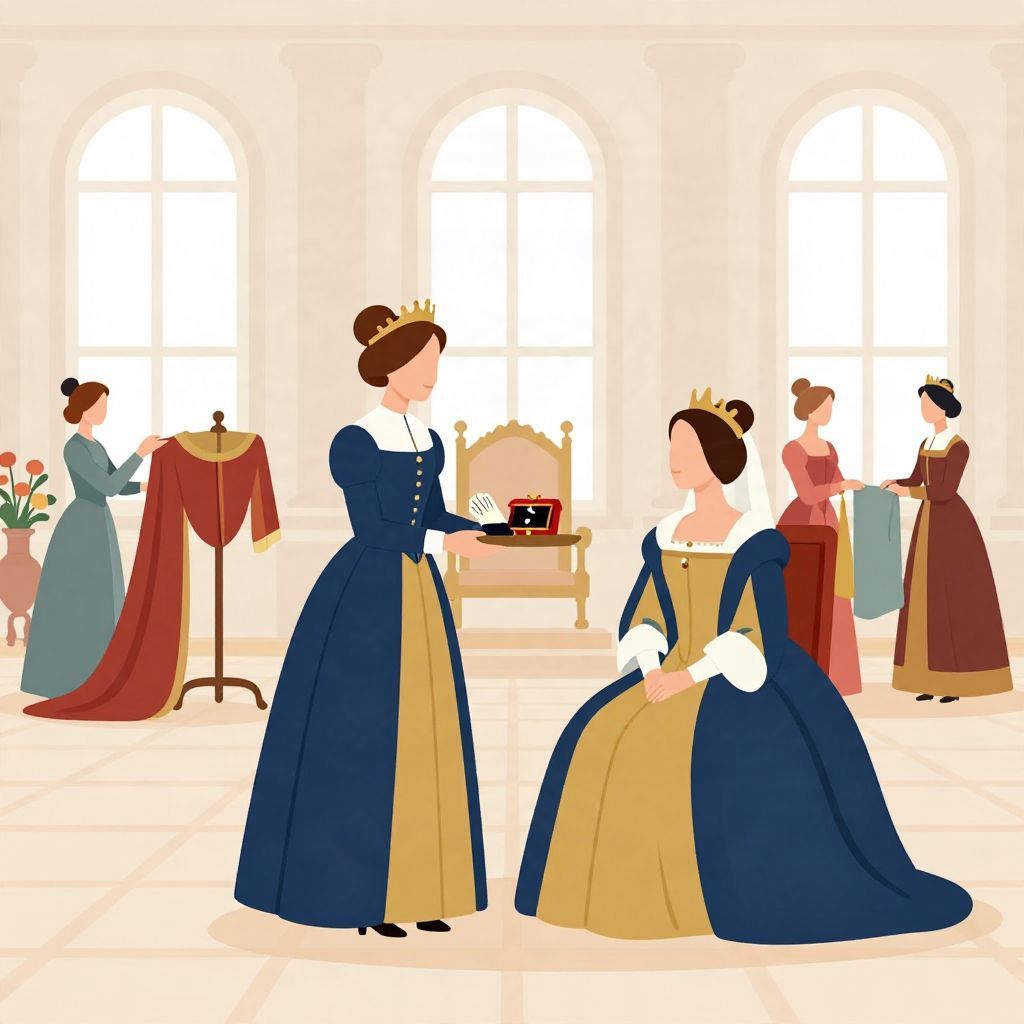
What does a lady in waiting do? In most European courts, a lady in waiting was a noblewoman who attended a queen, princess, or other high-ranking woman. Her duties could include companionship, helping with dress and grooming, managing small household tasks, accompanying her mistress in public, and serving as a trusted observer of court life.
The role was both practical and political. A lady in waiting was not merely a servant in the modern sense; she was often a woman of status whose presence reflected rank, patronage, and access to power.
What does a lady in waiting do?
A lady in waiting served as a personal attendant to a royal or aristocratic woman, helping with daily routines, formal appearances, travel, and social obligations. She might supervise clothing, carry messages, keep company, and represent her mistress in courtly settings. In many periods, the role also gave her influence through proximity to the ruler.
Origins of the Lady in Waiting
The office developed out of medieval and early modern court households, where elite women were surrounded by attendants for security, ceremony, and convenience. Similar roles existed in Byzantium, medieval Europe, and other court cultures, though titles and duties varied. The English phrase “lady in waiting” became common later, but the underlying office is much older.
Why courts needed female attendants
Royal women lived within highly structured households. Because etiquette, privacy, and gender norms shaped court life, women attendants were often preferred for helping a queen dress, bathe, travel, or receive visitors. Their presence also helped maintain decorum in spaces where men and women of rank mixed under strict rules.
Noble birth mattered
In many courts, ladies in waiting were drawn from noble or gentry families. This was important because service at court was not only labor; it was also an honor. Families gained prestige, and the woman herself could build connections that might lead to marriage, influence, or advancement for her relatives.
What a lady in waiting actually did day to day
Daily duties depended on the court, the century, and the rank of the woman served. Some tasks were intimate and domestic, while others were ceremonial and political. The job could be demanding, repetitive, and highly visible at the same time.
Common responsibilities
- Assisting with dressing, jewelry, and hair
- Keeping the queen or princess company
- Accompanying her in public processions, travel, and ceremonial events
- Helping manage messages, gifts, and small household matters
- Observing etiquette and ensuring proper conduct around the royal household
- Reading aloud, conversing, sewing, or assisting with leisure activities
Companionship and conversation
One of the most important duties was simply being present. Royal women, especially queens consort and widows, often spent long hours in formal surroundings. A lady in waiting provided companionship, helped ease the isolation of court life, and could act as a confidante when trust was essential.
Ceremony and display
Court society was deeply ceremonial. Ladies in waiting helped create the visual order of a royal household, appearing in processions, audiences, and religious ceremonies. Their clothing, rank, and arrangement around the queen all signaled hierarchy, wealth, and political stability.
Practical household work
Although they were elite women, some ladies in waiting performed tasks that were practical rather than glamorous. They might oversee wardrobes, organize personal belongings, or help manage the queen’s private chambers. In earlier centuries especially, the line between noble service and domestic labor could be surprisingly thin.
How the role changed over time
The meaning of “lady in waiting” shifted across centuries. In the medieval period, court households were often less specialized, and attendants might perform a wide range of duties. By the Tudor and Stuart eras, the role became more formalized in European monarchies. In later centuries, it increasingly emphasized ceremony, companionship, and patronage over hands-on labor.
Medieval courts
In medieval Europe, elite women in royal households often served as attendants, companions, or members of a queen’s chamber. The household was a center of governance as well as domestic life, so access to the queen could matter politically. Records from this period are uneven, and titles were not always standardized.
Tudor and early modern courts
By the 15th and 16th centuries, English and continental courts had more clearly defined female households. Queens such as Catherine of Aragon, Anne Boleyn, and Elizabeth I were surrounded by women whose roles included attendance, privacy, and social management. In these courts, a lady in waiting could become a valuable intermediary between the queen and the wider political world.
18th and 19th centuries
Later royal households often separated ceremonial roles from practical household labor. Ladies in waiting increasingly acted as high-status companions, hosts, and aides in public life. In some monarchies, the position remained a mark of aristocratic service rather than a full-time administrative post.
Political significance of the office
A lady in waiting could be far more than a background figure. Because she had close access to a royal woman, she might hear private conversations, carry messages, or influence appointments and favors. In monarchies where personal relationships shaped politics, this access could be powerful.
Patronage and influence
Courts ran on patronage. A woman who regularly attended a queen might recommend petitions, support relatives, or serve as a channel between factions. Her influence was usually indirect, but indirect influence could still matter a great deal in dynastic politics.
Risk and vulnerability
Close access to power could also be dangerous. If a queen fell from favor, her attendants might be dismissed, questioned, or caught up in scandal. Court service offered opportunity, but it also required caution, loyalty, and careful navigation of rivalries.
Was a lady in waiting the same as a servant?
Not exactly. A lady in waiting was usually of higher social status than ordinary household servants. She was often a gentlewoman or noblewoman, and her role combined service with companionship and representation. That said, the work could still be demanding, and in daily practice she might perform tasks that look domestic by modern standards.
Differences in status
- Ladies in waiting were usually women of rank or respectable family background.
- Household servants performed more manual labor and had lower social standing.
- Courtiers might overlap with ladies in waiting, especially when service gave access to political influence.
Different countries, different titles
Across Europe, similar positions had different names and structures. In Spain, France, the Holy Roman Empire, Britain, and elsewhere, royal women were attended by women whose duties overlapped but were not identical. The exact title “lady in waiting” is especially familiar in English usage, but the institution itself was widespread.
Famous examples and historical context
Many well-known women began or spent time as ladies in waiting before becoming politically important in their own right. Their careers show how court service could shape influence, reputation, and opportunity.
Anne Boleyn and the Tudor court
Anne Boleyn served in the household of Queen Claude of France before returning to England, where court connections helped her rise. Her experience illustrates how attendance at court could provide education in etiquette, politics, and elite culture.
Women around Elizabeth I
Elizabeth I’s ladies in waiting were part of a carefully managed court. They supported her public image, private routine, and social network. Because Elizabeth never married, her female household remained especially important to the performance of queenship.
Mary, Queen of Scots
Mary’s household included women who were not only attendants but also political allies. In turbulent times, ladies in waiting could be drawn into religious conflict, factional struggle, and diplomatic intrigue.
Historical significance of ladies in waiting
The office matters historically because it reveals how power worked in monarchies. Courts were not just places of ceremony; they were workplaces, political arenas, and social systems. Ladies in waiting helped sustain those systems by supporting royal women, shaping etiquette, and connecting families to the center of power.
What the role tells us about women’s history
Although women were often excluded from formal political office, court service gave some of them access to education, influence, and visibility. The role of lady in waiting shows that women’s power in history often operated through household structures, personal relationships, and informal networks rather than through elected or official positions.
What the role tells us about monarchy
The existence of ladies in waiting also shows that monarchy was personal as well as institutional. Kings and queens relied on households built around trust, rank, and ritual. A royal court was a small society, and the women who attended the queen helped make that society function.
The role in modern memory
Today, the phrase “lady in waiting” often appears in films, novels, and television dramas, sometimes with a romantic or simplified meaning. Historically, however, the role was more complex. It combined service, status, etiquette, and politics, and it changed over time according to the needs of each court.
So, what does a lady in waiting do? She attends a royal woman, assists with daily and ceremonial duties, offers companionship, and may help shape court politics through close access and trust. For more background, see what a lady in waiting is and what a lady in waiting to the queen means. The office is a reminder that in monarchies, household service and political power were often closely linked.