
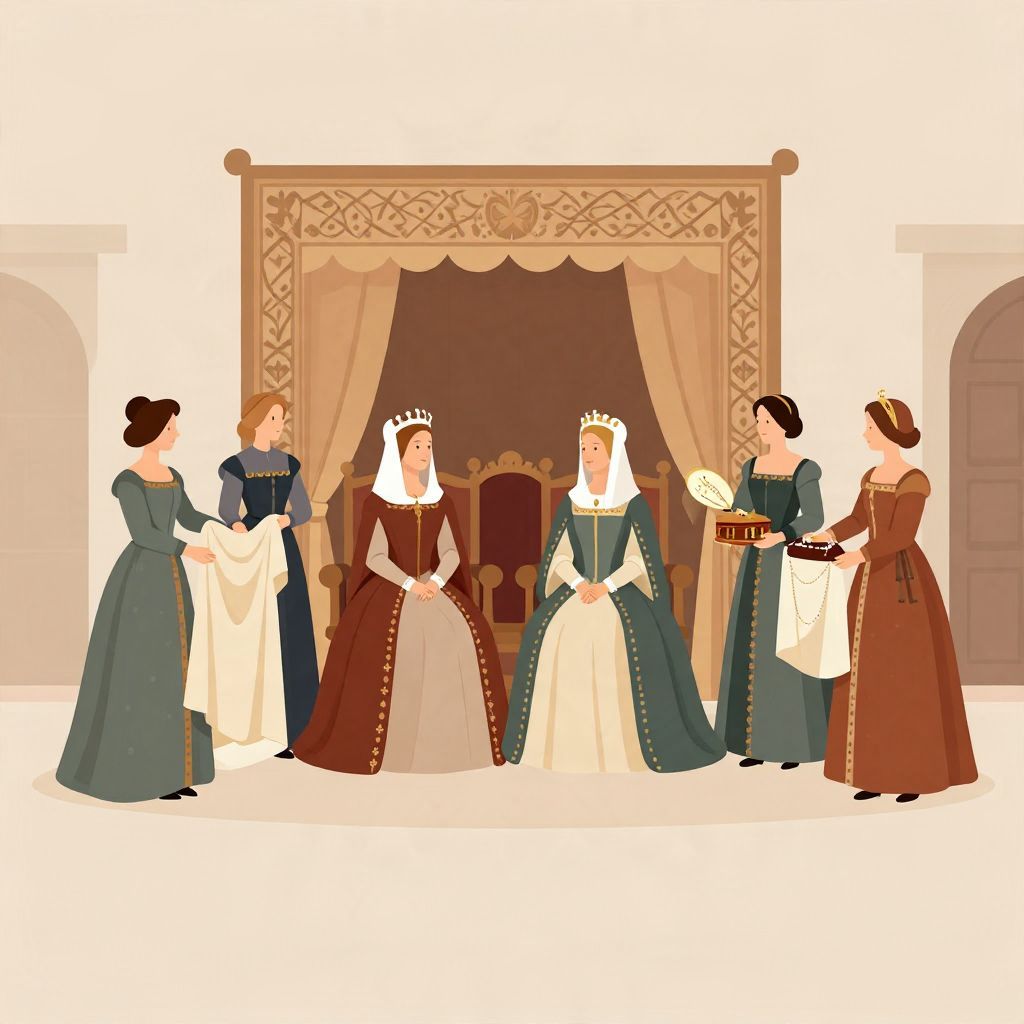
A lady in waiting was a woman who attended a queen, princess, or other noblewoman in a royal or aristocratic household. The role combined personal companionship, ceremonial presence, and practical service, but it was also a position shaped by rank, court politics, and changing ideas about gender and status.
The title sounds simple, yet its history is long and varied. In different countries and centuries, ladies in waiting could be close confidantes, household managers, political observers, or ceremonial attendants. Understanding the role means looking at how royal courts worked and why elite women were placed so near the center of power.
What Is a Lady in Waiting?
A lady in waiting was an attendant to a queen or high-ranking noblewoman, usually drawn from the upper ranks of society. She assisted with daily life, accompanied her mistress at court and in public, and often served as a trusted companion. The exact duties varied by country, period, and court custom.
Origins and Early History of the Role
The idea of female attendants to elite women is ancient, but the specific institution of the “lady in waiting” developed gradually in medieval and early modern European courts. Courts in Byzantium, France, England, Spain, and other monarchies maintained female attendants for queens and princesses, though the titles differed. The role became especially formalized as royal households grew more complex from the Middle Ages onward.
In early courts, elite women rarely lived in isolation. They were surrounded by attendants who helped with dress, grooming, travel, ceremony, and social interaction. These women were not servants in the modern sense alone; many came from noble or gentry families and were expected to embody refinement, loyalty, and discretion. Their presence helped reinforce the rank and dignity of the woman they served.
Medieval roots
By the later Middle Ages, queens and noblewomen in Europe commonly had households of female attendants. These households reflected both practical needs and political realities. A queen needed women to help manage her chambers, clothing, and schedule, but she also needed companions who could move within the intimate spaces of court life without threatening social norms.
From household service to court office
As monarchies became more elaborate in the 15th and 16th centuries, female attendants became more clearly organized. Some courts distinguished between women who handled personal service and those who held more ceremonial or honorable positions. Over time, the lady in waiting became associated not just with labor, but with prestige, access, and influence.
What Did a Lady in Waiting Actually Do?
The duties of a lady in waiting depended on the court, but they usually included personal attendance, companionship, and ceremonial support. She might help a queen dress, accompany her to religious services or public events, manage messages, or keep her company during travel and private hours. In some courts, she also supervised other household women.
Daily responsibilities
- Assisting with clothing, jewelry, and grooming
- Accompanying the queen or noblewoman in public and private
- Helping organize household routines and ceremonial appearances
- Serving as a companion during meals, travel, and court events
- Relaying messages and observing court etiquette
Companionship and trust
Because a lady in waiting spent time in private chambers, she could become a trusted confidante. This closeness mattered in courts where personal relationships could shape patronage, marriage negotiations, and political alliances. A discreet attendant might hear sensitive conversations or notice shifts in favor before others did.
Ceremony and representation
Royal courts were highly performative spaces. The appearance of a queen mattered, and ladies in waiting helped create that image. They stood or walked nearby during processions, receptions, weddings, baptisms, and religious ceremonies. Their clothing, rank, and behavior reflected the dignity of the household they served.
What the Title Meant in Different Countries
The English phrase “lady in waiting” is widely used today, but historically the equivalent office took different forms across Europe. In England, the queen’s household included women such as ladies of the bedchamber, maids of honor, and women of the privy chamber. In France, comparable roles existed within the queen’s household, while in Spain and other monarchies the titles and hierarchy could differ again.
Because court systems were not identical, the phrase “lady in waiting” can be a useful modern umbrella term rather than a precise historical title for every place and period. Historians often use it to describe women who attended a queen or noblewoman in a formal household setting, even when the original title was something else.
England and Britain
In the English and later British court, women serving the queen were often members of the elite. Their positions could be honorary, practical, or both. Some were appointed because of family status, political loyalty, or personal connection to the monarch. Others were part of a broader household structure that included women of different ranks and responsibilities.
France and continental Europe
French courts developed highly structured female households, especially in the early modern period. Noble birth often mattered greatly, and appointment could be a mark of favor. Similar systems existed elsewhere in Europe, though the balance between service and honor varied. In some courts, the role gave women a rare public presence within a male-dominated political world.
Social Status and Who Became a Lady in Waiting
Ladies in waiting were usually chosen from noble or gentry families, not from the poorest social classes. Their social standing was important because they represented the rank of the woman they served. A queen’s household was part of the political order, and the women within it were expected to reflect that order through birth, manners, and loyalty.
That said, the role was not always fixed. Some women entered service through family connections, while others rose through favor. In certain courts, a woman might begin as a lower-ranking attendant and later gain a more prestigious position. The household could therefore be a route to influence, even if it was not a path to formal political office.
Why noble birth mattered
Elite households were not simply workplaces. They were social institutions where rank had to be visible at every moment. A noblewoman was more likely to be accepted as a companion to a queen because her status helped preserve the dignity of the court. Her family might also benefit from the connection through patronage, marriages, or access to power.
Political Influence at Court
Although ladies in waiting were not rulers, they could matter politically. Their proximity to queens and princesses gave them access to conversation, information, and sometimes influence. In courts where access to the monarch was tightly controlled, a trusted attendant might become an important intermediary.
This influence should not be exaggerated. Most ladies in waiting did not shape policy directly. But some became significant because they could recommend petitioners, carry messages, or support factions at court. In monarchies where personal relationships mattered, proximity itself was a form of power.
Women, patronage, and access
Royal courts often worked through patronage networks. A lady in waiting might help a family secure an audience, a post, or a favor. She might also be drawn into court factionalism, especially if her own relatives had political ambitions. For this reason, the role could be both prestigious and risky.
Famous examples
Some historical women who served in royal households became well known because of their closeness to powerful figures. However, not every attendant was a political actor in her own right. The historical record often favors the most famous courts and the most dramatic personalities, which can obscure the many women whose service was important but less visible.
How the Role Changed Over Time
The meaning of “lady in waiting” changed as monarchies and aristocratic culture changed. In the medieval period, the role was closely tied to household service and noble companionship. In the early modern era, it became more formalized and ceremonial. By the 18th and 19th centuries, some courts retained the office as a mark of tradition even as its practical importance declined.
The early modern court
In the 16th and 17th centuries, European courts became more elaborate and hierarchical. The queen’s household was often divided into offices with specific duties and ranks. Ladies in waiting could be part of a carefully staged court culture in which access to the royal person was regulated and symbolic.
Later ceremonial functions
By the 19th century, some royal households still maintained ladies in waiting, but the role was often more ceremonial than administrative. A lady in waiting might accompany a queen to events, assist with formal appearances, and maintain the etiquette of monarchy. In constitutional monarchies, the office became less about governance and more about representation.
Common Misunderstandings About the Term
Modern audiences sometimes imagine a lady in waiting as a servant in the ordinary sense, but that is only part of the story. Many were themselves aristocratic women, and the position could be highly honorable. Others assume the role was identical across all monarchies, when in fact titles, duties, and rank varied widely.
Another misconception is that ladies in waiting had constant political power. Some did influence events, but most served within a system that limited women’s formal authority. Their importance came from access, trust, and social standing rather than public office. In that sense, the role reveals how power often worked indirectly in premodern courts.
Why the Role Matters in History
Studying ladies in waiting helps explain how royal courts functioned as social and political systems. These women were part of the machinery that supported monarchy, but they also show how elite women could participate in court life beyond the domestic sphere. Their work connected private rooms to public ceremony and family networks to state power.
The role also highlights a broader historical truth: power was not only exercised by kings and ministers. It was shaped by access, etiquette, information, and household organization. Ladies in waiting stood at the intersection of those forces, making them an important part of court history even when they left few records of their own.
In Short: What Is a Lady in Waiting?
A lady in waiting was a noble or high-status woman who attended a queen or aristocratic woman, serving as companion, assistant, and ceremonial presence. The role developed in medieval and early modern courts, where household service, rank, and politics were closely connected. Its meaning changed over time, but its central purpose remained the same: to support and represent elite female authority within court society.
For a closer look at related court traditions, see what are ladies in waiting and what is a lady in waiting to the queen.