
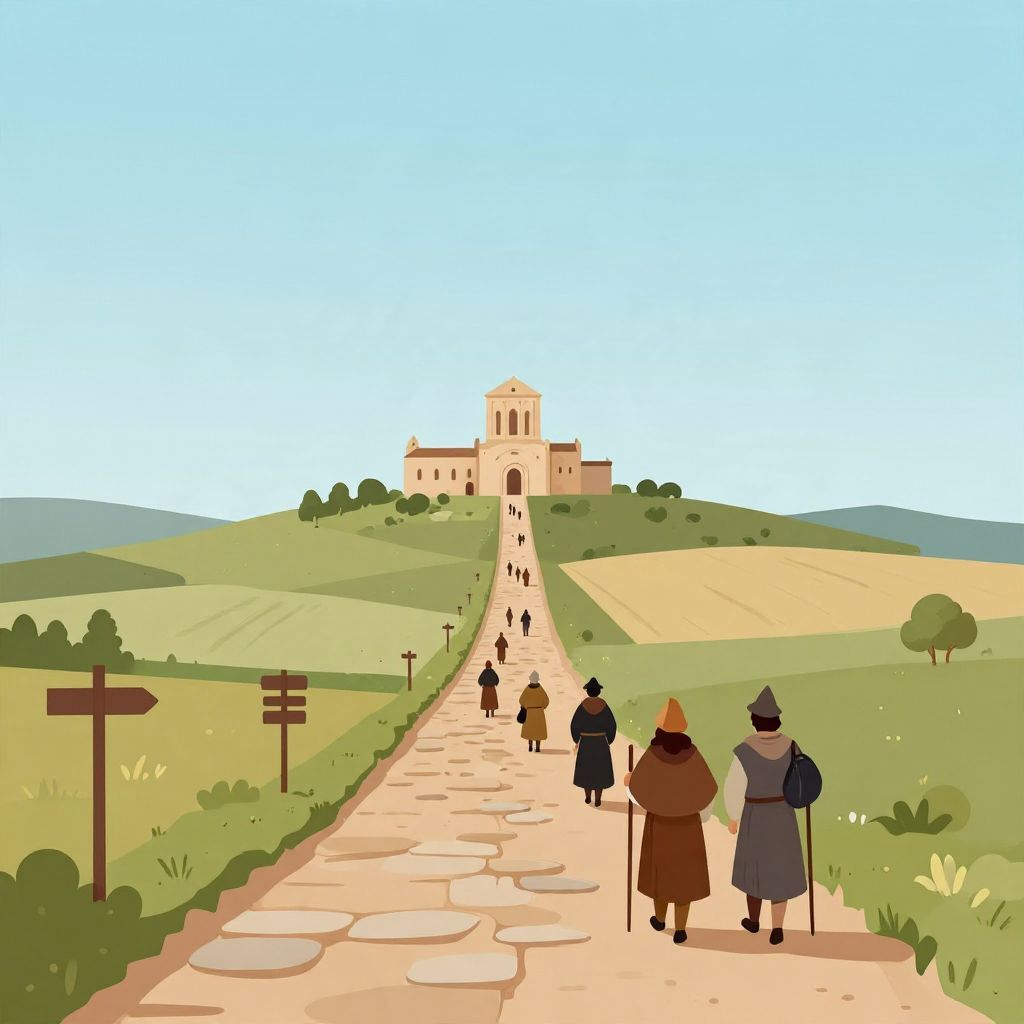
When historians ask, “What was a pilgrimage road?” they are usually referring to a route used by religious travelers heading to a sacred site. These roads were not just paths on a map; they were part of a wider religious, social, and economic world that connected shrines, towns, monasteries, and markets.
Across many cultures, pilgrimage roads helped people travel for worship, penance, healing, or devotion. Some were informal trails, while others became famous, well-maintained highways with bridges, inns, and customs posts. Their history reveals how faith shaped movement, landscape, and political power.
What Was a “Pilgrimage Road”?
A pilgrimage road was a route followed by pilgrims traveling to a sacred destination, such as a shrine, temple, tomb, mosque, or holy city. In practice, it could be a simple footpath or a major long-distance road. Its purpose was religious, but it also carried merchants, officials, and local traffic.
The Religious Meaning of Pilgrimage Roads
Pilgrimage roads mattered because the journey itself was often part of the spiritual act. In many traditions, travel to a holy place was believed to bring merit, forgiveness, healing, or divine favor. The road was therefore not merely a means of transport; it was part of the devotion.
Why people traveled them
- Worship: to visit a sacred site and perform rites there.
- Penance: to seek forgiveness or spiritual renewal.
- Healing: to pray for cures or miracles.
- Vows and gratitude: to fulfill promises or give thanks after survival or recovery.
- Community: to join festivals, processions, or shared acts of faith.
This religious meaning gave pilgrimage roads a special status. They were often marked by shrines, waystations, crosses, or sacred landmarks. In some places, walking the road was itself a ritual, with prescribed prayers, fasting, or acts of humility along the way.
Where Did Pilgrimage Roads Appear in History?
Pilgrimage roads existed in many civilizations and religions, from the ancient world to the modern era. They are especially well known in Christianity, Islam, Hinduism, Buddhism, and Shinto, though the forms and meanings differed widely. There was no single “pilgrimage road” in world history, but many sacred routes.
Examples from different traditions
- Christian Europe: routes to Jerusalem, Rome, Canterbury, Santiago de Compostela, and local shrines.
- Islamic world: the hajj routes to Mecca, including routes from Egypt, Syria, Iraq, and elsewhere.
- South Asia: roads to sacred rivers, temples, and pilgrimage centers such as Varanasi, Puri, or Tirupati.
- East Asia: routes to Buddhist monasteries and sacred mountains, and to Shinto shrines in Japan.
Some of these routes became famous over centuries because they were used repeatedly by large numbers of travelers. Others were local roads known mainly to nearby communities. In every case, the road linked sacred geography to ordinary human movement.
How Pilgrimage Roads Developed
Pilgrimage roads usually developed gradually. A sacred site attracted visitors, and repeated travel created a recognizable route. Over time, rulers, religious institutions, and local communities improved the road because it brought prestige, donations, trade, and political influence.
From footpath to organized route
At first, pilgrims often followed existing tracks, river crossings, or trade roads. As traffic increased, communities built bridges, shelters, wells, and hostels. In more organized states, authorities repaired roads, posted guards, and regulated tolls. The route could then become a durable part of the region’s infrastructure.
This process is visible in many historical settings. A shrine might begin as a local place of devotion, then expand into a regional center as stories of miracles or sacred power spread. Once a route gained reputation, it could draw more pilgrims, which in turn encouraged further development.
Pilgrimage Roads in the Ancient and Medieval Worlds
In antiquity, pilgrimage was already a major feature of religious life. Ancient Egyptians traveled to sacred centers, Greeks visited healing sanctuaries such as Epidaurus, and Jews made journeys to Jerusalem when the Temple stood. Roads to these places were shaped by empire, commerce, and devotion alike.
The Christian world
In medieval Europe, pilgrimage roads became especially important. Routes to Rome, Jerusalem, and Santiago de Compostela drew thousands of travelers. The road to Santiago, in particular, became one of the best-known pilgrimage networks in Europe during the Middle Ages. It connected local paths into a larger system of inns, monasteries, bridges, and churches.
Medieval pilgrimage was not only spiritual. It also helped spread art, stories, relic cults, and practical knowledge. Pilgrims carried news from one region to another, and towns along the route benefited from food, lodging, and trade. Some roads became famous enough to shape regional identities.
The Islamic hajj routes
In the Islamic world, the journey to Mecca for the hajj became one of the most important pilgrimage movements in history. From the early centuries of Islam onward, routes from across North Africa, the Levant, Iraq, Persia, and beyond converged toward the Hijaz. Caravans often traveled with protection, water supplies, and official organization.
These routes were deeply significant because the hajj is one of the Five Pillars of Islam. States invested in the safety of pilgrims, not only for religious reasons but also because controlling the route demonstrated legitimacy and authority. The pilgrimage road was therefore both sacred and political.
South Asian pilgrimage routes
In South Asia, pilgrimage roads connected cities, rivers, and temple complexes. Sacred bathing places and temple festivals could transform ordinary roads into seasonal pilgrimage corridors. Merchants, ascetics, and pilgrims often shared the same routes, creating a dense network of religious travel.
These roads were not always centralized or formally named in the way some European routes were. Yet they were no less important. They linked devotion to geography, especially where sacred rivers or mountain sites were central to religious practice.
What Made a Road a Pilgrimage Road?
A road became a pilgrimage road when repeated sacred travel gave it a special identity. The key feature was not the pavement or the width of the road, but its religious function. If people traveled it primarily to reach a holy place, and if the route acquired supporting institutions, it could be understood as a pilgrimage road.
Common features
- Sacred destination: a shrine, tomb, temple, mosque, monastery, or holy city.
- Repeated travel: regular use by pilgrims over time.
- Waystations: inns, hostels, monasteries, or rest stops.
- Markers: signs, crosses, milestones, shrines, or sacred landmarks.
- Protection and regulation: guards, tolls, permits, or state oversight in some periods.
Not every pilgrim used the same route, and not every route was exclusive to pilgrims. A pilgrimage road often overlapped with trade roads, military roads, or local travel networks. Its identity came from use and meaning, not from a single official designation.
Economic and Political Importance
Pilgrimage roads were religious routes, but they also had practical consequences. They brought money to inns, markets, ferries, and craft producers. Towns along the way often grew because pilgrims needed food, lodging, transport, and religious goods such as candles, amulets, or souvenirs.
Rulers recognized this value. Supporting a pilgrimage road could increase prestige, attract visitors, and strengthen control over territory. In some cases, states improved roads for pilgrims while also using them to move armies, collect taxes, or project power. Sacred travel and statecraft were often closely linked.
Benefits for local communities
- More trade and demand for services
- Construction of bridges, wells, and shelters
- Growth of towns near shrines and crossroads
- Opportunities for religious donations and patronage
At the same time, pilgrimage traffic could create problems: overcrowding, theft, disease, disputes over tolls, and conflict between local residents and outsiders. So pilgrimage roads were sources of both opportunity and tension.
Myth, Legend, and Historical Reality
Many pilgrimage roads are surrounded by legends. Some stories claim a road was created by a saint, established by a miracle, or followed exactly by an ancient holy figure. Such traditions are historically important, but they are not always literal fact. Historians usually distinguish between devotional memory and verifiable evidence.
For example, a route may be described in later religious literature as ancient and unbroken, yet the surviving evidence may show that it developed in stages. That does not make the road less important; it simply means its history is more complex than legend suggests. Sacred routes often grew through centuries of adaptation.
Do Pilgrimage Roads Still Exist?
Yes. Many pilgrimage roads remain active today, though modern transport has changed how people use them. Some pilgrims still walk long distances for spiritual reasons, while others travel by bus, train, or car and walk only the final stretch. The road remains meaningful even when the journey is faster than in the past.
Modern pilgrimage routes also attract hikers, tourists, and heritage travelers. In some cases, ancient roads have been restored or re-marked, blending religious practice with cultural tourism. Their durability shows how deeply pilgrimage has shaped landscapes over time.
Why Pilgrimage Roads Matter in History
Pilgrimage roads matter because they reveal how religion organized space, movement, and community in the past. They show that roads were not only tools of commerce or conquest. They could also be sacred pathways that gave meaning to travel and connected distant people through shared belief.
Studying pilgrimage roads helps explain how sacred places became influential, how towns grew along routes of devotion, and how states and religious institutions managed movement. In that sense, a pilgrimage road was both a physical road and a cultural institution.
In short, a pilgrimage road was a route used for sacred travel, shaped by faith, supported by communities, and often important far beyond religion. If you want to explore related topics, you might also be interested in why pilgrims came to America or the purpose of the Great Wall of China.