
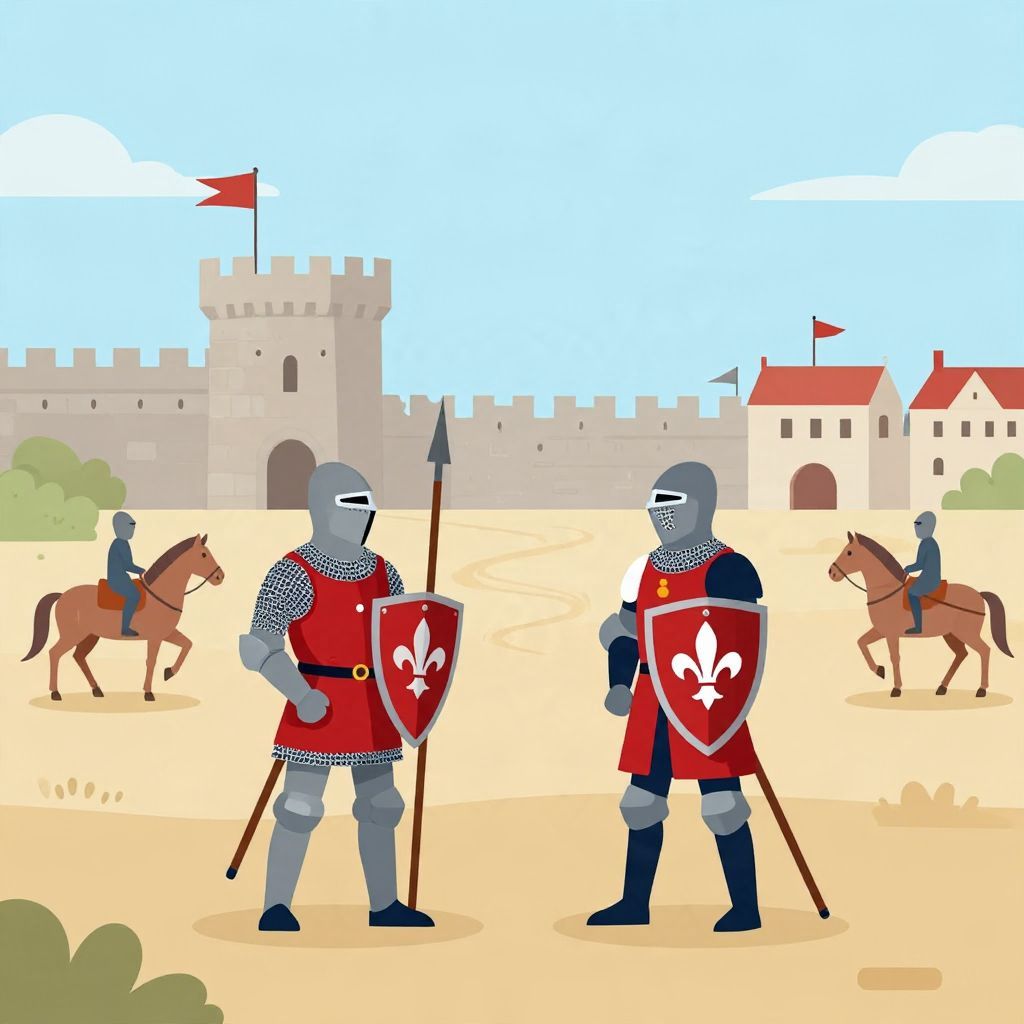
What was the longest war? The answer depends on how you define a “war.” If you mean the longest continuous armed conflict between the same two sides, the most famous answer is the Hundred Years’ War between England and France, which lasted from 1337 to 1453. But if you count wars that lasted far longer in a broader, more symbolic sense, other conflicts and rivalries can enter the discussion.
That ambiguity matters. Historians usually separate formal wars, intermittent conflicts, and long-running political struggles. So the “longest war” is not a single fixed label; it is a question about definitions, chronology, and historical context.
What Was The Longest War?
There is no universally agreed single “longest war,” because historians measure war in different ways. The Hundred Years’ War is the best-known long war in European history, lasting 116 years with interruptions. Other conflicts, such as the Reconquista or the Roman–Persian wars, lasted much longer as broad struggles, but they were not one uninterrupted war in the modern sense.
Why the Hundred Years’ War Is Usually the Answer
The Hundred Years’ War is the standard answer because it was a clearly defined dynastic conflict between England and France, with recognizable phases, truces, and resumed fighting. Despite its name, it lasted 116 years, from 1337 to 1453, and it became the classic example of a long medieval war.
How the war began
The roots of the conflict lay in feudal politics, inheritance claims, and control of territory in France. English kings held lands in France and owed homage to the French crown for some of them. When the French royal line faced succession problems in the 14th century, Edward III of England pressed a claim to the French throne, helping trigger war in 1337.
Why it lasted so long
The war was not a single unbroken campaign. It moved through phases of intense fighting and long pauses. Armies were expensive, rulers changed, alliances shifted, and plague, rebellion, and financial strain repeatedly interrupted the struggle. The conflict endured because neither side could secure a decisive and lasting settlement for decades.
The main turning points
- 1340s: English victories at sea and on land, including Crécy in 1346.
- 1356: The French suffered a major defeat at Poitiers, where King John II was captured.
- 1360: The Treaty of Brétigny temporarily reduced hostilities.
- 1415: Henry V won at Agincourt, reviving English momentum.
- 1429 onward: Joan of Arc helped inspire French recovery.
- 1453: The French retook Bordeaux and ended the war in practical terms.
Was the Hundred Years’ War Really 100 Years?
No. The name is misleading. It was not exactly 100 years, but about 116 years from the opening of the war in 1337 to the final French victory in 1453. The phrase “Hundred Years’ War” was coined later by historians to describe the long Anglo-French struggle, not by the people who lived through it.
It is also important to remember that the war did not involve continuous fighting every year. There were truces, negotiations, and periods when the conflict was effectively dormant. That is one reason the name is useful as a label but imperfect as a literal description.
Other Contenders for the Longest War
If you broaden the definition beyond one formal war, several other conflicts may seem “longer” than the Hundred Years’ War. These are not always comparable, because they may include many separate campaigns, changing enemies, or centuries of intermittent struggle rather than one declared war.
The Roman–Persian wars
The Roman and later Byzantine empires fought the Persian empires for centuries, from the late Republic and early Empire through the 7th century CE. These wars were not one continuous conflict, but a long strategic rivalry over frontier zones, prestige, and regional dominance. In total, they stretched across several centuries of recurring warfare.
The Reconquista
The Reconquista in the Iberian Peninsula is often described as a long Christian campaign to conquer Muslim-ruled territories, ending with the fall of Granada in 1492. It lasted for centuries, but it was not a single war in the narrow sense. It was a shifting series of campaigns, alliances, and state-building efforts.
The Ottoman–Habsburg struggle
The long contest between the Ottoman Empire and the Habsburgs also lasted for centuries in various forms. It included sieges, border wars, and diplomatic rivalry across southeastern and central Europe. Again, this was a prolonged geopolitical struggle rather than one uninterrupted war with a single start and end date.
How Historians Define a “War”
The answer to “What was the longest war?” depends on what counts as war. Historians may use different criteria:
- Continuous war: fighting that never truly stops.
- Intermittent war: conflict with truces and resumptions.
- Dynastic war: a struggle over succession and legitimacy.
- Civilizational rivalry: a broader contest across generations.
Under the strictest definition, the longest recognized war is usually not a single ancient rivalry but a conflict with clear diplomatic and military continuity, such as the Hundred Years’ War. Under a broader definition, much older and longer struggles can be cited, but they are less precise as “wars” and more accurate as historical rivalries.
Why the Longest War Matters Historically
Long wars reshape states. They alter taxation, military organization, political identity, and the balance of power. The Hundred Years’ War helped transform both England and France. England moved toward a more insular political identity, while France strengthened royal authority and developed more centralized institutions.
It also changed warfare itself. The conflict showcased the importance of infantry, longbows, artillery, and stronger state finance. Medieval warfare did not suddenly become modern, but the war marked a major step in the evolution of European military power.
Lasting consequences of long wars
- More centralized governments and heavier taxation
- Greater importance of professional soldiers and artillery
- Stronger national identities
- Economic strain on peasants, towns, and nobles
- Long-term border and succession disputes
Popular Myths About the Longest War
One common myth is that the “longest war” must mean the war with the most nonstop fighting. In reality, many famous long wars included long pauses. Another myth is that the title can be assigned neatly and permanently. In historical scholarship, the answer changes depending on whether you are asking about formal declarations, military campaigns, or broader political conflicts.
It is also a mistake to assume that older wars were always shorter. Some ancient and medieval rivalries lasted for generations, but the evidence is often fragmented, and the boundaries between war, raid, rebellion, and diplomacy can be blurry.
So, What Was the Longest War?
If you want the most common historical answer, it is the Hundred Years’ War, which lasted from 1337 to 1453. If you want the longest broader conflict in a looser sense, historians may point to centuries-long rivalries such as the Roman–Persian wars or the Reconquista. The “longest war” is therefore less a single fact than a question of historical definition.
That is why the best answer is careful rather than absolute: the Hundred Years’ War is the longest famous continuous dynastic war, but the longest conflict in history depends on how narrowly or broadly you define war. For more on long-lasting empires and the geopolitical rivalries that shaped them, see how long the Ottoman Empire lasted and how imperialism helped lead to World War I.