
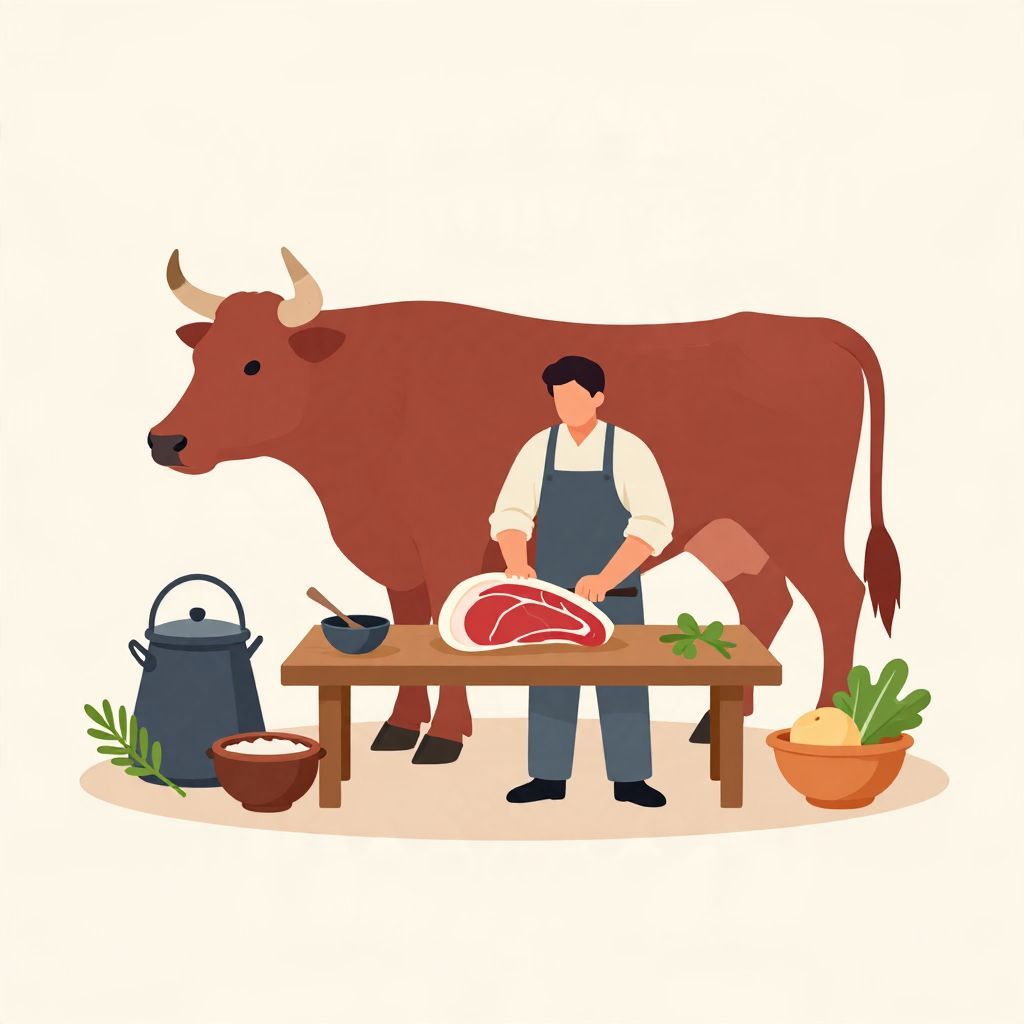
Where does oxtail come from? The short historical answer is that oxtail comes from the tail of cattle, and the dish developed as a way to use a cut that many people once considered low-value. Its history is tied less to a single place of invention than to older traditions of thrift, butchery, and slow cooking across Europe, the Caribbean, Africa, and Asia.
Because oxtail is both a cut of meat and a name for a dish, its story is partly culinary and partly social. What began as an economical use of beef became a prized ingredient in soups, stews, and braises, especially where long cooking could transform tough connective tissue into rich, gelatinous meat and broth.
Where does oxtail come from?
Oxtail comes from the tail of cattle, usually beef cattle rather than an actual ox. Historically, the word referred to the tail of a castrated working bullock or ox, but in modern use it simply means cattle tail. The dish emerged from practical cooking traditions that made use of every edible part of the animal, especially in poorer households and in cuisines shaped by scarcity.
The cut itself: cattle, not a separate animal
Despite the name, oxtail is not necessarily from an ox in the old agricultural sense. In earlier centuries, an “ox” was a trained draft animal, often a castrated male bovine. Over time, the term in cooking became broader, and oxtail came to mean the tail cut from cattle generally. That linguistic shift reflects how food terms often outlive the farming practices that created them.
Why the tail became food
The tail is full of bone, cartilage, marrow, and connective tissue. It is not a quick-cooking cut, but it becomes deeply flavorful when simmered for hours. In many historical food cultures, this made it ideal for soups and stews. When meat was expensive or when households aimed to avoid waste, oxtail offered nourishment, flavor, and economy in one cut.
The historical background of oxtail in cooking
Oxtail’s culinary history is rooted in the long tradition of using the whole animal. For centuries, butchers and cooks in Europe treated less desirable cuts as useful ingredients for broths, pottages, and peasant dishes. Oxtail was not originally a luxury food; it was a practical one, valued because slow cooking could turn a tough cut into a rich meal.
Medieval and early modern Europe
In medieval Europe, meat was often preserved, boiled, or stewed rather than quickly grilled or roasted. Oxtail fit this style well. It appears in the broader history of broth-based dishes, where bones and sinew were simmered to extract flavor and nutrition. By the early modern period, oxtail soup and oxtail stew had become established in parts of Britain and France, especially among households that relied on economical cooking.
In Britain, oxtail soup became especially associated with home kitchens and later with restaurant fare. The dish’s popularity grew because it was hearty, filling, and relatively inexpensive. In France, similar slow-cooked preparations fit into a wider tradition of pot-au-feu and braised meats. These dishes show how oxtail was absorbed into European culinary systems that prized long simmering and layered flavor.
From necessity to delicacy
Over time, oxtail changed status. What had once been a thrifty cut became more sought after as people recognized its flavor and texture. This pattern is common in food history: ingredients that begin as “poor food” can later become prized, especially when urban restaurants and gourmet culture reframe them as distinctive or traditional. Oxtail followed that path in the 19th and 20th centuries.
How oxtail spread across the world
Oxtail did not remain confined to one national cuisine. As cattle ranching, colonial trade, migration, and slavery moved food traditions around the Atlantic and beyond, oxtail entered many regional dishes. Its global history is tied to the movement of people who adapted inexpensive cuts to local spices, vegetables, and cooking methods.
The Caribbean and African diasporic cooking
In the Caribbean, oxtail became deeply associated with stews and braises flavored with local seasonings, beans, peppers, and herbs. This was not accidental. Enslaved Africans and their descendants often had limited access to the best cuts of meat, so they developed highly resourceful cooking traditions that made use of offcuts and tough pieces. Oxtail fit that pattern well.
After emancipation, these dishes remained important in Caribbean home cooking and later in diaspora communities in Britain, North America, and elsewhere. Jamaican oxtail stew, for example, is now widely recognized, but it belongs to a broader Caribbean culinary history shaped by African, European, and local influences. The dish’s significance lies not only in taste but also in its connection to survival, adaptation, and cultural memory.
Latin America and other regional traditions
Oxtail also appears in Latin American cooking, often in soups and stews that reflect Iberian and local traditions. In some places, the cut is used in sancocho-style dishes or rich broths. Similar preparations exist in parts of Africa and Asia, where slow-cooked cattle tail became part of everyday cooking or festive meals. The details vary, but the logic is the same: extract maximum flavor from a tough cut through time and heat.
Why oxtail became popular in the first place
The rise of oxtail as a recognizable dish can be explained by three historical forces: economy, technique, and taste. First, it was cheap or undervalued in many markets. Second, slow-cooking methods made it practical. Third, the resulting broth and meat were rich and satisfying. These factors helped oxtail move from discarded cut to respected ingredient.
Economy and thrift
In societies where meat was costly, cooks often relied on less expensive parts of the animal. Oxtail was especially useful because it could stretch into a large pot of soup or stew. A single tail, simmered with vegetables and grains, could feed a family. This made it a staple in working-class kitchens and in times when food budgets were tight.
Technique and transformation
Oxtail rewards patience. Long cooking breaks down collagen into gelatin, thickening the broth and creating a silky mouthfeel. Before modern refrigeration and quick-cook habits, many kitchens already relied on slow simmering for practical reasons. Oxtail became a natural fit for these methods, which is why it appears so often in historical stews and soups.
Taste and status change
As food culture evolved, people began to value the deep flavor that oxtail produced. Restaurants and home cooks alike discovered that a cut once associated with necessity could also be celebrated for richness. This shift in status is part of a larger history of “nose-to-tail” cooking, though that modern phrase is newer than the practice itself.
Is there one place where oxtail originated?
There is no single, provable birthplace of oxtail as a food. The cut itself comes from cattle everywhere cattle were raised, and the cooking traditions around it developed independently in multiple regions. What can be said with confidence is that oxtail became established wherever people needed affordable, flavorful food that could be made by slow cooking.
A food with many local histories
That means oxtail’s history is plural. In Britain it became a familiar soup and stew ingredient. In the Caribbean it took on bold seasoning and became central to beloved dishes. In parts of Africa, Latin America, and Asia, it entered local braising traditions. Rather than a single origin story, oxtail has a network of histories shaped by trade, labor, migration, and necessity.
Language and naming matter
The word “oxtail” itself is English, but the food is not limited to English-speaking cultures. Names often travel with colonial trade and migration, while the underlying practice of cooking tail meat may be much older and broader. This is why historians of food are careful to separate the name of a dish from the deeper history of the ingredient.
Oxtail in modern food culture
Today, oxtail has moved from a humble cut to a sought-after ingredient in many cities. It appears on restaurant menus, in home kitchens, and in fusion dishes that combine older stewing traditions with contemporary tastes. Rising demand has also changed its price, which is a reminder that food status is historical, not fixed.
From cheap cut to expensive dish
In many places, oxtail is no longer inexpensive. As more people came to appreciate its flavor, demand increased. This happened with several once-overlooked cuts of meat in the 20th and 21st centuries. The result is a familiar historical irony: a food born from thrift can become expensive precisely because it was once humble.
What this says about food history
Oxtail’s journey shows how cuisine reflects social conditions. Scarcity, migration, and ingenuity shaped what people ate and how they cooked it. The dish survived because it was practical, but it endured because it was delicious. That combination explains why oxtail remains important in so many food traditions today.
So, where does oxtail come from?
Oxtail comes from cattle, and its culinary history comes from the practical use of the whole animal in many societies. It is not tied to one country or one inventor. Instead, oxtail emerged through centuries of resourceful cooking, especially in Europe, the Caribbean, and other regions where slow-cooked dishes turned a tough cut into a rich meal.
Seen historically, oxtail is more than an ingredient: it is a record of how people cooked under pressure, adapted to changing economies, and turned necessity into tradition. If you are interested in the history of specific foods, you may also enjoy reading about where broccoli comes from and where sushi originated.