
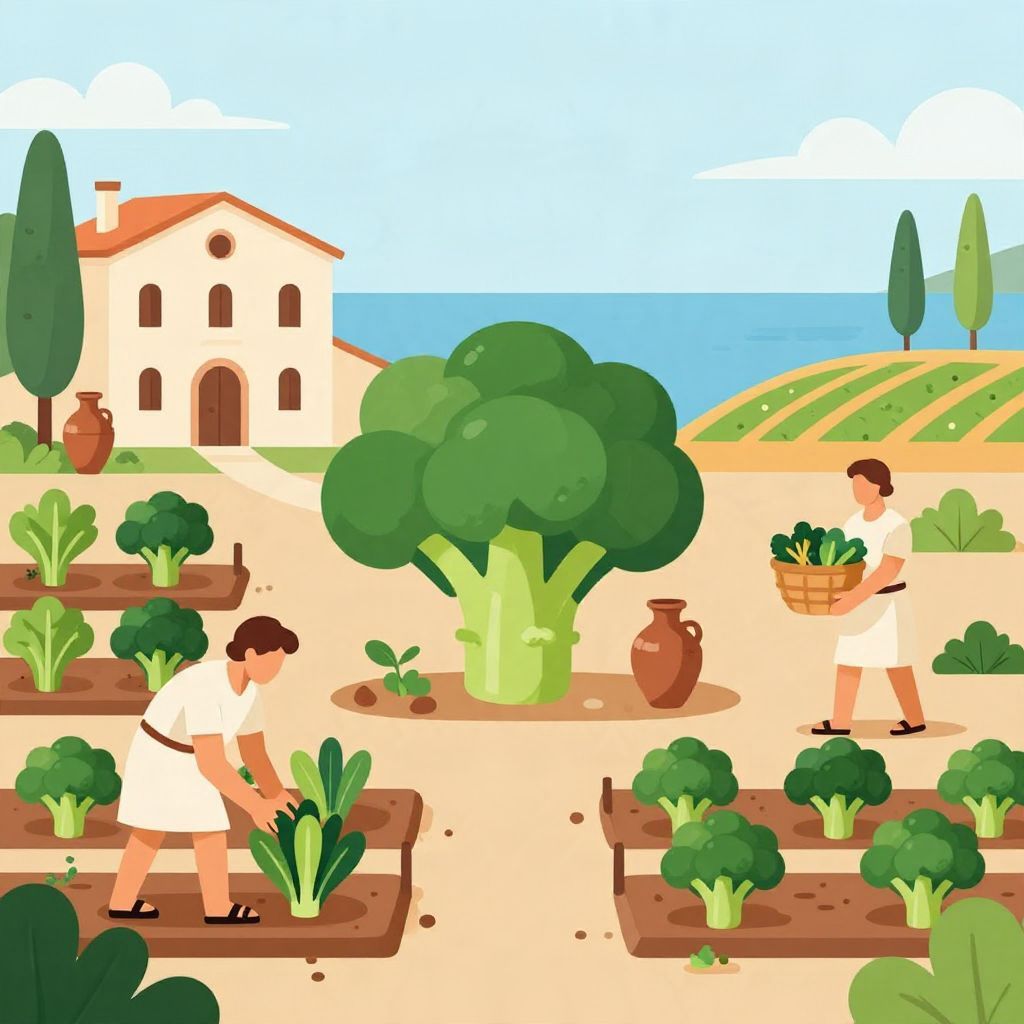
Where does broccoli come from? The short answer is that broccoli originated in the Mediterranean world, most likely in ancient Italy, where farmers selectively bred it from wild cabbage over many generations. It is not a naturally wild plant in the form we eat today; it is a human-made crop shaped by centuries of cultivation.
Its history is tied to Roman agriculture, later Italian regional farming, and eventually the spread of vegetables through European and global trade. Broccoli’s story shows how ordinary foods can have deep historical roots.
Where Does Broccoli Come From?
Broccoli comes from the eastern Mediterranean and, in the form we know today, was developed in Italy from cultivated cabbage varieties. It likely emerged through selective breeding in Roman times or later, then spread across Europe much later. The plant belongs to the same species as cabbage, kale, cauliflower, and Brussels sprouts.
The Ancient Roots of Broccoli
Broccoli’s ancestry begins with wild mustard and related brassica plants that grew around the Mediterranean. Ancient farmers gradually selected plants with larger flower heads, thicker stems, and milder flavors. Over time, these choices produced many familiar vegetables from one species, Brassica oleracea.
From Wild Cabbage to Cultivated Brassicas
Wild cabbage grew along rocky coasts and cliffs in southern Europe. Early farmers did not create broccoli all at once. Instead, they saved seeds from plants with useful traits and replanted them. This slow process produced different vegetable forms: leafy kale, tight-headed cabbage, flowering broccoli, and cauliflower.
Because these changes happened over centuries, historians and botanists cannot point to a single inventor or exact year. What is clear is that broccoli is a product of sustained agricultural experimentation rather than a naturally occurring food in the modern sense.
Did the Romans Know Broccoli?
There is good reason to think the ancient Romans knew a broccoli-like vegetable. Roman writers described cultivated brassicas in several forms, and the Roman agricultural tradition valued improved cabbage plants. However, the exact vegetable called “broccoli” today is harder to identify in ancient texts, so scholars are cautious about making overly precise claims.
Roman Agriculture and Vegetable Improvement
The Romans were skilled gardeners and farmers. They grew many vegetables for both practical and culinary reasons, and they understood that careful cultivation could improve taste and yield. In this environment, a broccoli ancestor could have been selected and refined, especially in Italy, where brassica cultivation remained important.
Still, the evidence does not prove that modern broccoli was identical to any one Roman plant. It is more accurate to say that the Romans helped create the agricultural conditions in which broccoli could eventually emerge.
Why Italy Is the Strongest Historical Answer
When people ask where broccoli comes from, historians usually point to Italy because the vegetable was developed there in recognizable form and because the Italian peninsula preserved and refined brassica cultivation for centuries. The word “broccoli” itself comes from Italian, reinforcing that connection.
The Name and Its Meaning
The Italian word broccolo refers to the flowering top or sprout of a cabbage plant, and broccoli is the plural form. This linguistic clue matters: it suggests the vegetable was identified in Italy as a distinct culinary plant before it became widely known elsewhere.
That does not mean broccoli was “invented” in one city or by one person. Rather, Italian growers, especially in regional agricultural traditions, developed and preserved the plant until it became a recognizable vegetable in its own right.
How Broccoli Spread Beyond Italy
Broccoli remained mostly a regional European food for a long time. It became more widely known in France and England during the early modern period, but it was still not common in many places. Its broader spread came through migration, trade, and changing tastes in cooking.
From Regional Crop to International Vegetable
Italian immigrants helped introduce broccoli to the United States in the late 19th and early 20th centuries. Over time, commercial farming, improved transport, and changing consumer preferences made it much more common. By the 20th century, broccoli had become a familiar vegetable in many countries far beyond its Mediterranean origins.
This global spread is important historically because it shows how food traditions travel. A plant may begin in one region, but once it enters trade networks and immigrant kitchens, it can become part of many national cuisines.
Broccoli’s Place in the History of Food
Broccoli is a good example of how human beings reshape nature through agriculture. It also shows that many vegetables we think of as “natural” are actually the result of long-term selection. Cabbage, cauliflower, kale, kohlrabi, Brussels sprouts, and broccoli all come from the same species, yet they look and taste very different.
Why the Same Plant Can Become So Different
Farmers selected different parts of the plant for different purposes. Some valued leaves, others stems, and others compact flower buds. Over generations, these choices produced distinct vegetables. Broccoli was favored for its unopened flower head and tender stalks, which made it useful in cooking and appealing in flavor.
This process was not unique to broccoli. Many staple foods in history were shaped by patient, practical selection rather than dramatic invention. Broccoli’s history is therefore part of a much larger story about agriculture, adaptation, and taste.
What We Can Say with Confidence
Historians and food scholars can say several things confidently about broccoli’s origins:
- It belongs to the species Brassica oleracea.
- Its deeper ancestry is in wild Mediterranean cabbage plants.
- Its recognizable cultivated form developed in Italy.
- It spread more widely through European and later global trade.
- Its exact moment of origin is unknown because it was created gradually through farming.
What remains uncertain is the precise date when broccoli first became distinct from other brassicas. That uncertainty is normal for crops with ancient, gradual development. Unlike a battle or treaty, a vegetable’s origin rarely appears in a single dated document.
Why Broccoli’s Origin Matters
Broccoli’s history is more than a curiosity about dinner. It reveals how agriculture shaped the ancient Mediterranean world, how Roman and post-Roman farming traditions preserved useful crops, and how Italian regional foodways influenced global cuisine. It also reminds us that many everyday foods have long, human-made histories.
So, where does broccoli come from? It comes from the Mediterranean, especially Italy, where it was developed from cultivated cabbage over centuries. Its story is one of slow agricultural change, regional tradition, and eventual worldwide spread. If you’re interested in how other foods traveled and changed over time, you might also enjoy reading about the history of succotash and where French fries originated.