
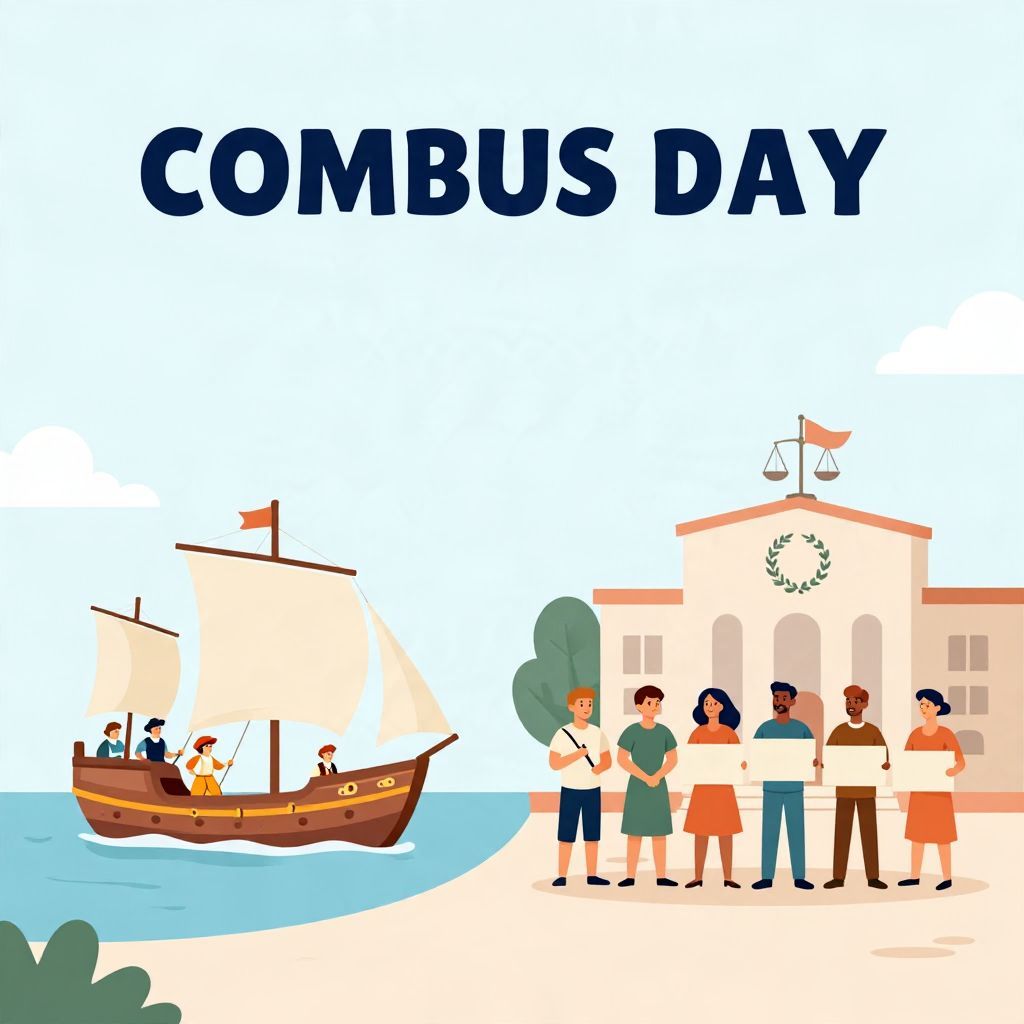
Columbus Day is no longer celebrated in the same way it once was because many Americans came to see the holiday as a celebration of conquest rather than a neutral commemoration of exploration. Over time, criticism grew over Christopher Columbus’s role in colonization, violence against Indigenous peoples, and the mythologized version of history taught in schools.
As a result, many states, cities, schools, and institutions replaced Columbus Day with Indigenous Peoples’ Day or chose not to observe it at all. The holiday has not disappeared everywhere, but its meaning and public support have changed dramatically.
Why Is Columbus Day No Longer Celebrated?
Columbus Day is less widely celebrated because historians, Indigenous activists, educators, and many communities increasingly reject the older heroic image of Columbus. They point to the suffering that followed European colonization in the Americas, including enslavement, disease, land seizure, and violence. In many places, the holiday has been replaced or renamed to reflect a broader and more critical understanding of history.
How Columbus Day Became a Holiday in the First Place
To understand why the holiday declined, it helps to know why it existed. Columbus Day developed in the United States during the 19th and early 20th centuries, especially among Italian American communities who viewed Columbus as a symbol of immigrant pride and achievement. The federal holiday was established in 1937 and later moved to the second Monday in October under the Uniform Monday Holiday Act in 1971.
Why Columbus was celebrated
For many years, Columbus was presented in textbooks as a brave European explorer who “discovered” the Americas in 1492. That story fit older national narratives that emphasized exploration, expansion, and European achievement. In the United States, Columbus also became important as a figure who could be claimed by immigrant communities seeking acceptance and recognition.
The limits of the old celebration
Even in its earlier form, Columbus Day was never universally embraced. Native peoples and some scholars had long argued that the holiday ignored the consequences of colonization. But for decades, those critiques had less public influence than the dominant patriotic story attached to the day.
What Changed: The Historical Criticism of Columbus
The main reason Columbus Day is no longer celebrated in many places is that public understanding of Columbus changed. Modern historical scholarship and public debate have emphasized that Columbus’s voyages marked the beginning of a colonial era that devastated Indigenous societies. This does not mean Columbus was unimportant; it means the meaning of his legacy is now viewed much more critically.
Columbus and colonization
Columbus did not “discover” an empty continent. The Americas were already home to millions of people with diverse societies, governments, and cultures. After Columbus’s arrival in the Caribbean, Spanish colonization expanded through conquest, forced labor, and extraction of wealth. On Hispaniola and elsewhere, Indigenous communities suffered catastrophic population loss from disease, violence, and exploitation.
The problem with the “hero” narrative
Older celebrations often focused on navigation, courage, and European expansion while leaving out the human cost. Today, many people see that selective memory as historically incomplete. Columbus was a historical actor of his time, but he was also part of a system that helped launch centuries of dispossession in the Americas.
The Rise of Indigenous Peoples’ Day
Another major reason Columbus Day is no longer celebrated in many places is the rise of Indigenous Peoples’ Day. This alternative observance began as a direct response to Columbus Day and aims to honor Native communities, histories, and resilience instead of celebrating colonization.
How the replacement happened
Beginning in the late 20th century, local governments, universities, and activists pushed for a new holiday or commemoration. Berkeley, California, was among the earliest cities to adopt Indigenous Peoples’ Day in 1992, during the 500th anniversary of Columbus’s first voyage. Since then, many other cities, states, school systems, and institutions have followed.
What the new observance represents
Indigenous Peoples’ Day does not simply erase Columbus from history. Rather, it changes the focus from celebration to remembrance and recognition. It highlights Native survival, sovereignty, and the fact that Indigenous people were—and remain—central to the history of the Americas.
Why the Change Gained Momentum in the Late 20th and 21st Centuries
The decline of Columbus Day reflects broader historical changes in how societies interpret the past. Several developments pushed the shift forward: civil rights activism, Native American activism, changing school curricula, and a stronger public emphasis on historical injustice. These forces made it harder to sustain older celebratory narratives without criticism.
Changing history education
As history education expanded and became more inclusive, students learned more about Indigenous perspectives and the impact of European colonization. Columbus was increasingly taught not as a simple hero but as a complicated figure within a larger colonial process. That shift in education influenced public memory.
Public memory and identity
Holiday observances are never just about the past; they also express values in the present. For many communities, celebrating Columbus came to feel incompatible with honoring Native peoples and acknowledging historical violence. Renaming the holiday was one way to align public commemoration with those values.
Is Columbus Day Actually Gone?
Columbus Day has not disappeared entirely. It remains a federal holiday in the United States, and some states and local governments still observe it under that name. But in practice, it is no longer celebrated uniformly across the country. In many places, the day is now marked as Indigenous Peoples’ Day, or it passes with little public observance.
What varies by place
- Some states officially recognize Columbus Day.
- Some recognize Indigenous Peoples’ Day instead.
- Some observe both names or leave the choice to local governments.
- Many schools and institutions now use the day to teach about Indigenous history.
Why this matters
The holiday’s uneven status shows that historical memory is contested. Public holidays are not fixed forever; they change as societies reassess whom they choose to honor. Columbus Day’s decline is a clear example of that process.
The Historical Debate: Should Columbus Be Remembered at All?
Historians generally agree that Columbus was a significant figure in Atlantic history. The disagreement is not about whether he mattered, but about how he should be remembered. Some argue that removing Columbus Day risks oversimplifying history. Others respond that the older holiday already oversimplified history by celebrating exploration while ignoring conquest and suffering.
A more balanced view
A historically grounded approach does not require pretending Columbus had no importance. It does require placing him in context. He was part of the early modern expansion of European power, and his voyages helped transform the world. But that transformation brought immense harm to Indigenous peoples. A mature historical memory can hold both facts at once.
Why the Holiday’s Meaning Changed So Much
Columbus Day declined because the story behind it changed in the public mind. Once seen mainly as a celebration of discovery and immigrant identity, it is now widely associated with colonialism, Indigenous dispossession, and historical mythmaking. That is why many communities no longer celebrate it in its old form.
The broader lesson is that holidays reflect values as much as events. As more people learned about the consequences of Columbus’s voyages, they chose different ways to remember October. If you want to explore the historical background further, see when Columbus sailed in 1492 and the wider context of Indigenous history and land in “no one is illegal on stolen land.”