
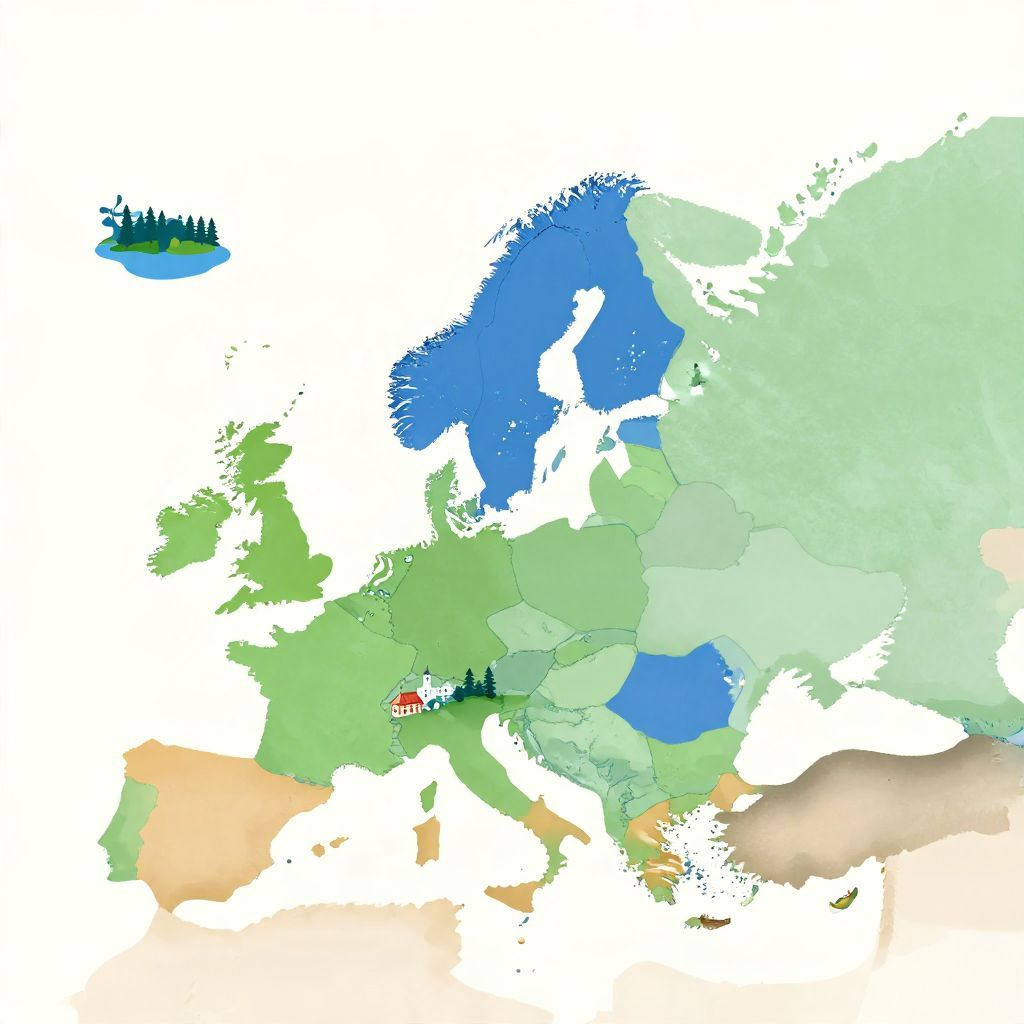
Is Finland part of Scandinavia? The short answer is: it depends on how you define Scandinavia. In the strict historical and linguistic sense, Finland is usually not included, because Scandinavia traditionally refers to the Scandinavian Peninsula and the closely related North Germanic-speaking kingdoms of Denmark, Norway, and Sweden.
But Finland is deeply tied to Scandinavian history. For centuries it was ruled by Sweden, later shaped by the Russian Empire, and today it is often grouped with the Nordic countries. So the answer is both simple and nuanced: geographically and linguistically, usually no; historically and culturally, often yes in broader regional discussions.
Is Finland Part of Scandinavia?
Usually, no in the strict sense, but sometimes yes in broader usage. Most historians and geographers reserve “Scandinavia” for Denmark, Norway, and Sweden. Finland is more accurately described as part of the Nordic region. However, because of centuries of shared political history with Sweden and close cultural ties, Finland is often discussed alongside Scandinavia in historical and everyday contexts.
Why the Answer Depends on Definition
The confusion comes from the fact that “Scandinavia” has never had only one meaning. It can refer to geography, language, culture, or politics. Depending on which meaning is used, Finland may be excluded, included loosely, or grouped with a wider northern European region.
1. Geographic meaning
In the narrow geographic sense, Scandinavia refers to the Scandinavian Peninsula, which is mainly Norway and Sweden, with a small part of northern Finland sometimes included in broader geographic discussions. Since most of Finland lies outside the peninsula, it is usually not considered geographically Scandinavian.
2. Linguistic meaning
In linguistic terms, Scandinavia is commonly associated with the North Germanic languages: Danish, Norwegian, and Swedish. Finnish belongs to the Finnic branch of the Uralic language family, not the Germanic family. That language difference is one of the strongest reasons Finland is usually separated from Scandinavia in scholarly usage.
3. Cultural and political meaning
In everyday speech, people sometimes use “Scandinavia” more loosely to mean the northern European countries with similar welfare states, social systems, and historical links. In that broader sense, Finland may be casually included, though many prefer the more accurate term “Nordic countries.”
Finland in Medieval and Early Modern Scandinavian History
Finland’s historical relationship with Scandinavia is especially strong because much of Finnish territory was under Swedish rule for centuries. From the Middle Ages until 1809, Finland formed part of the Swedish realm, which meant that its political institutions, law, religion, and elite culture were heavily influenced by Sweden.
Swedish expansion into Finland
Swedish influence in Finland grew during the medieval period, especially from the 12th and 13th centuries onward. This was part of the broader expansion of Swedish power eastward across the Baltic. The process was gradual and involved warfare, settlement, trade, and missionary activity. It was not a single conquest with one clear date, but a long transformation of power.
Integration into the Swedish realm
By the late Middle Ages, Finland had become an established part of the Swedish kingdom. Swedish law, administration, and the Catholic Church all played major roles in shaping the region. After the Reformation in the 16th century, Lutheran Christianity became dominant in both Sweden and Finland, creating even closer religious and institutional ties.
What this meant for Finnish society
For many centuries, the ruling language of administration and high culture in Finland was Swedish. A Swedish-speaking elite developed, especially along the coast and in towns. This does not mean that Finland became “Swedish” in a simple ethnic sense; the majority of the population remained Finnish-speaking. But it does show that Finland was historically embedded in a Scandinavian political world.
Why Finland Is Not Usually Counted as Scandinavia Today
Despite those deep historical links, Finland is usually treated as distinct from Scandinavia in modern usage. The main reasons are language, geography, and the historical development of national identities in the 19th and 20th centuries.
Language difference
Swedish, Danish, and Norwegian are mutually related North Germanic languages. Finnish is not. This difference matters because language has long been one of the clearest markers of Scandinavian identity. Even though Swedish is still an official language of Finland and is spoken by a minority, Finnish itself remains separate from the Scandinavian language family.
National identity and the 19th century
During the 19th century, Finnish national consciousness grew stronger, especially after Finland became an автономous Grand Duchy under Russian rule in 1809. Intellectuals, writers, and political leaders increasingly emphasized Finland’s distinct language, folklore, and history. This helped establish Finland as a nation with its own identity rather than simply a Swedish province.
The rise of “Nordic” as the broader term
In modern historical and political language, “Nordic” is often the best umbrella term for Denmark, Norway, Sweden, Finland, and Iceland, along with the Faroe Islands, Greenland, and Åland in certain contexts. This term avoids the ambiguity of “Scandinavia” and better reflects Finland’s place in regional cooperation.
Finland’s Historical Ties to Sweden and the Scandinavian World
Even if Finland is not strictly Scandinavian, it cannot be understood apart from Scandinavian history. Its long union with Sweden left lasting marks on government, law, religion, education, and social structure. These ties are one reason many people instinctively place Finland in the Scandinavian sphere.
Law and administration
Swedish legal traditions shaped Finnish institutions for centuries. Local administration, landholding patterns, and court practices developed within the Swedish kingdom’s framework. This created a shared political culture across the Baltic, even though everyday life in Finnish-speaking rural communities remained distinct.
Religion and education
The Reformation linked Finland even more closely to Sweden. Lutheranism became the dominant faith, and church organization helped spread literacy. The church also preserved records that are important for historians today. Education, especially among elites, was often conducted in Swedish, reinforcing the shared Scandinavian connection.
Trade and the Baltic world
Finland’s coastal towns were part of the wider Baltic trading network. Merchants, officials, clergy, and soldiers moved across the region, connecting Finland to Sweden, the Baltic German world, and other northern European centers. In this sense, Finland was never isolated from Scandinavian history; it was woven into it.
From Sweden to Russia: A Turning Point in Finnish History
The year 1809 marked a major break. After the Finnish War between Sweden and Russia, Sweden ceded Finland to the Russian Empire. Finland became the Grand Duchy of Finland, an autonomous entity under the Russian crown. This changed the political framework even as many Swedish-era institutions remained in place.
Why 1809 matters
This transfer ended Finland’s centuries-long role as part of the Swedish kingdom. It did not erase Swedish influence overnight, but it shifted Finland’s political center of gravity away from Scandinavia and toward the Russian Empire. That change played a major role in the later development of Finnish nationalism.
Autonomy and identity
Under Russian rule, Finland retained many of its own laws and administrative structures. This autonomy helped preserve a sense of separate identity. Over time, Finnish-language culture gained strength, especially in the 19th century, and the idea of Finland as a distinct nation became more firmly established.
Finland in the Modern Nordic Region
In the 20th century, Finland’s place in northern Europe became clearer in a different way. After gaining independence in 1917, Finland developed strong ties with its neighbors through diplomacy, trade, and cultural exchange. It is now firmly part of the Nordic family of states, even if it is not always classified as Scandinavian.
Independence and regional cooperation
Finland’s independence after the Russian Revolution created a new national framework. Over time, it joined Nordic cooperation in politics, labor markets, education, and culture. These connections are real and important, but they do not erase the older distinction between Scandinavia and Finland.
Swedish in Finland today
Swedish remains one of Finland’s official languages, reflecting the long historical legacy of Swedish rule. The Swedish-speaking minority is small but culturally significant. This bilingual heritage is one of the clearest reminders that Finland’s history is closely connected to Scandinavia, even if it is not identical to it.
So, Is Finland Scandinavian or Nordic?
The most accurate answer is that Finland is Nordic but usually not Scandinavian. If someone uses “Scandinavia” loosely, they may include Finland in conversation. But in historical, geographic, and linguistic terms, Finland is generally treated as separate from Scandinavia while remaining closely linked to it.
Simple way to remember the distinction
- Scandinavia: usually Denmark, Norway, and Sweden.
- Nordic countries: Denmark, Norway, Sweden, Finland, and Iceland, plus related territories in some contexts.
- Finland: historically tied to Scandinavia, but usually classified as Nordic rather than Scandinavian.
Historical Facts That Explain the Confusion
Several facts make Finland easy to misclassify. It was ruled by Sweden for centuries, shares many institutions with Scandinavian states, and is often grouped with them in modern political and cultural discussions. At the same time, its language, much of its geography, and its national development set it apart.
Key historical evidence
- Finland was part of the Swedish realm for several centuries, roughly from the medieval period to 1809.
- Swedish law, religion, and administration deeply influenced Finnish society.
- Finnish is not a North Germanic language, which separates it from the core Scandinavian language group.
- After 1809 and especially after 1917, Finland developed a stronger separate national identity.
- Modern usage usually places Finland in the Nordic region rather than strict Scandinavia.
Final Answer
So, is Finland part of Scandinavia? Historically, Finland has been deeply connected to Scandinavia, especially through centuries of Swedish rule. But in the strictest geographic and linguistic sense, it is usually not considered Scandinavian. The most precise modern description is that Finland is a Nordic country with a strong Scandinavian historical legacy.