
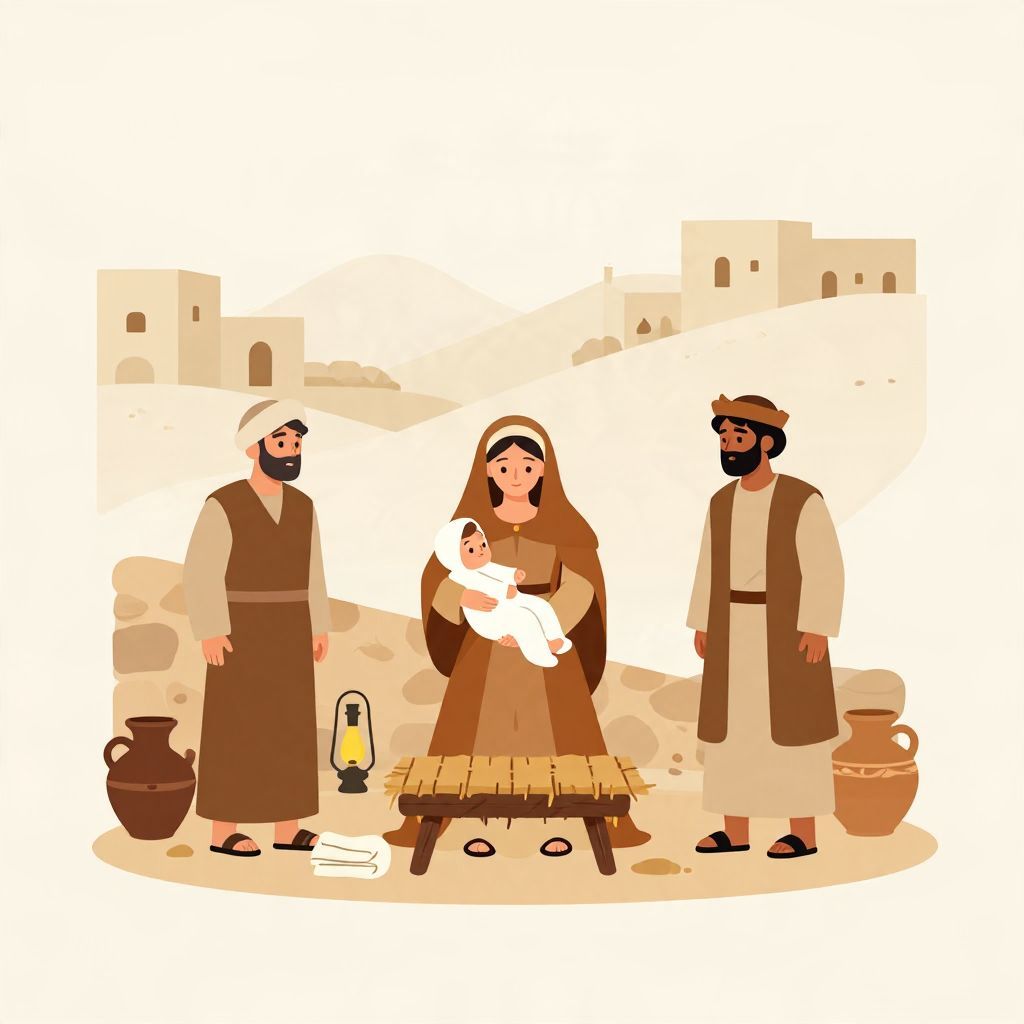
How old was the Virgin Mary when she had Jesus? It is a question that blends history, theology, and tradition. The short answer is that no surviving ancient source gives Mary’s exact age, so any precise number is an estimate rather than a documented fact.
Most historical reconstructions place Mary as a very young woman, probably in her early to mid-teens, though some traditions and later interpretations suggest she may have been somewhat older. The evidence is limited, and the answer depends on how one weighs biblical texts, Jewish marriage customs, and later Christian tradition.
How old was the Virgin Mary when she had Jesus?
There is no confirmed historical age for Mary at Jesus’ birth. The most common scholarly estimate is that she was likely a teenager, often around 12 to 16 years old, based on marriage patterns in first-century Jewish society. This is an inference, not a recorded fact, and older or younger possibilities cannot be ruled out with certainty.
What the historical evidence actually says
The New Testament does not state Mary’s age. The Gospels of Matthew and Luke focus on the theological meaning of Jesus’ birth, not on biographical details such as Mary’s exact age. Because of that, historians must rely on context rather than a direct statement from the sources.
In the ancient Mediterranean world, especially in Jewish communities of Roman Judea, girls were often betrothed and married younger than is typical today. That social context is the main reason historians think Mary was likely very young when she became pregnant and gave birth to Jesus.
Why historians estimate a teenage age
Several factors shape the estimate:
- Marriage customs: Betrothal could happen soon after puberty, and marriage often followed relatively early.
- Family structure: Women were commonly married in their teens in many ancient societies.
- Social expectations: Childbearing was closely tied to marriage and household formation.
These points make a teenage age plausible, but they do not prove it. Historical probability is not the same as documentary certainty.
Mary’s age in Jewish and Roman-era context
To understand the likely age of Mary, it helps to look at the world of first-century Judea. Mary would have lived under Roman rule in a Jewish village culture where family honor, marriage, and childbearing were central to daily life. Girls were generally expected to marry young, often soon after reaching physical maturity.
That said, “young” in the ancient world varied by region, class, and family circumstance. Some women married later, especially if family conditions delayed marriage. So while a teenage Mary is historically plausible, it should not be treated as a settled numerical fact.
Betrothal and marriage in the ancient world
In Jewish tradition, betrothal was a serious legal commitment, more binding than a modern engagement. A betrothed girl was already considered promised to her future husband, even before the marriage was fully completed. This helps explain why the Gospel accounts present Mary as already pledged to Joseph when the annunciation occurs.
Because betrothal could happen early, the age of first marriage in that culture was often lower than modern readers expect. That is one reason many historians place Mary somewhere in her early teens.
What Christian tradition says about Mary’s age
Later Christian tradition sometimes offered more specific ideas about Mary’s youth, but these traditions developed after the New Testament period and should not be confused with direct historical evidence. Some devotional writings and artistic traditions portray Mary as very young, emphasizing her humility and obedience.
In some traditions, Mary is imagined as a girl of about 12 or 13. That image became influential in Christian art and popular devotion, but it reflects later interpretation rather than a securely documented age from the first century.
Why later tradition emphasized youth
Mary’s youth served an important theological purpose in Christian thought. It highlighted her role as a willing and pure vessel in the story of the Incarnation. In medieval and later Christian imagination, her young age also reinforced themes of innocence, faith, and divine election.
However, theological symbolism is not the same as historical proof. A tradition may be meaningful without being verifiable in the strict historical sense.
How old was Mary likely to be compared with Joseph?
Joseph’s age is also unknown, but later tradition often imagines him as older than Mary, sometimes much older. That idea appears in some apocryphal and devotional traditions, especially in the effort to explain Mary’s perpetual virginity and Joseph’s role as guardian rather than husband in the full marital sense.
Historically, Joseph may have been a young adult, possibly close in age to Mary, or somewhat older. The sources do not provide enough evidence to determine his age either. Any firm claim about the age gap between them goes beyond the available historical record.
What can be said with confidence
- Mary was likely of marriageable age in her society.
- She was probably younger than a modern adult bride would typically be.
- Her exact age is not stated in the Bible or in reliable first-century records.
Why the question matters historically
Asking how old Mary was is not just a curiosity. It opens a window into ancient family life, women’s roles, and the social setting of early Christianity. The age of marriage in the ancient world was shaped by economics, kinship, survival, and religion in ways very different from modern expectations.
The question also shows how history and faith can overlap without being identical. For believers, Mary’s significance lies in her role in salvation history. For historians, the focus is on what can be responsibly inferred from the available evidence.
History versus devotion
It is important to separate three different things:
- Historical evidence: what the earliest sources actually say.
- Scholarly inference: what historians think is most likely based on context.
- Religious tradition: later beliefs, stories, and devotional images.
When people ask Mary’s age, they often want a single exact answer. History cannot honestly give one. It can only give the most plausible range and explain why that range is reasonable.
Was Mary 12, 13, 14, or 15?
Those numbers are often repeated in popular discussions, but they should be treated cautiously. A figure in the low teens is plausible because that fits the marriage patterns of the time. Still, historians cannot verify a precise age such as 12 or 14 from the surviving evidence.
If you want the most careful answer, it is this: Mary was probably a teenager, but her exact age is unknown. Any exact number is an estimate built from historical context, not a fact directly recorded by ancient sources.
The timeline of Mary and Jesus in historical context
Although Mary’s age is uncertain, the broader chronology of Jesus’ early life is easier to place. Most historians date Jesus’ birth to the years around 6 to 4 BCE, based on the reign of Herod the Great and the chronology of the Gospels. That means Mary’s pregnancy and Jesus’ birth belong to the late Second Temple Jewish world.
- c. 6–4 BCE: Jesus is likely born, though the exact year is debated.
- Early first century CE: Jesus grows up in Galilee, likely in Nazareth.
- c. 27–30 CE: Jesus’ public ministry and crucifixion likely occur.
This timeline does not solve Mary’s age, but it places her within a specific historical setting: Roman-ruled Judea and Galilee, where Jewish family customs shaped the lives of women and men alike.
What historians do not know
There are several things historians cannot responsibly claim about Mary:
- her exact birth year
- her exact age at Jesus’ conception or birth
- whether she was a young teenager or a somewhat older bride
- the precise details of her early life outside the Gospel narratives
That uncertainty is normal in ancient history. Many important figures from the ancient world are known only through partial and later sources. The careful answer is often less dramatic than the popular one, but it is more trustworthy.
So how old was the Virgin Mary when she had Jesus?
The best historical answer is that Mary was probably a teenager, likely in her early to mid-teens, but no ancient source gives her exact age. This estimate fits the marriage customs of first-century Jewish society, yet it remains an informed reconstruction rather than a documented certainty.
In other words, the question has a probable range, not a precise answer. That distinction matters because it respects both the limits of the evidence and the historical world in which Mary lived.
For readers interested in related chronology, see also how old Mary was when Jesus was born and how old Jesus was when he was crucified. The historical takeaway is simple: Mary’s exact age is unknown, but the most plausible estimate places her among the young brides of her time, in a world very different from our own.