
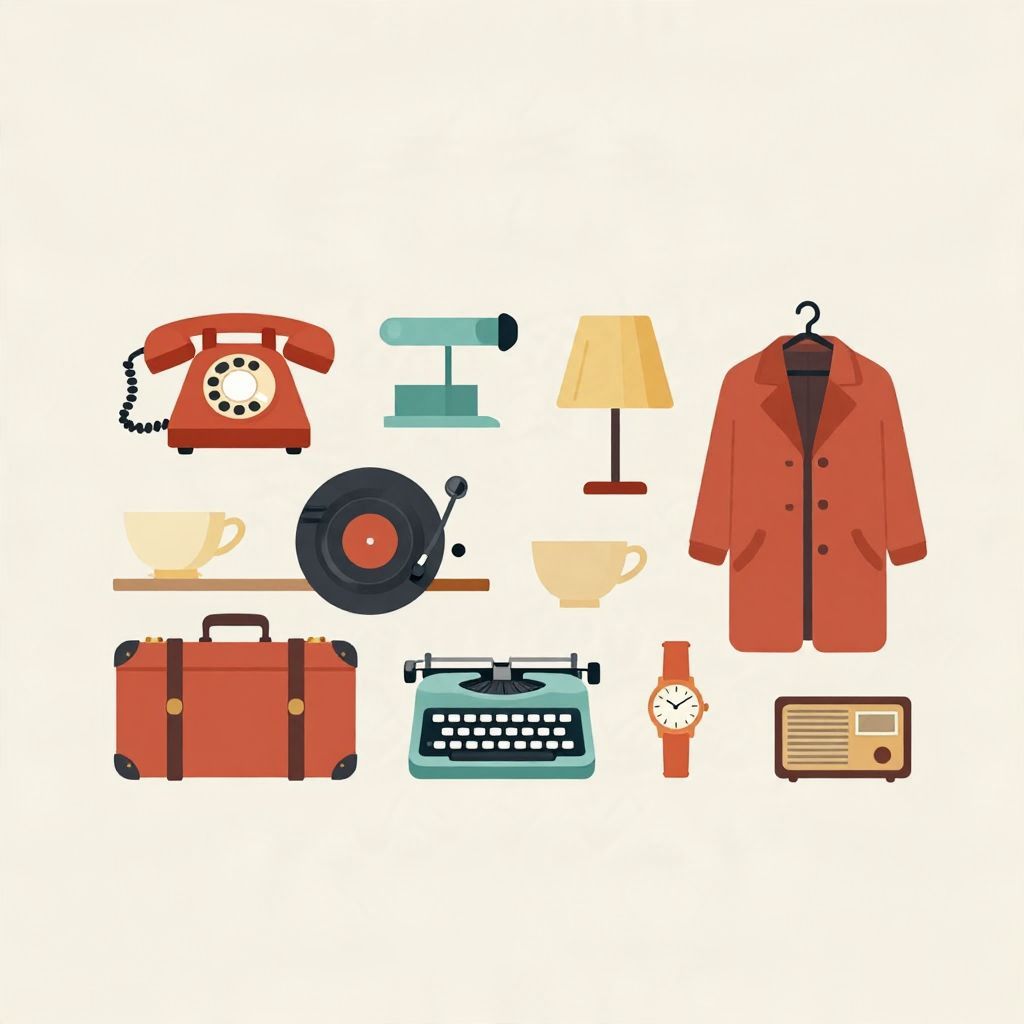
What makes something vintage is not just age, but age combined with cultural meaning, style, and survival. The word is used for clothing, furniture, cars, records, and many other objects, yet its boundaries are flexible and often debated.
Historically, “vintage” developed from older language about wine and harvests, then expanded in the 20th century into a term for objects from a recognizable earlier era. Today, it usually suggests something old enough to feel historically distinct, but not necessarily ancient or antique.
What makes something vintage?
Something is usually called vintage when it comes from an earlier period, typically at least 20 to 30 years old, and still reflects the style, craftsmanship, or cultural identity of its time. Unlike “antique,” which often implies 100 years or more, “vintage” is a looser category shaped by taste, collecting, and historical memory.
The origins of the word “vintage”
The term began in the world of wine. In English, “vintage” originally referred to the wine harvest or the year a wine was made, from the older French vendange and ultimately Latin roots connected to harvesting. For centuries, the word was tied to quality, season, and origin rather than to old objects in general.
From harvest to heritage
By the 18th and 19th centuries, “vintage” could still mean a specific year of wine, but it gradually took on broader associations: age, distinction, and the value of something produced in a particular era. That shift mattered because it linked the word not simply to oldness, but to the idea that time itself could add character.
When did “vintage” start meaning old objects?
The modern use of “vintage” for clothing, furniture, and collectibles became common in the 20th century, especially as mass production, fashion cycles, and nostalgia changed how people thought about older goods. As newer products arrived faster, earlier styles began to stand out as belonging to a clearly identifiable past.
The rise of collecting and style consciousness
In the late 19th and early 20th centuries, antiques were already being collected, but “vintage” filled a different space. It described items that were old enough to be interesting and authentic, yet not so old that they belonged mainly to museums or elite antiquarian collecting. This made the term especially useful for fashion, décor, and design.
The difference between vintage, antique, and retro
These words are often confused, but they describe different relationships to the past. “Vintage” usually means an original object from an earlier era. “Antique” generally means much older, often 100 years or more. “Retro” usually refers to a newer object made in an older style.
A simple comparison
- Vintage: an original item from a previous era, often 20–30+ years old.
- Antique: an object usually 100 years old or more.
- Retro: a modern item designed to imitate an earlier style.
These categories are not fixed by a single universal law. Different industries, countries, and collectors use the terms differently. A 1980s jacket may be vintage in fashion, while a 1980s car may still feel too new for some collectors to use that label.
Why age alone does not make something vintage
Age is important, but it is not enough by itself. A very old object may be damaged, ordinary, or historically unremarkable. Something becomes vintage when age combines with recognizability: it reflects a past style, production method, or social moment that people can identify and value.
Historical significance and cultural recognition
Vintage status often depends on whether an item captures the look or spirit of its era. A dress from the 1970s may be vintage because it shows the materials, cut, and aesthetic of that decade. A mass-produced household item from the same period may also be vintage if it represents everyday life in a way people now find meaningful.
The role of craftsmanship, rarity, and condition
Collectors and historians often look at more than date. Craftsmanship, rarity, provenance, and condition all affect whether something is seen as vintage and how valuable it becomes. An object made with distinctive workmanship or linked to a known maker may attract attention even if it was once common.
Condition and authenticity
For many buyers, a vintage object should retain enough original material to show its age honestly. Heavy restoration can reduce that sense of authenticity, although careful conservation may preserve value. In practice, the best vintage pieces often show wear, because that wear confirms they lived through their own time.
How the meaning of vintage changed in the 20th century
The 20th century transformed “vintage” from a term rooted in wine into a broad cultural label. Industrial production made many goods uniform and disposable, while new consumer markets encouraged people to distinguish between the new, the used, and the historically interesting. Vintage became a way to assign value to the recent past.
Fashion and the recycling of style
Fashion was especially important in this shift. Clothing from earlier decades could be worn, sold, or collected as vintage because styles changed quickly and visibly. By the mid-20th century, fashion magazines, secondhand markets, and costume design helped normalize the idea that older garments could be desirable rather than merely outdated.
Design, interiors, and everyday objects
Furniture, lamps, radios, and kitchenware also entered the vintage category as people began to appreciate design history. Mid-century modern pieces, Art Deco objects, and even ordinary household goods gained interest because they represented how people once lived, decorated, and used technology.
Why people value vintage objects
Vintage items matter because they connect present-day life to earlier habits, tastes, and technologies. They can evoke nostalgia, but they also serve as evidence of material culture: the everyday objects through which people worked, dressed, traveled, and decorated their homes.
Memory, identity, and sustainability
For some, vintage is about personal memory, such as clothing styles from childhood or objects associated with family history. For others, it is about identity and taste, especially in fashion and interior design. In recent decades, environmental concerns have also made vintage appealing as a form of reuse rather than replacement.
What historians can learn from vintage objects
Although “vintage” is a popular rather than strictly academic category, historians use similar objects to study social change. Clothing can reveal labor and gender norms, furniture can show domestic life, and consumer goods can illustrate technology, trade, and class. These objects are often more revealing than official records because they show how ordinary people actually lived.
Material culture as historical evidence
Vintage objects are part of material culture, the study of physical things made and used by people in the past. Their fabrics, wear patterns, labels, and manufacturing details can help date them and explain how they were produced and consumed. In this way, vintage is not just a style label; it is a doorway into historical evidence.
How the label is used today
Today, “vintage” is used in both precise and casual ways. In the marketplace, it can mean anything from a genuine mid-century object to something merely inspired by the past. In historical discussion, the term is most useful when it identifies an original item from a recognizable earlier era rather than a modern reproduction.
Popular usage versus strict historical usage
Because the word is flexible, sellers sometimes use it loosely. A historian or collector may ask: Is it original? Is it from the period it claims to represent? Does it still preserve the look and material evidence of its time? Those questions help separate true vintage from imitation or marketing language.
So, what makes something vintage in historical terms?
Historically, something becomes vintage when it is old enough to belong to a clearly earlier period, still retains the character of that period, and is valued for what it reveals about the past. It is not simply old; it is old in a way that feels culturally legible, authentic, and worth preserving.
That is why vintage matters: it turns ordinary objects into historical witnesses. If you want to explore how older objects and styles are preserved and interpreted, see how architecture has changed over time and what cultural preservation means in architecture.