
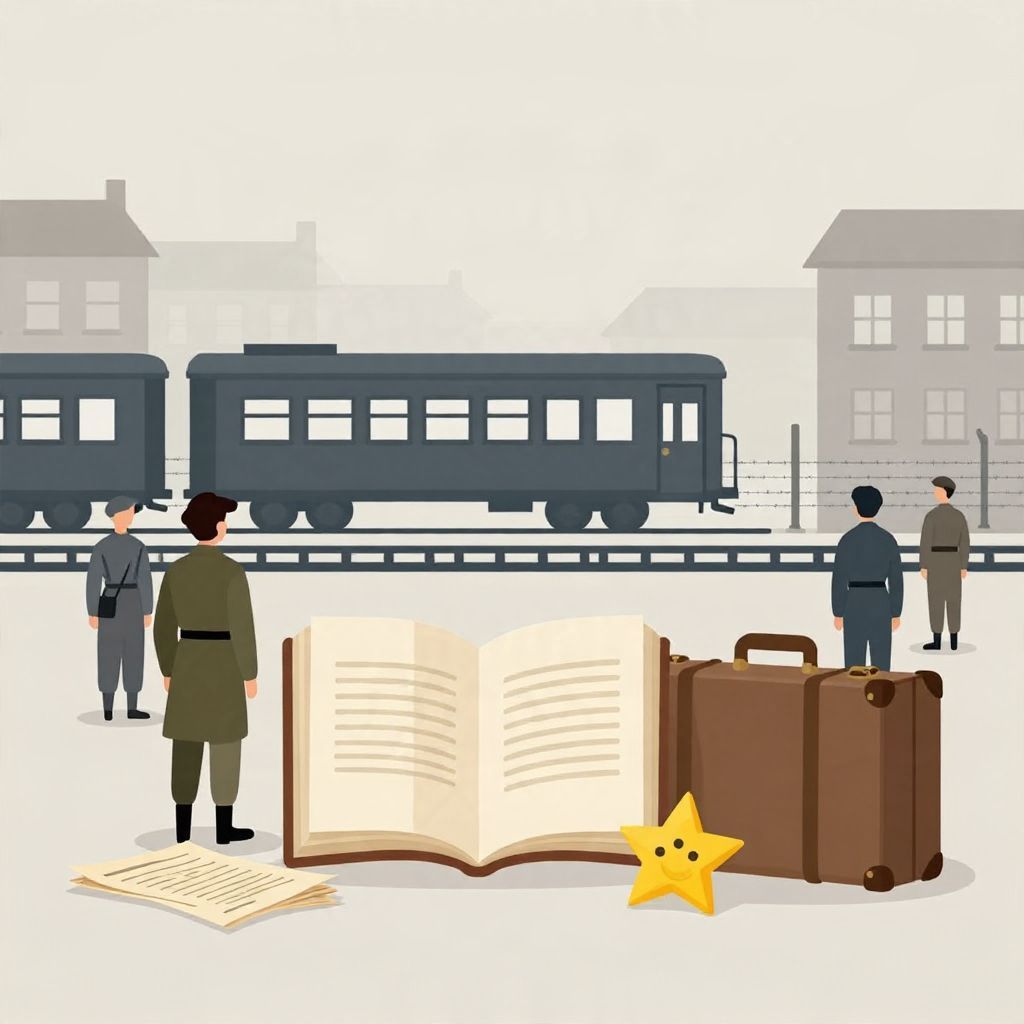
The phrase “What Was The Holocaust Book” is often a search for the meaning, origin, or historical background of the word Holocaust itself. In history, the Holocaust refers to the Nazi genocide of Europe’s Jews during World War II, along with the persecution and murder of millions of other victims. It is one of the most studied and remembered crimes of the 20th century.
Understanding the term matters because it is both a historical event and a word with a long, complicated history. Its meaning changed over time, and its use today carries deep moral and historical weight.
What Was the Holocaust?
The Holocaust was the systematic, state-sponsored persecution and murder of six million Jews by Nazi Germany and its collaborators between 1941 and 1945. The Nazis also targeted Roma, disabled people, Soviet prisoners of war, Poles, political opponents, and others. It was not a single battle or camp, but a continent-wide campaign of exclusion, deportation, forced labor, and mass murder.
Where Did the Word “Holocaust” Come From?
The word holocaust comes from the Greek holokaustos, meaning “completely burned,” and originally referred to a sacrifice consumed by fire. Long before World War II, English speakers sometimes used “holocaust” for large-scale destruction, especially by fire. After 1945, the word became closely associated with Nazi mass murder, especially the genocide of the Jews.
Why the term became common
In the decades after the war, “Holocaust” gradually became the standard English-language term for Nazi genocide, especially in the United States and Britain. Other terms are also used, including Shoah, a Hebrew word meaning “catastrophe” or “destruction.” Some historians and survivors prefer Shoah because “holocaust” can sound religious or imply a sacrificial meaning that does not fit the crime.
How Did the Holocaust Begin?
The Holocaust grew out of Nazi ideology after Adolf Hitler and the Nazi Party rose to power in Germany in 1933. The Nazis believed in racial hierarchy and antisemitism, claiming that Jews were a danger to the German nation. Their policies first isolated Jews from public life, then stripped away rights, property, and citizenship, and finally moved toward mass murder during the war.
From discrimination to genocide
The process did not begin with gas chambers. It began with propaganda, boycotts, legal discrimination, and violence. The Nuremberg Laws of 1935 removed Jewish citizenship and banned marriage or sexual relations between Jews and non-Jews. After the annexation of Austria and the occupation of parts of Europe, Nazi control expanded, and Jewish communities came under even harsher pressure.
War changed the scale
World War II created the conditions for mass killing. Once Germany invaded Poland in 1939 and later the Soviet Union in 1941, millions of Jews came under Nazi rule. Mobile killing squads, called Einsatzgruppen, followed the German army in the east and murdered Jewish communities by mass shooting. By late 1941 and 1942, the Nazis also built extermination camps designed specifically for killing on an industrial scale.
What Happened During the Holocaust?
The Holocaust unfolded through several connected stages: exclusion, ghettoization, forced labor, mass shootings, deportation, and extermination in camps. Jews were forced into overcrowded ghettos, starved, exploited for labor, and deported by rail to killing centers such as Auschwitz-Birkenau, Treblinka, Sobibór, Bełżec, Chełmno, and Majdanek. Many were murdered soon after arrival.
Key features of Nazi persecution
- Legal exclusion: Jews were removed from schools, professions, and public life.
- Ghettos: In occupied Poland and elsewhere, Jews were confined to sealed urban districts.
- Mass shootings: Entire communities were murdered in ravines, forests, and pits, especially in eastern Europe.
- Deportations: Jews were transported in cattle cars to camps across occupied Europe.
- Extermination camps: These camps were built for systematic killing, not just imprisonment.
The Final Solution
Nazi leaders used the phrase Final Solution to the Jewish Question for their plan to annihilate European Jewry. Historians generally place the shift to continent-wide extermination in 1941, though the policy developed through a series of decisions rather than one single signed order. The Wannsee Conference in January 1942 coordinated bureaucratic implementation, but killings were already underway.
Who Were the Main Victims?
The Jewish people were the central target of the Holocaust, and around six million were murdered. But Nazi racial policy and wartime violence also killed millions of others. The Roma and Sinti were persecuted as racial enemies; disabled people were murdered in the Aktion T4 euthanasia program; Polish civilians and Soviet prisoners of war suffered enormous losses; and political opponents, Jehovah’s Witnesses, and homosexual men were also persecuted.
Why historians distinguish the Jewish genocide
Historians usually reserve the term “Holocaust” primarily for the genocide of the Jews because the Nazis aimed at the total destruction of Jewish life across Europe. At the same time, the broader Nazi system of terror affected many groups. Recognizing this wider persecution does not diminish the centrality of Jewish suffering; it helps explain the full reach of Nazi violence.
How Did People Resist?
Resistance took many forms, though it was extremely difficult under Nazi rule. Some Jews smuggled food, organized education, preserved religious and cultural life, or documented events in secret. Others joined armed uprisings, such as the Warsaw Ghetto Uprising in 1943. In camps and ghettos, resistance was often about survival, solidarity, and bearing witness rather than military victory.
Examples of resistance
- Armed revolt: The Warsaw Ghetto Uprising became the best-known Jewish armed resistance.
- Secret archives: Some victims recorded daily life and crimes for future generations.
- Escape and rescue: A smaller number fled, hid, or were helped by rescuers.
- Spiritual resistance: Maintaining identity, education, and memory was itself a form of defiance.
How Was the Holocaust Ended?
The Holocaust ended with the defeat of Nazi Germany in 1945. As Allied armies advanced, many camps were liberated and evidence of the crimes became visible to the world. Survivors emerged from ghettos, camps, hiding places, and forced labor sites, though many were still displaced and had nowhere to return. The war’s end did not immediately bring justice or recovery.
Aftermath for survivors
Survivors faced homelessness, trauma, and the loss of families and communities. Many remained in displaced persons camps before emigrating to places such as the United States, Palestine/Israel, Canada, Australia, and elsewhere. The Holocaust also reshaped Jewish life, postwar politics, and international efforts to define crimes against humanity and genocide.
Why Does the Holocaust Matter in History?
The Holocaust is central to modern history because it shows how a modern state, using bureaucracy, propaganda, law, police power, and war, can organize mass murder. It also remains a warning about racism, dehumanization, authoritarianism, and the dangers of unchecked hatred. Its study is not only about the past; it is about how societies can fail ethically and politically.
Historical significance
After 1945, the Holocaust influenced human rights language, genocide studies, Holocaust education, and memorial culture around the world. It also became a defining event in Jewish history and in the memory of Europe. Scholars continue to study how ordinary institutions, collaborators, bystanders, and perpetrators made genocide possible.
Common Questions About the Holocaust Term
Is “Holocaust” the same as “Shoah”?
They usually refer to the same historical event, but “Shoah” is the Hebrew term most often used in Jewish contexts. “Holocaust” is more common in English-language public history. Both are used, though some people prefer one over the other for cultural or ethical reasons.
Was the Holocaust only about Jews?
No. The Nazi regime persecuted many groups, but the genocide of the Jews was the central aim of the Holocaust. Other victims were also targeted and murdered in large numbers, and their suffering is an essential part of the wider history of Nazi violence.
Did the Nazis plan it all at once?
Not in a single moment. The Holocaust developed step by step, through radical ideology, escalating violence, wartime expansion, and increasingly coordinated murder. Historians debate the exact timing of decisions, but they agree that Nazi policy moved from exclusion to genocide during the war.
The Holocaust was the Nazi regime’s attempt to destroy an entire people, and the word itself has become a powerful historical term for that catastrophe. If you want to understand the machinery of Nazi power and the wider climate of fear and repression, see also what the Gestapo was and what the Great Fear was.