
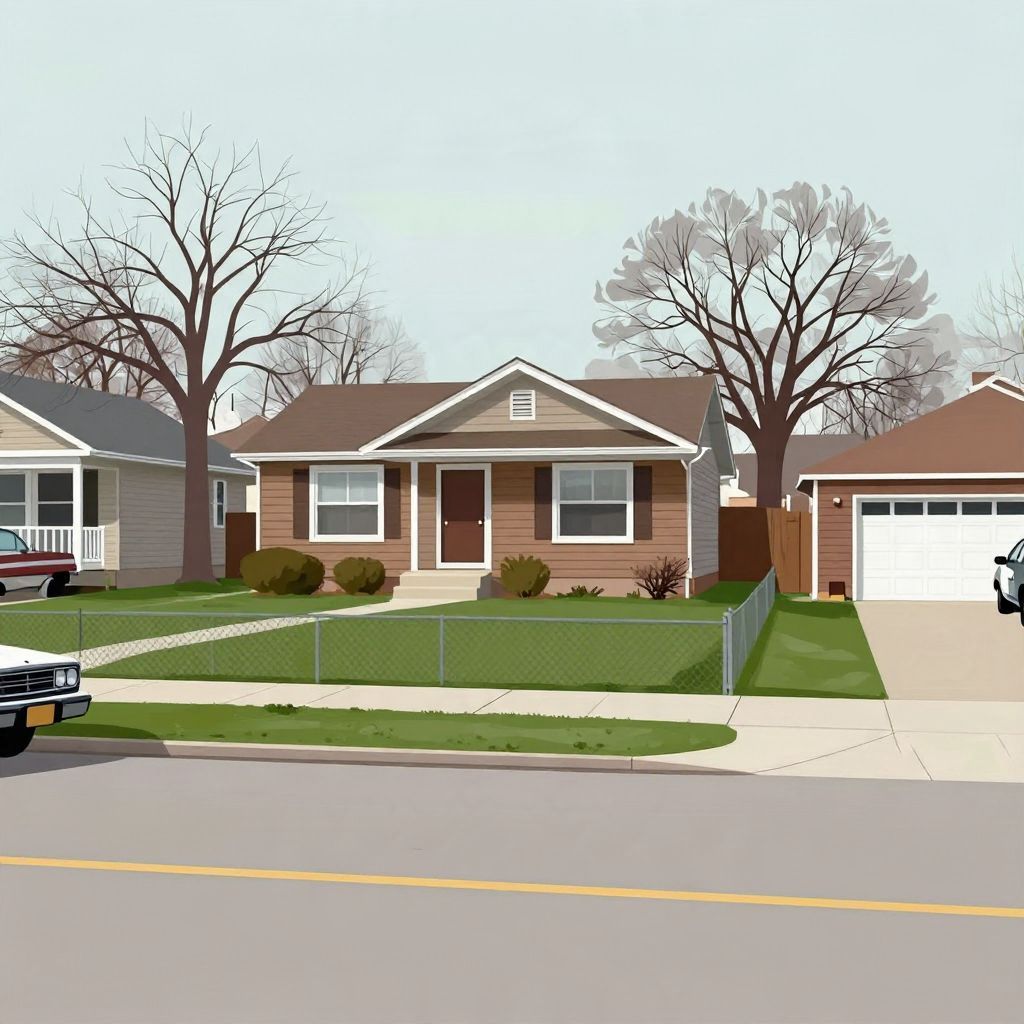
John Wayne Gacy lived in the Chicago area for most of the period when he became infamous, but the most historically significant address associated with him was his home in Norwood Park Township, Illinois, in suburban Chicago. That house, at 8213 West Summerdale Avenue in Des Plaines, became the center of the investigation into the murders linked to him.
To answer the question precisely, Gacy also lived earlier in Waterloo, Iowa, and later in the broader Chicago suburbs, but the Des Plaines residence is the location most often meant when people ask where he lived. Its history matters because the house was not just a private home; it became a crime scene that shaped public memory of one of the most notorious criminal cases in modern U.S. history.
Where Did John Wayne Gacy Live?
John Wayne Gacy lived primarily in the Chicago suburbs, especially at 8213 West Summerdale Avenue in Des Plaines, Illinois, from 1971 until his arrest in 1978. He had earlier lived in Illinois and Iowa, but the Des Plaines house is the key residence tied to his crimes. It was there that investigators later found the remains of many of his victims beneath and around the property.
The Des Plaines house
The best-known answer is the two-story house in Des Plaines, a northwest suburb of Chicago. Gacy bought the property in 1971 and lived there during the years when he worked as a contractor, hosted neighbors and local officials, and concealed the crimes that made him infamous. The house stood in a middle-class residential neighborhood, which helped him maintain a public image of normalcy.
That ordinary setting is part of why the case shocked the public. Gacy was not living in an isolated rural area or a hidden compound. He lived in a dense suburban community where people saw him as a businessman, civic participant, and, for a time, a seemingly respectable neighbor.
Other places associated with his life
Before settling in the Chicago suburbs, Gacy had lived in Waterloo, Iowa, where he spent part of his youth and early adulthood. He was born in Chicago in 1942, so Illinois remained central to his life even when he was not living there continuously. As an adult, he moved through different parts of the Chicago area, but none became as historically significant as the Des Plaines address.
If the question is asked in a broader biographical sense, the answer is not one single house but a sequence of residences in the Midwest. Still, for historical and criminal-history purposes, the Des Plaines home is the location most directly associated with John Wayne Gacy.
Why the Des Plaines Address Became Historically Important
The house at 8213 West Summerdale Avenue became historically important because it was the place where police discovered evidence of Gacy’s murders in 1978. The property was searched after the disappearance of 15-year-old Robert Piest led investigators to Gacy. During the search, authorities uncovered human remains in the crawl space and elsewhere on the property, later linking many victims to the home.
This transformed the residence from a suburban house into a landmark of criminal history. The address became synonymous with the case because it represented the hidden violence beneath an outwardly ordinary life. In the public imagination, the house came to symbolize the gap between appearance and reality in one of the most disturbing murder investigations in American history.
A suburban setting that helped conceal suspicion
Gacy’s neighborhood and lifestyle mattered. He presented himself as a contractor, a community-minded man, and even a political volunteer in local circles. The suburban environment of the 1970s, with its emphasis on privacy and trust in neighbors, helped him avoid immediate suspicion. That does not mean the neighborhood caused the crimes; rather, it created conditions in which he could maintain a double life for years.
Historians and crime researchers often note that serial offenders sometimes exploit ordinary social expectations. In Gacy’s case, the home was central to that pattern: it was both a domestic space and the place where he concealed evidence of murder.
What Was John Wayne Gacy’s Life Like Before Des Plaines?
John Wayne Gacy was born in Chicago, Illinois, in 1942. His early life included family instability and periods spent in Illinois and Iowa. As a young adult, he worked in business and entered public life in the Chicago area. Before the murders came to light, he had already built a public identity that seemed at odds with the crimes later attributed to him.
His move into the Chicago suburbs was important because it placed him in a setting where he could own property, run a business, and blend into local life. By the early 1970s, he had established the residence that would later become infamous.
From Iowa to suburban Chicago
Gacy’s time in Waterloo, Iowa, is part of his broader biography, but it is not the residence most people mean when they ask where he lived. The Iowa period belongs to his earlier life, while the Des Plaines home belongs to the criminal case itself. That distinction matters historically because the public memory of Gacy is tied less to his childhood homes than to the suburban house where investigators found the remains of victims.
What Happened to the House After the Crimes?
After the investigation, the Des Plaines house became a site of public fascination and controversy. It was eventually demolished in 1979. The property did not remain a preserved museum or memorial in the way some historic sites do; instead, it was removed, in part because of the intense stigma attached to the location and the practical difficulty of maintaining it as a private residence.
The demolition reflected a common response to places associated with notorious crimes: communities often struggle between preserving history and removing a site that has become emotionally unbearable. In this case, the house’s destruction did not erase its historical significance. It only confirmed how deeply the address had entered public memory.
Why the address still matters
Even though the building no longer stands, the address remains important in historical accounts because it anchors the investigation in a specific place and time. The house is part of the documented geography of the case, helping explain how police, prosecutors, and journalists reconstructed Gacy’s movements and the timeline of the murders.
For students of modern U.S. history, the site also illustrates how local suburban spaces can become central to national news. The case unfolded in a residential neighborhood, but its consequences reached far beyond Des Plaines.
How Historians and the Public Remember Gacy’s Residence
John Wayne Gacy’s residence is remembered less as a home than as a crime site. That distinction is important. A house can be part of a person’s biography without being historically significant, but in this case the residence became inseparable from the crimes. The address is now discussed in relation to victim identification, police investigation, media coverage, and the broader history of serial murder in the United States.
Public memory of the house has also been shaped by the larger cultural fascination with Gacy himself. He was sometimes described in the media as “the killer clown” because he performed as “Pogo the Clown” at charitable events. That image, while widely recognized, should not obscure the historical reality: the significance of the residence lies in the investigation and the victims, not in the sensational label attached to him.
Historical caution about sensationalism
When discussing where Gacy lived, it is easy to drift into lurid detail. A careful historical approach keeps the focus on verified facts: the location of the house, the period he lived there, the discovery of evidence, and the aftermath. It is also important to remember that the site’s notoriety comes from the suffering of victims and the impact on the community, not from the personality of the killer.
Key Facts About Where John Wayne Gacy Lived
- Birthplace: Chicago, Illinois, 1942
- Early life residence: Included periods in Iowa, especially Waterloo
- Main notorious residence: 8213 West Summerdale Avenue, Des Plaines, Illinois
- Years at the Des Plaines house: From 1971 until his arrest in 1978
- Historical importance: Site where human remains were discovered during the investigation
- Aftermath: The house was demolished in 1979
Why This Location Still Comes Up in History Searches
People continue to ask where John Wayne Gacy lived because the address helps explain one of the most notorious criminal cases of the 20th century. The location is not just a biographical detail; it is part of the evidence trail, the neighborhood history, and the social context of the crimes. Knowing where he lived helps place the case in its real setting: suburban Chicago in the 1970s.
It also shows how ordinary places can become historically charged. A suburban house, once just another family residence, became a symbol of hidden violence, investigative persistence, and the limits of appearances.
In short, John Wayne Gacy lived most notably at 8213 West Summerdale Avenue in Des Plaines, Illinois, the house most closely tied to his crimes and arrest. If you want to explore the broader story of his case, you may also find related background useful in how John Wayne Gacy died and in broader crime-history context such as what happened to Jimmy Hoffa.