
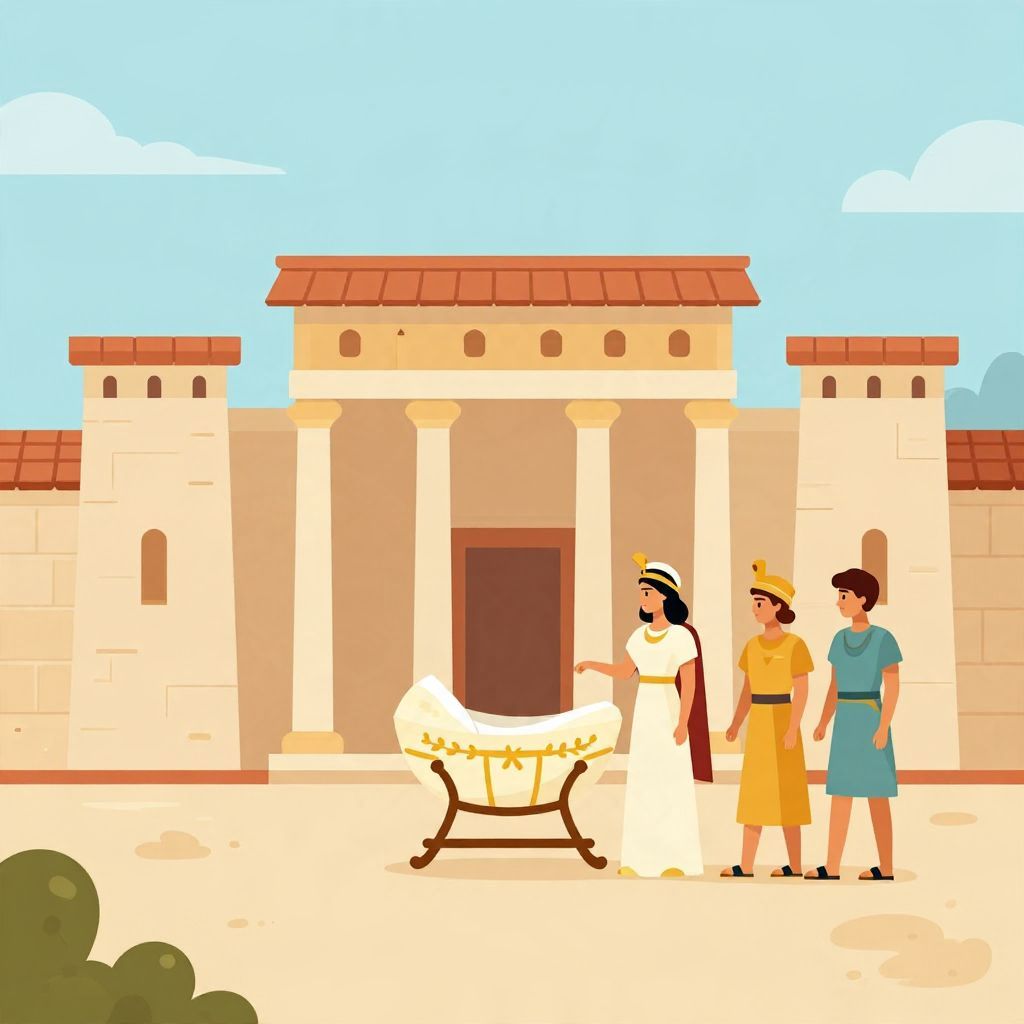
Where was Alexander the Great born? The short answer is Pella, the royal capital of ancient Macedonia, in the northern Greek world. He was likely born there in 356 BCE, though ancient sources differ on the exact day and modern historians treat the precise date with caution.
His birthplace matters because it helps explain how Alexander became the ruler who would transform the ancient Mediterranean and Near East. Pella was not just a city; it was the political and cultural center of the Macedonian kingdom that shaped his early life, education, and ambitions.
Where Was Alexander the Great Born?
Alexander the Great was born in Pella, the capital of the Kingdom of Macedon, in what is now northern Greece. Most historians place his birth in 356 BCE. While the exact day is uncertain, the location is well established by ancient tradition and by the fact that Pella was the Macedonian royal seat during his father Philip II’s reign.
Pella: The Royal Capital of Macedon
What kind of place was Pella?
Pella was the administrative and ceremonial center of Macedon in the fourth century BCE. It sat in a fertile region near the Thermaic Gulf, with access to trade routes, farmland, and the power structure of the Macedonian court. By the time Alexander was born, Pella had become the stage for royal politics, diplomacy, and military planning.
The city was not a Greek polis in the same sense as Athens or Sparta, but it was deeply connected to the wider Greek world. Macedonian kings claimed Greek ancestry and participated in Greek religious and athletic traditions, even as many southern Greeks viewed Macedon as semi-peripheral or culturally distinct.
Why Pella was important to Alexander’s early life
Being born in Pella meant Alexander entered a court environment shaped by ambition and warfare. His father, Philip II, had turned Macedon into a major military power. The royal court exposed Alexander to generals, envoys, philosophers, and nobles from an early age, giving him a political education few children in the ancient world could match.
Pella also symbolized legitimacy. As the son of the reigning king and queen, Alexander’s birth there reinforced his place within the Macedonian royal house, the Argead dynasty. His birthplace was therefore not just a geographic fact but part of the story of how he was positioned to inherit power.
How Certain Is the Birthplace?
The identification of Pella as Alexander’s birthplace is widely accepted, but the exact circumstances are not documented in a modern sense. Ancient biographers wrote centuries after his lifetime and sometimes preserved traditions rather than verifiable records. Even so, the convergence of historical evidence strongly supports Pella as the correct answer.
What historians can say with confidence
- Alexander was born in 356 BCE, during the reign of Philip II.
- Pella was the Macedonian capital at that time.
- Ancient tradition consistently associates Alexander’s birth with the Macedonian royal court.
- There is no serious historical case that places his birth in another city as the main alternative.
Why the exact date is less certain
The exact day of Alexander’s birth is less secure because ancient chronology can be inconsistent. Later traditions linked his birth to notable events and omens, but those details belong more to legend and royal storytelling than to firm historical record. Historians therefore prefer the broader dating of 356 BCE.
Historical Background: Macedon in the Fourth Century BCE
Philip II and the rise of Macedon
To understand Alexander’s birthplace, it helps to understand the kingdom he was born into. When Philip II came to power, Macedon was not yet the dominant force it would become. Philip reorganized the army, strengthened royal authority, and expanded Macedonian influence across Greece. Pella was the political center of this transformation.
Alexander’s birth in Pella occurred during a period of rapid state-building. The city would have reflected the energy of a kingdom on the rise: court ceremonies, military preparations, foreign alliances, and competition among nobles. This environment helped shape Alexander’s sense of kingship and his later drive for conquest.
Royal family and succession politics
Alexander was born to Philip II and Olympias, a princess from Epirus. His birth took place within a royal household marked by dynastic rivalry, succession concerns, and political marriages. In Macedon, the king’s family was not insulated from politics; it was the center of politics.
That matters because Alexander’s birthplace was also the place where his future legitimacy was formed and contested. Macedonian succession was never simple, and later struggles over his identity and authority were tied to the prestige of being born into the royal capital.
Legends Surrounding Alexander’s Birth
Omens and divine claims
Ancient writers often surrounded Alexander’s birth with omens. Some stories claimed extraordinary signs appeared on the night he was born, and later traditions linked him to divine parentage. These tales were part of the ancient habit of framing great rulers as destined from birth.
Such stories are historically important, but they should not be confused with evidence. They tell us how later generations wanted to understand Alexander, not necessarily what happened in a literal sense. The secure historical point remains simple: he was born in Pella, within the Macedonian royal court.
Did Alexander’s birthplace become part of his legend?
Yes. In antiquity, birthplace could carry symbolic weight. Being born in the royal capital suggested legitimacy, power, and divine favor. For Alexander, whose life was later mythologized, Pella became part of the larger narrative that he was marked out for greatness from the beginning.
Why the Birthplace Matters in Alexander’s Story
It explains his political formation
Alexander did not emerge from nowhere. He was formed by the institutions and ambitions of Macedon. Pella placed him at the center of a monarchy that was becoming increasingly sophisticated, militarized, and outward-looking. His later campaigns in Asia were rooted in the power base that had developed at his birthplace.
It connects him to the Greek and Macedonian worlds
Questions about Alexander’s birthplace often lead to broader debates about identity. Pella was in Macedon, a kingdom that was culturally connected to Greece but also politically distinct. Alexander’s birth there reflects that dual context. He was a Macedonian king who operated within a Greek cultural sphere and later ruled a vast empire that included many peoples.
It helps explain his education
Because he was born in the royal capital, Alexander had access to elite instruction and court culture. His education later included tutoring by Aristotle, but his early formation began in Pella, where he absorbed the expectations placed on a royal heir. The city was the starting point of a life that would move from local kingship to imperial rule.
What Pella Was Like in Alexander’s Time
Archaeological remains show that Pella was a substantial and well-planned city. It featured public spaces, elite residences, and urban infrastructure that reflected Macedon’s growing wealth. Although the city has changed over time, its remains help historians imagine the world into which Alexander was born.
For Alexander, Pella would have been both familiar and politically charged. It was the place of family life, royal ceremony, and court intrigue. It was also the launch point for the Macedonian expansion that would eventually carry him far beyond Greece and into Egypt, Persia, and Central Asia.
Common Misunderstandings About Alexander’s Birthplace
Was he born in Greece or Macedonia?
Both answers can be used depending on the historical framing, but they are not identical. Pella was in ancient Macedon, which is located in the region of modern northern Greece. In Alexander’s own time, Macedon was a kingdom with its own political identity, even though it was closely tied to the Greek world.
Was he born in a palace?
It is plausible that Alexander was born at or near the royal residence in Pella, but the exact building is not securely known. Ancient sources do not give a precise architectural description of the birth site. What is certain is the broader setting: the Macedonian royal capital.
Did his birthplace determine his greatness?
No single birthplace determines a historical figure’s achievements. But Pella mattered because it placed Alexander in the center of power, strategy, and dynastic ambition. His later success depended on many factors: his father’s reforms, his own abilities, military organization, and the opportunities created by the Macedonian state.
Alexander’s Birthplace in Historical Memory
Over time, Pella became inseparable from Alexander’s legend. For later generations, the city represented the beginning of a story that stretched across three continents. Ancient historians, medieval writers, and modern readers have all returned to his birthplace as a way of understanding how an extraordinary ruler came to be.
Today, the question “Where was Alexander the Great born?” remains popular because it is simple on the surface but rich in historical meaning. The answer is Pella, but the deeper story is about a royal capital, a rising kingdom, and the making of one of antiquity’s most famous figures.
In short, Alexander the Great was born in Pella, the capital of Macedon, around 356 BCE. That birthplace placed him at the heart of a powerful monarchy and set the stage for the campaigns that would reshape the ancient world. If you want to explore more about his life and legacy, you may also enjoy reading about what Alexander the Great looked like and where Alexander the Great is buried.