
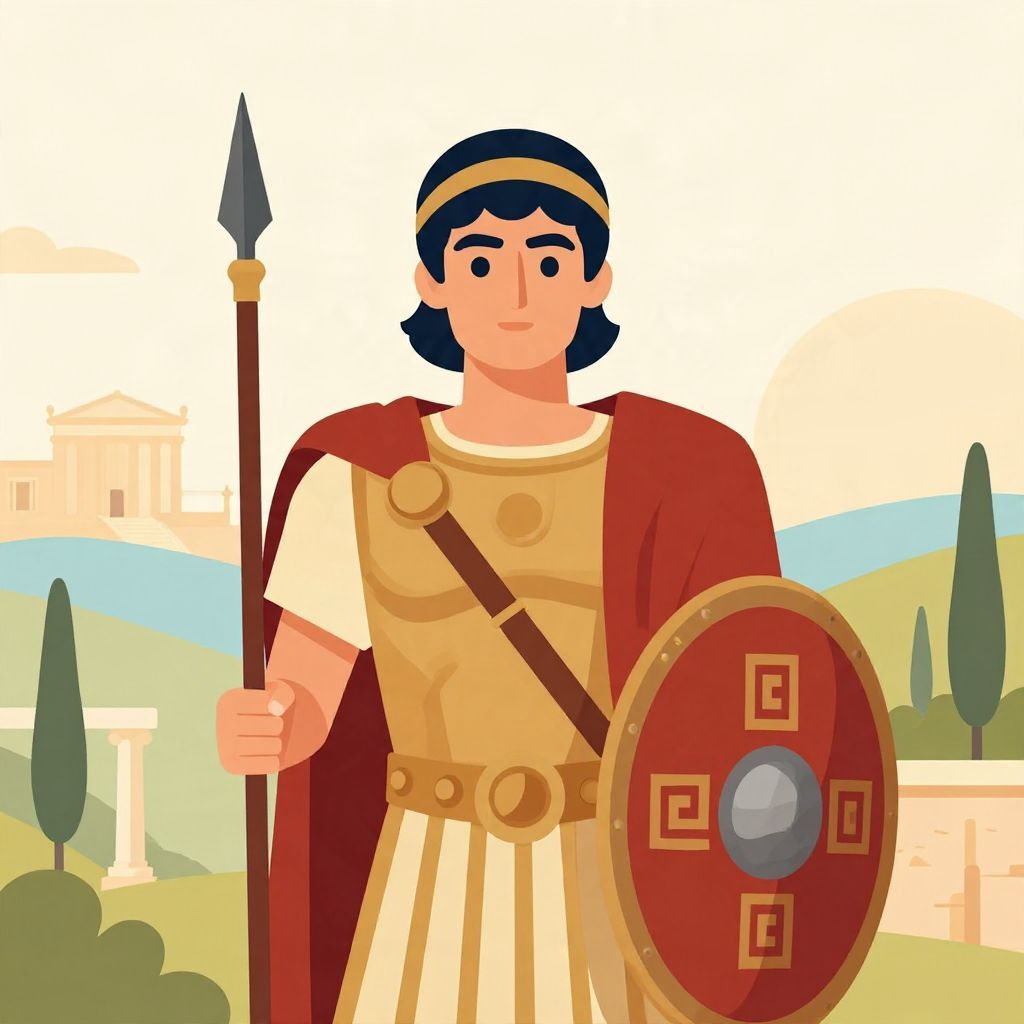
What did Alexander the Great look like? The short answer is that we do not know with certainty, but ancient portraits and literary descriptions suggest a young, clean-shaven Macedonian king with a lean face, expressive eyes, and a distinctive hairstyle. Most surviving images were created after his death, so they reflect both memory and idealization.
Because Alexander became one of history’s most famous rulers, later artists, coin-makers, and writers tried to capture his image for political and cultural reasons. That makes the question less about a single exact likeness and more about how ancient people wanted Alexander to be seen.
What Did Alexander the Great Look Like?
Alexander the Great was probably of medium height, athletic build, fair-to-light complexion by ancient standards, and youthful appearance, with a strong face, prominent eyes, and thick hair. He was usually shown clean-shaven, unlike many later Hellenistic rulers. However, no surviving portrait can be treated as a perfect photograph of his real face.
The Best Ancient Evidence for Alexander’s Appearance
Our main evidence comes from coins, sculptures, mosaics, and written descriptions made in or after Alexander’s lifetime. These sources do not all agree, but together they show a ruler presented as youthful, energetic, and almost superhuman in charisma. The closer a source is to his own era, the more useful it is, though even early images were shaped by politics.
Portraits on coins and statues
Some of the most important visual evidence comes from later Hellenistic coins and statues that likely copied earlier royal portraits. These images often show Alexander with a smooth face, a slightly tilted neck, and a dramatic sweep of hair. The famous “anastole,” or upward-flung hair, became one of his signature visual traits.
One of the best-known sculptural types is the so-called Alexander portrait tradition associated with Lysippos, the court sculptor who worked during Alexander’s reign. Ancient writers claimed Lysippos captured Alexander’s energy and physical grace better than others did. Even so, surviving copies are Roman-era reproductions, not original Macedonian works.
Written descriptions from antiquity
Ancient authors described Alexander as handsome, but they also emphasized his unusual presence rather than precise measurements. Some accounts stress his bright or piercing gaze, his fair skin, and his tendency to appear youthful even as he aged. Others note that he was physically robust and capable of enduring the hardships of campaign life.
These descriptions matter, but they should be used cautiously. Ancient biographers often aimed to portray character through appearance, so a writer describing Alexander’s eyes or hair may have been trying to signal greatness, ambition, or divine favor rather than provide neutral observation.
How Reliable Are the Famous Images of Alexander?
The most recognizable images of Alexander are not straightforward likenesses. They are historical portraits filtered through propaganda, memory, and artistic convention. In the ancient world, rulers were often shown as they wanted to be remembered, not necessarily as they looked in daily life.
Why idealization mattered
Alexander’s successors ruled competing kingdoms after his death in 323 BCE, and many of them used his image to legitimize their own power. A youthful, heroic Alexander helped present their dynasties as heirs to his conquest. That meant his face was often made more handsome, more noble, and more timeless than reality may have been.
Greek and Macedonian art also had its own ideals. Kings were commonly shown with controlled features, athletic bodies, and a sense of divine favor. A portrait could communicate authority, courage, and charisma even if it did not preserve exact details such as nose shape or jawline.
What historians can and cannot say
Historians can say Alexander was almost certainly depicted as youthful, clean-shaven, and physically vigorous, with a distinctive hairstyle and intense expression. They cannot say with confidence exactly how tall he was, the precise color of his eyes, or the exact shape of his face. Those details remain debated because the evidence is indirect and often stylized.
Alexander’s Appearance in Historical Context
Alexander’s looks mattered because appearance was part of kingship in the ancient Mediterranean. A ruler’s body, dress, and portrait were political tools. For a young conqueror who built an empire from Greece to Egypt and into Central Asia, visual image helped define authority across enormous cultural distances.
The Macedonian royal style
As a Macedonian king, Alexander belonged to a warrior elite that valued hunting, military skill, and aristocratic display. His appearance likely reflected that world: practical in campaign, but carefully composed in official art. The clean-shaven face seen in many portraits distinguished him from later Hellenistic rulers who preferred beards as symbols of maturity and philosophy.
The role of divine association
Alexander also encouraged comparisons with heroes and gods. In some traditions he was linked to Heracles, Achilles, and even Zeus-Ammon. Artistic portrayals could therefore blur the line between realistic likeness and symbolic image. A more idealized face helped communicate that he was not just a king, but a ruler of extraordinary destiny.
What Ancient Sources Suggest About His Face and Body
Although no source gives a complete modern-style description, several recurring features appear in ancient traditions. Taken together, they offer a plausible reconstruction rather than an exact portrait.
- Age and youthfulness: He is usually depicted as young, especially in portraits from the years of conquest.
- Hair: Thick hair, often arranged with an upward sweep over the forehead.
- Face: Smooth, clean-shaven, and idealized rather than heavily bearded.
- Expression: Alert, intense, and commanding, sometimes with a slightly upward gaze.
- Build: Athletic and capable of military exertion, though not described as exceptionally large.
Some later legends tried to make Alexander physically extraordinary in every way, but the most plausible picture is more human: a striking, energetic young king whose appearance matched the image of a charismatic commander.
Did Alexander Have Any Distinctive Physical Traits?
Several famous details are often repeated, but not all are firmly established. Ancient sources mention that Alexander may have had one eye that looked different from the other in some portraits, though this is not secure evidence of a real physical condition. Likewise, modern claims about his exact height or eye color are speculative.
The question of eye color and complexion
Some popular retellings describe Alexander as having blue or light eyes and a pale complexion. These details may be influenced by artistic convention or later imagination. Ancient Mediterranean populations were diverse, and the sources do not provide enough certainty to confirm such specifics.
The famous “tilted neck”
One recurring feature in portrait types is a slight tilt of the head or neck. This may have been a stylistic choice intended to suggest energy, thoughtfulness, or divine inspiration. It should not be read as a medical diagnosis. In art history, such details often carry symbolic meaning rather than literal accuracy.
How Alexander’s Image Changed After His Death
Alexander died in Babylon in 323 BCE, and after that his image became even more powerful than his actual body had been in life. Successor kings, cities, and later Roman rulers all reused his likeness to connect themselves to his legacy. As his empire fragmented, his face became a symbol of unity, conquest, and prestige.
From ruler to legend
In the centuries after his death, Alexander’s image moved from royal portrait to cultural icon. Artists emphasized his youth, beauty, and vigor because those qualities fit the legend of a man who conquered much of the known world before age 33. The more famous he became, the less important exact realism often was.
Roman admiration and reuse
The Romans admired Alexander deeply. They copied Greek portraits, collected his stories, and used his image in their own political culture. Roman reproductions are valuable because they preserve older artistic traditions, but they also show how Alexander had already become a model of heroic leadership rather than simply a Macedonian king.
Why the Question Still Matters
Asking what Alexander the Great looked like is really a question about how history remembers power. His appearance was not preserved in a single definitive image, but in a network of portraits and stories shaped by admiration, propaganda, and artistic ideals. That makes him one of the best examples of how ancient fame could outlast physical reality.
For modern readers, the uncertainty is part of the story. Alexander’s image survives not because we can reconstruct every feature with certainty, but because ancient people repeatedly chose to represent him as youthful, commanding, and exceptional. In that sense, his “look” is as much a historical creation as a biological fact. For a related comparison in historical image-making, see what Vikings looked like.