
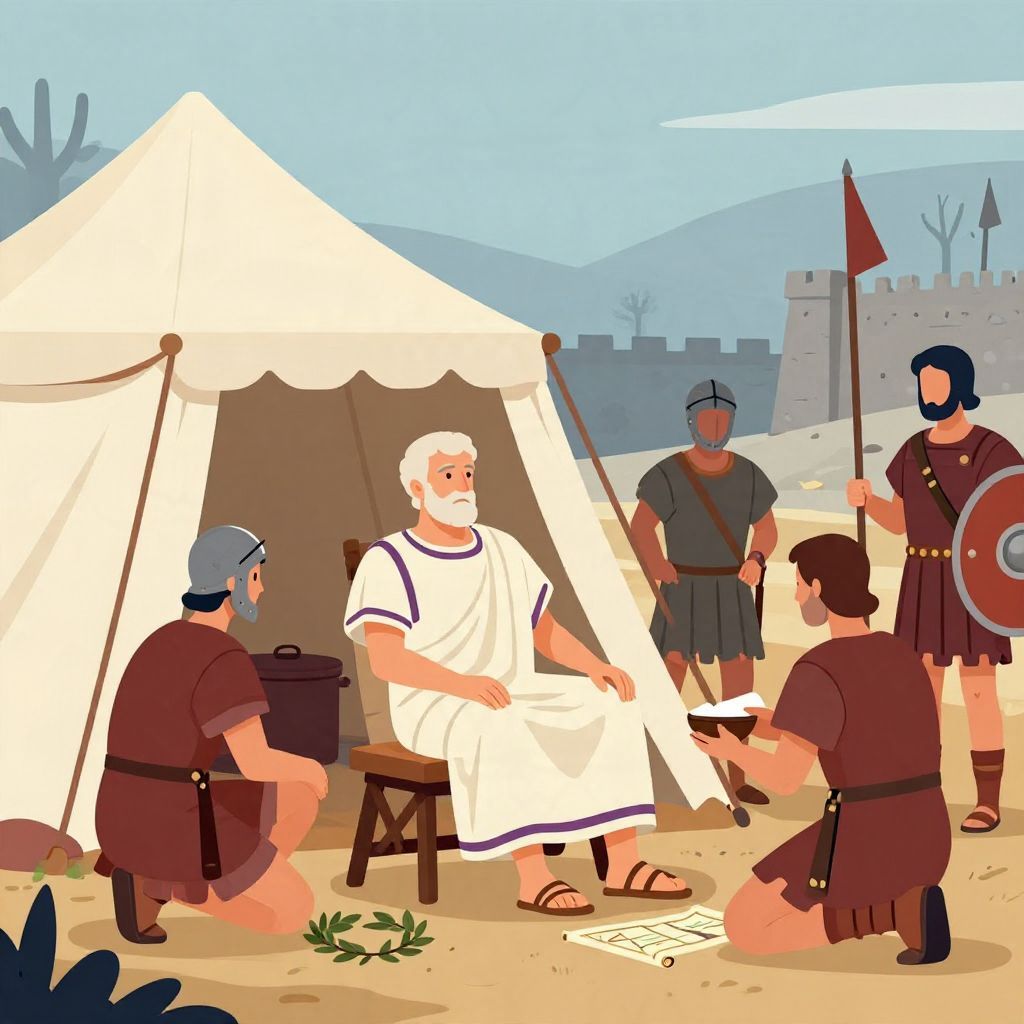
Marcus Aurelius died in March 180 CE, most likely of a natural illness while on campaign near Vindobona or Sirmium along the Danube frontier. Ancient sources do not give a modern medical diagnosis, but they agree that he fell ill during the final phase of the Marcomannic Wars and did not recover.
His death ended the reign of the last of the so-called “Five Good Emperors” and marked a major turning point for the Roman Empire. It also opened the way for his son, Commodus, whose rule would look very different from Marcus’s own.
How Did Marcus Aurelius Die?
Marcus Aurelius died in 180 CE from an illness, probably a fever or plague-related disease contracted during military operations on the northern frontier. The exact cause is unknown, but historians generally reject the idea of assassination. His death appears to have been natural and occurred after he became sick while campaigning against Germanic tribes.
The Final Years of Marcus Aurelius
To understand Marcus Aurelius’s death, it helps to look at the last years of his reign. He spent much of his later rule dealing with the Marcomannic Wars, a long and difficult conflict along the Danube frontier. Roman armies were fighting several groups, including the Marcomanni, Quadi, and Sarmatians, who had taken advantage of Roman weakness and instability.
Marcus was not a distant ruler who left war to his generals. He personally traveled to the front and lived for long stretches in military camps. This was unusual for an emperor known today as a philosopher, but it reflected the seriousness of the crisis. By the late 170s, the Danube region had become the center of imperial attention.
A ruler under strain
Marcus Aurelius was already burdened by years of conflict, political pressure, and personal loss. His co-emperor and adoptive brother, Lucius Verus, had died in 169 CE. The empire had also faced the Antonine Plague, a devastating epidemic that weakened populations and armies. These conditions made the final years of his reign physically and politically exhausting.
Ancient writers present Marcus as a disciplined and dutiful emperor who accepted hardship without complaint. While that image may be somewhat idealized, it is clear that he spent his last years in a demanding military environment rather than in the comfort of Rome.
What Do Ancient Sources Say About His Death?
The main ancient accounts agree on the broad outline: Marcus Aurelius became ill during the Danube campaign and died soon afterward. However, they do not provide a precise diagnosis. Roman historians and biographers often described emperors’ deaths in moral or political terms rather than medical ones, so the evidence is limited.
Some later traditions connect his death with the continuing effects of the plague that had swept through the empire. That is plausible, but not certain. Others suggest he may have suffered from a common fever or another battlefield illness. Because the sources are sparse, modern historians usually speak cautiously and avoid naming a single definite disease.
Why historians do not know the exact cause
There were no modern medical records, no laboratory tests, and no reliable autopsy report. Ancient authors also had different priorities from modern doctors. They were more interested in succession, character, and imperial legitimacy than in clinical detail. As a result, Marcus Aurelius’s death is historically well attested, but medically uncertain.
Where Did Marcus Aurelius Die?
The exact location is debated. Many historians place his death near Vindobona (modern Vienna) or Sirmium (near modern Sremska Mitrovica in Serbia), both important military centers on the Danube frontier. The uncertainty comes from the way ancient sources describe his movements in the final campaign.
What is clear is that he died far from Rome, in the midst of war. That detail matters because it shows how deeply the frontier crises had drawn the emperor away from the capital. His death was not a ceremonial event in the city of emperors, but the end of a military campaign.
Was Marcus Aurelius Assassinated?
There is no solid historical evidence that Marcus Aurelius was assassinated. The idea occasionally appears in popular retellings, but it is not supported by the ancient record. The most reliable evidence points instead to illness and exhaustion after years of campaigning.
Rumors of poison or foul play are easy to imagine around a Roman emperor, especially because imperial politics were often violent. But in this case, the evidence does not justify the claim. Marcus’s death is better understood as the result of age, strain, and disease rather than conspiracy.
What Happened Immediately After His Death?
Marcus Aurelius’s death had immediate political consequences. His son Commodus succeeded him as emperor. Unlike Marcus, Commodus quickly moved toward a more self-indulgent and politically unstable style of rule. Many Roman writers later treated this succession as the beginning of a decline from the more balanced reigns of the earlier Antonines.
Marcus had already elevated Commodus to imperial status while still alive, making the transition legally straightforward. That said, the choice was controversial in hindsight. Roman historians often contrasted Marcus’s philosophical reputation with Commodus’s later behavior, turning the succession into a moral lesson about the fragility of good government.
The end of an era
Marcus Aurelius is often remembered as the last of the “Five Good Emperors,” a modern label for a period that included Nerva, Trajan, Hadrian, Antoninus Pius, and Marcus himself. His death is therefore seen not just as the passing of one ruler, but as the close of a relatively stable phase in Roman imperial history.
This does not mean the empire collapsed immediately. Rome remained powerful for centuries. But Marcus’s death did mark a shift: after him, succession became less secure, military pressures remained intense, and the political tone of the empire changed.
Why His Death Matters in Roman History
Marcus Aurelius’s death matters because it connects several major themes in Roman history: war on the frontiers, epidemic disease, imperial succession, and the tension between philosophy and power. He is remembered today as a Stoic thinker, but his death reminds us that he was also a wartime emperor facing the practical limits of Roman rule.
It also highlights how vulnerable the empire could be even under a respected ruler. Marcus spent his final years trying to stabilize the Danube frontier, but his death left unresolved military and political challenges to his successor. The transition to Commodus would shape how later Romans judged the end of the Antonine age.
Marcus Aurelius’s Death in Historical Perspective
From a historical standpoint, the safest answer is simple: Marcus Aurelius died of illness in 180 CE while campaigning on the Danube frontier. The precise disease is unknown, and the exact place of death remains debated, but the broad outline is well established. He was not killed in battle, and there is no trustworthy evidence of assassination.
His death is significant not because it was unusual for a Roman emperor to die of sickness, but because of what followed. The empire passed from a philosophically minded ruler under wartime strain to a son whose reign would be remembered very differently. In that sense, Marcus Aurelius’s death was both a personal end and a historical turning point.
For readers interested in the wider context of Roman imperial history, this event connects naturally to the reigns of the Roman Empire and Commodus, whose rule followed Marcus’s and helped define how later generations remembered the Antonine era.