
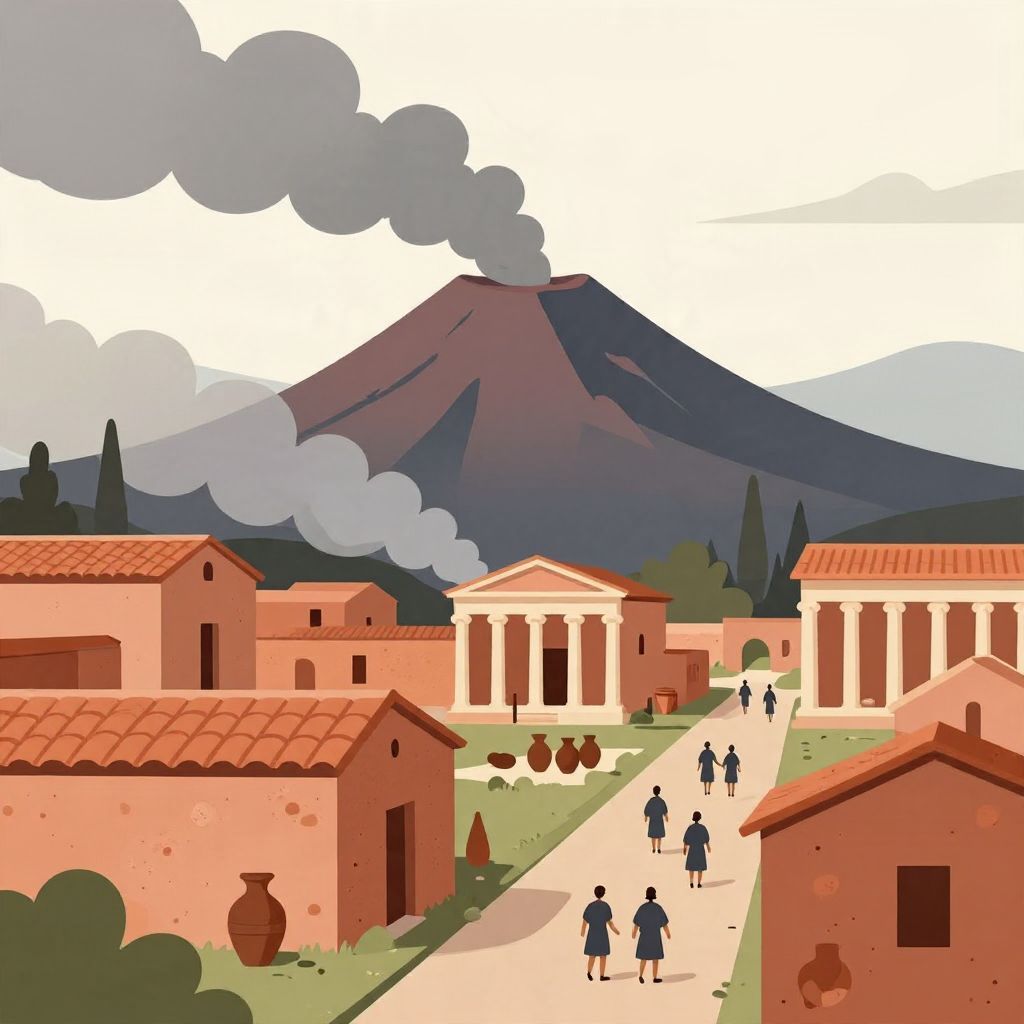
How many people died in Pompeii? The short answer is that historians and archaeologists cannot know the exact number. The most widely accepted estimate is that several thousand people died in and around Pompeii during the eruption of Mount Vesuvius in 79 CE, though the true total may have been lower or higher depending on who was in the city that day and how many escaped.
What we do know is that the disaster was sudden, violent, and overwhelming. Ash, pumice, toxic gases, and later pyroclastic surges buried Pompeii and nearby settlements, killing residents, visitors, and possibly people who had fled too late.
How many people died in Pompeii?
Most scholars estimate that around 2,000 to 3,000 people died in Pompeii, though this figure is uncertain. Archaeologists have found the remains of roughly that range, but the city’s full population was likely larger, and many residents may have escaped before the deadliest phase of the eruption.
Why the number is uncertain
Pompeii was not a city with a modern census, and the eruption disrupted any chance of a precise count. Some people left early, some were away from the city, and others may have died in surrounding areas rather than inside Pompeii itself. The number of bodies recovered also depends on how excavations were conducted over time and which parts of the city were explored.
What archaeologists have found
Excavations have uncovered human remains in houses, streets, gardens, and at the city gates, showing that people died in different circumstances. Some victims were trapped indoors, others were trying to flee, and some seem to have sought shelter along the coast or outside the city. The famous plaster casts made from voids in the ash preserve the shape of many victims, but they do not provide a complete death toll.
What happened during the eruption of Mount Vesuvius?
The eruption began on 24 August 79 CE according to the traditional dating, though some scholars argue for a later autumn date based on archaeological evidence. The first phase rained pumice and ash over Pompeii, collapsing roofs and making movement dangerous. Later, deadly pyroclastic surges—fast-moving clouds of hot gas and volcanic material—killed many who remained.
The sequence of disaster
- Initial explosion: A towering eruption column sent ash and pumice into the sky.
- Falling debris: Ash and stone accumulated on rooftops and streets, causing structural collapse.
- Flight and confusion: Many residents tried to escape, while others stayed behind or were unable to leave.
- Pyroclastic surges: Superheated flows and surges swept through the region and caused most of the deaths.
The eruption did not kill everyone in the same way. Some people likely died from falling debris or suffocation, while others were overcome by heat and ash. The final death toll reflects several phases of catastrophe rather than one single moment.
Who lived in Pompeii, and why does that matter?
Pompeii was a busy Roman city with a mixed population of free citizens, enslaved people, laborers, merchants, artisans, and visitors. This matters because the population was not fixed. Some residents were wealthy enough to leave quickly, while poorer people, enslaved workers, and those with fewer resources may have had less chance to escape.
Population estimates before the eruption
Scholars generally estimate Pompeii’s population at somewhere between 10,000 and 20,000 people, though exact figures remain debated. If that range is correct, then the number of deaths found so far suggests that a substantial portion of the population escaped or was absent when the eruption struck.
That said, the number of people in the city on the day of the eruption may have varied. Pompeii was a commercial center, so travelers, workers, and slaves could have been entering or leaving the city, making any precise count impossible.
Why didn’t everyone die?
One of the most important things historians have learned is that Pompeii was not wiped out instantly. The disaster unfolded over hours and possibly longer. That gave some people time to flee, especially during the early ash fall. Others may have already been outside the city or in nearby countryside villas.
Escape was possible, but not easy
Escape routes became increasingly dangerous as ash thickened, roads filled, and visibility dropped. Still, not everyone stayed. Some families left belongings behind, and some victims were found with valuables, suggesting they may have been trying to carry important items while fleeing. The survival of many residents explains why the death toll was tragic but not equal to the full population of the city.
What do the remains tell us about the victims?
The human remains from Pompeii reveal a great deal about the final hours of the city. They show men, women, children, and older adults. They also show that the victims came from different social backgrounds. Some were found in houses, some in public spaces, and some near the city walls or gates, indicating a desperate attempt to escape.
The plaster casts and their limits
The plaster casts made in the 19th century are among the most famous images from Pompeii. They preserve the positions of bodies and sometimes details of clothing or posture. However, they are not a census of the dead. Many remains were destroyed, overlooked, or never recovered, and some casts represent voids left by decomposed bodies rather than complete skeletons.
Because of this, the casts are powerful evidence of human tragedy, but they cannot by themselves answer the exact question of how many died.
How does Pompeii compare with other volcanic disasters?
Pompeii remains one of the most famous volcanic disasters in history because the city was buried so completely and preserved so well. But in terms of death toll, it was not the deadliest eruption ever recorded. Other volcanic events in history killed far more people, especially in densely populated modern regions.
Pompeii’s importance lies not only in the number of deaths, but in what the disaster preserved: houses, streets, shops, artwork, food, and everyday life. The city became a time capsule of the Roman world, giving historians rare evidence of urban life in the early Roman Empire.
Why the death toll still matters today
The question of how many people died in Pompeii is not just about numbers. It helps historians understand how ancient people lived, how they responded to disaster, and how a Roman city functioned socially and economically. It also shows the limits of archaeology: even with extraordinary evidence, some questions remain approximate rather than exact.
Pompeii’s victims are remembered not because a precise total is known, but because their deaths were preserved in such detail. The city stands as a reminder that natural disasters can reshape history in a matter of hours, while leaving behind evidence that scholars continue to study nearly two millennia later.
In summary: the best historical answer is that roughly 2,000 to 3,000 people died in Pompeii, though the exact number cannot be confirmed. The eruption of Vesuvius in 79 CE killed many, but not all, of the city’s inhabitants, and the surviving evidence shows a disaster that was sudden, uneven, and profoundly human. For more background on the ancient world, you may also explore history topics and timelines or browse an introductory history article.