
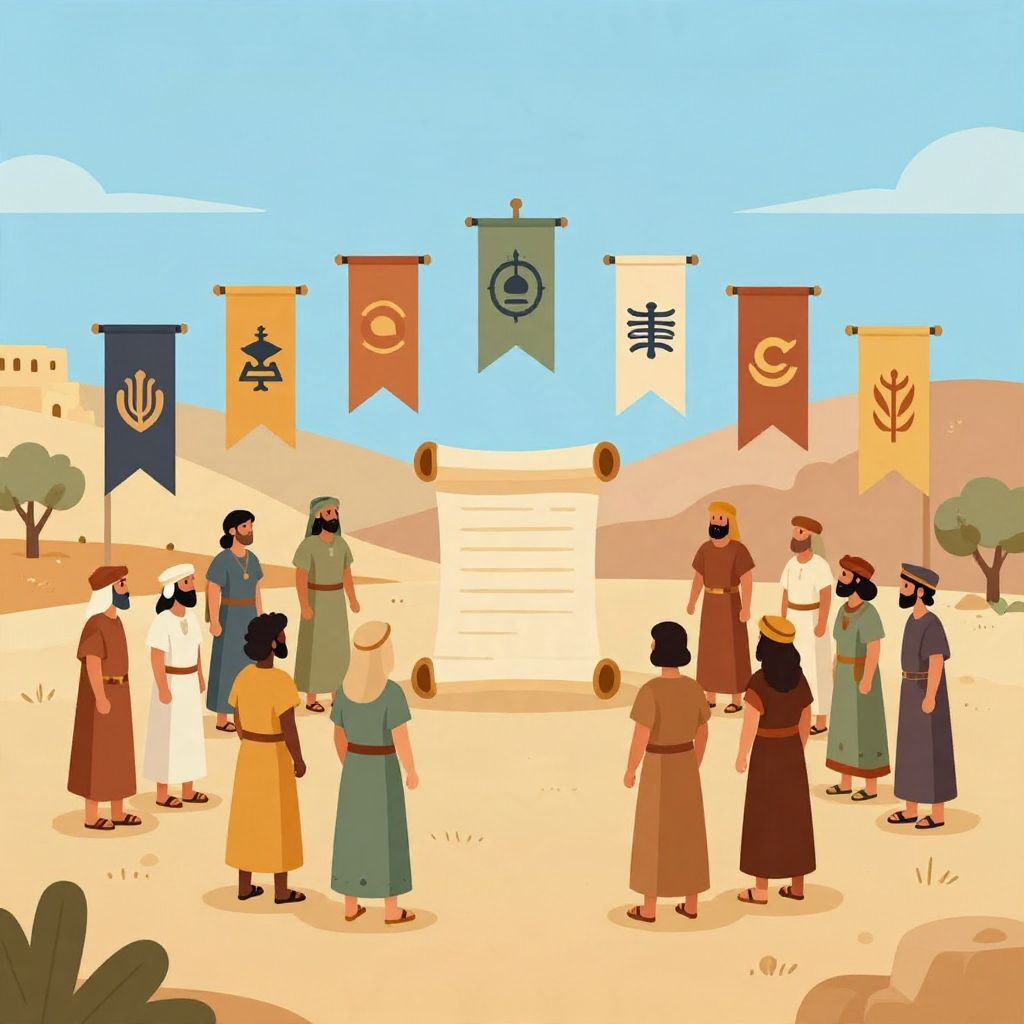
How many tribes of Israel were there? In the most familiar biblical tradition, the answer is twelve. The “Twelve Tribes of Israel” became a foundational way of describing the descendants of Jacob’s sons and the people of ancient Israel.
But the historical answer is a little more complex than a simple count. The number twelve reflects both ancestry traditions and later political-religious organization, and different biblical lists do not always match exactly.
How Many Tribes of Israel Were There?
Traditionally, there were 12 tribes of Israel, named for the sons of Jacob, also called Israel. In practice, the lists vary because the tribe of Levi was set apart for priestly duties, while Joseph was often represented through his two sons, Ephraim and Manasseh, to preserve the total of twelve.
Where the Idea of the Twelve Tribes Came From
The tribal system comes from the Hebrew Bible’s account of Jacob’s twelve sons, who were understood as the ancestors of the Israelite tribes. This is a genealogical and theological tradition, not a modern census. It gave the people of Israel a shared origin story and a way to organize identity, land, and inheritance.
The sons associated with the tribes
- Reuben
- Simeon
- Levi
- Judah
- Dan
- Naphtali
- Gad
- Asher
- Issachar
- Zebulun
- Joseph
- Benjamin
In later biblical usage, Joseph is often split into Ephraim and Manasseh, his two sons. That adjustment helps explain why some passages still speak of twelve tribes even when Levi is treated differently.
Why the Number Sometimes Changes
The number twelve is stable as a symbolic ideal, but the actual lists are not always identical. This is because the tribes were not just family lines; they also functioned as territorial and religious groups. Some lists exclude Levi, since Levites did not receive a normal land allotment. Other lists include Joseph’s sons separately to keep the count at twelve.
Common ways the count is handled
- Twelve sons as twelve tribes — the simplest traditional version.
- Levi excluded — because the Levites served in religious roles and were not assigned a standard tribal territory.
- Joseph divided into Ephraim and Manasseh — often used when Levi is excluded, preserving twelve tribal units.
This flexibility shows that “tribe” in ancient Israel was not a rigid modern category. It could mean a kinship group, a landholding unit, or a political-religious identity depending on the text and period.
What the Tribes Meant in Ancient Israel
The tribes were important for more than genealogy. They shaped how land was distributed, how military levies were organized, and how collective identity was remembered. In the biblical narrative, each tribe had a place in the covenant relationship with God and in the life of the nation.
Land and inheritance
According to biblical tradition, the land of Canaan was divided among the tribes after the Israelite settlement. This division helped define local identity. Tribes were linked to regions, towns, and family networks, though the historical process was likely more gradual and complex than the biblical story suggests.
Religion and leadership
The tribe of Levi is especially important. Levites were associated with priestly and temple service, and the priestly line was tied more specifically to Aaron, a Levite. This special role meant Levi often appears differently from the other tribes in biblical lists and later Jewish tradition.
Were the Twelve Tribes a Historical Reality?
Historians generally treat the twelve-tribe scheme as a tradition rooted in ancient Israelite identity, but not as a simple record of twelve neatly bounded clans that can be verified in the modern sense. Archaeology and ancient Near Eastern history do not provide a direct way to confirm the exact tribal structure described in the Bible.
Most scholars think the tribal system likely reflects a mixture of kinship memory, regional alliances, and later national storytelling. In other words, the tribes may preserve real social groupings from early Israel, but the final biblical presentation is shaped by theology and national memory.
Why twelve mattered
The number twelve had strong symbolic power in the ancient world. It suggested completeness, order, and wholeness. That may be one reason the tradition remained so influential even when the historical realities were more complicated. The number itself became part of Israel’s identity.
What Happened to the Tribes Later?
The tribal system changed dramatically over time. After the united monarchy period associated with Saul, David, and Solomon, the kingdom split into Israel in the north and Judah in the south, traditionally dated to around the 10th century BCE. This division weakened older tribal unity.
The northern tribes and exile
The northern kingdom included several tribes, often associated with Ephraim, Manasseh, Issachar, Zebulun, Asher, Naphtali, Dan, Reuben, Gad, and Simeon in different traditions. In 722 BCE, the Assyrian Empire conquered the northern kingdom. Many people were deported, absorbed, or resettled, which later gave rise to the idea of the “lost tribes.”
Judah, Benjamin, and Levi
The southern kingdom of Judah survived longer, and after the Babylonian conquest in 586 BCE, Judean identity became central to the later Jewish people. Over time, “Jew” came to derive from “Judah,” while tribal distinctions became less politically important. Levi remained distinct in religious life, especially in priestly and temple traditions.
The Lost Tribes: History and Legend
The phrase lost tribes of Israel refers to the northern tribes that disappeared from clear historical record after the Assyrian conquest. This is partly a historical problem and partly a later religious and cultural theme. Some communities and traditions have claimed descent from them, but such claims are often difficult to verify historically.
It is important to distinguish between evidence and later belief. The “lost tribes” are not a proven mystery in the sensational sense; they are a consequence of ancient imperial conquest, migration, and assimilation, combined with centuries of memory and interpretation.
How the Tribes Appear in Different Biblical Texts
Different books of the Bible list the tribes in different ways, depending on purpose. Some lists emphasize ancestry, others land, worship, or symbolic completeness. That is why there is no single fixed tribal list that appears everywhere.
Examples of variation
- Some passages list Levi among the tribes.
- Some omit Levi and include Ephraim and Manasseh separately.
- Some lists place Judah first because of its later importance.
- Some omit Dan or arrange the tribes in unusual orders for symbolic reasons.
These variations are a reminder that biblical texts were written for different audiences and purposes across many centuries. The tribal tradition was flexible enough to support changing religious and political needs.
Why the Twelve Tribes Still Matter
The twelve tribes remain important because they shaped Jewish and Christian imagination for centuries. They appear in discussions of covenant, land, kingship, prophecy, and identity. In later literature, the twelve tribes also became a symbol of the restored people of God and the hope of national renewal.
In Christianity, the number twelve also influenced the symbolism of the twelve apostles, who were seen by many early believers as representing a renewed Israel. That connection shows how deeply the tribal pattern shaped later religious thought.
So, How Many Tribes of Israel Were There?
Historically and traditionally, the answer is twelve. However, the exact way those twelve are counted changes depending on the source. Sometimes Levi is excluded, sometimes Joseph is divided into Ephraim and Manasseh, and sometimes the lists are arranged for symbolic rather than strictly genealogical reasons.
The best historical summary is this: the twelve tribes of Israel are a foundational ancient tradition rooted in Israelite identity, but the biblical count is not a single fixed roster. It is a living tradition that reflects history, memory, and theology at once. For related biblical history, you may also find what a eunuch in the Bible meant and what sea Moses parted useful context.