
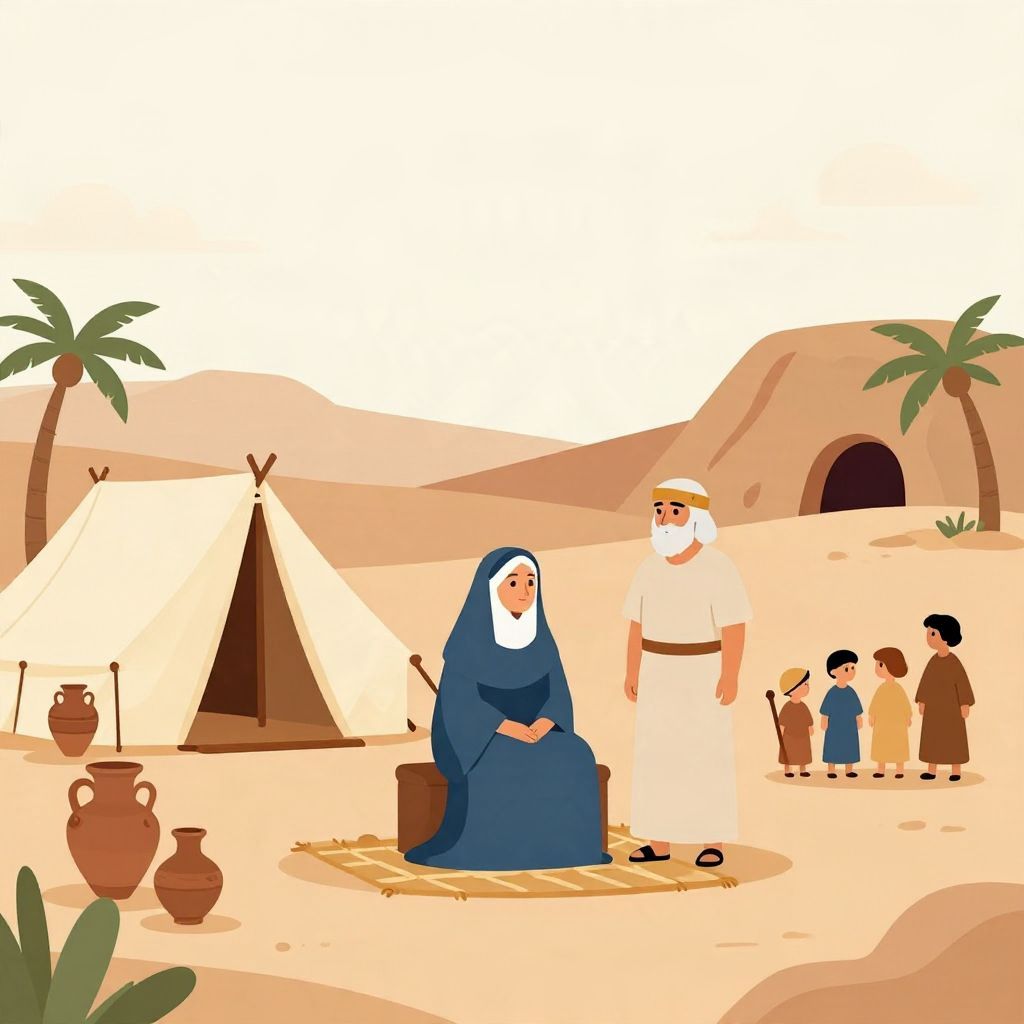
How old was Sarah when she died? The short answer is that, according to the biblical text in Genesis, Sarah died at the age of 127. This is the traditional and most widely cited answer in Jewish, Christian, and historical discussions of the Hebrew Bible.
Because Sarah belongs to the world of biblical history rather than securely documented political history, her age comes from scripture, not from an independent contemporary record. That means the answer is clear within the biblical tradition, even though historians also note the limits of verifying such details outside the text itself.
How old was Sarah when she died?
Sarah was 127 years old when she died, according to Genesis 23:1. The Bible presents this as a precise age and places her death in Hebron, in the land of Canaan. In the same passage, Abraham mourns her and purchases the cave of Machpelah as a burial place.
Where does Sarah’s age come from?
Sarah’s age is given directly in the biblical narrative, which is why the figure of 127 is so firmly associated with her. Unlike many ancient figures whose ages are reconstructed from later tradition, Sarah’s lifespan is stated explicitly in the text. For readers of the Bible, this makes her age one of the clearest chronological details in the patriarchal stories.
The biblical statement
Genesis says that Sarah lived 127 years and then died. The passage serves more than a biographical purpose: it marks a turning point in the Abraham story. Sarah’s death follows the long narrative of promise, travel, barrenness, and the birth of Isaac, and it sets up the next stage in the family’s history.
Historical caution
Historians generally treat Sarah as a figure of biblical tradition rather than a person whose life can be independently dated with certainty. Her age is therefore best understood as a scriptural claim within an ancient religious narrative. That does not make it meaningless; it means the number belongs to the text’s historical and theological world.
What happened when Sarah died?
Sarah’s death is described in Genesis 23 as a major family event. Abraham mourned her, then negotiated with the Hittites for a burial site at Machpelah near Hebron. This is one of the Bible’s most detailed land-purchase scenes and is often read as an important moment in the family’s establishment in Canaan.
Why the burial story matters
The burial account is significant because it shows Abraham not merely as a traveler, but as someone securing a permanent foothold in the land. Sarah’s death, then, is not only a personal loss. It also becomes part of the broader narrative of inheritance, land, and family continuity that shapes the rest of Genesis.
Sarah’s role in the story of Isaac
Sarah had already lived to see the birth of Isaac, the child promised to Abraham and Sarah in their old age. Her death therefore comes after the central fulfillment of that promise. In the biblical storyline, her lifespan bridges the period of waiting and the beginning of the next generation.
Sarah’s age in the biblical timeline
Sarah’s age at death is easiest to understand when placed within the timeline of Abraham and Isaac. The Bible provides enough chronological markers to show that Sarah died after Isaac’s birth, but before the family story moved fully into the next generation. The exact dating in modern calendar terms remains uncertain.
Key milestones in the narrative
- Call of Abraham: Abraham leaves his homeland and begins the journey to Canaan.
- Promise of a son: Abraham and Sarah are told they will have a child despite their old age.
- Birth of Isaac: Sarah gives birth to Isaac, the long-awaited son.
- Sarah’s death: Sarah dies at 127 and is buried near Hebron.
- Aftermath: Abraham secures the burial cave of Machpelah for the family.
Why the ages in Genesis matter
Genesis often uses ages to organize the story and connect generations. These numbers help readers follow the movement from one patriarchal household to another. In Sarah’s case, the age of 127 emphasizes both her long life and the importance of her role in the ancestral line of Israel.
Was Sarah’s age symbolic?
Some readers have wondered whether 127 may carry symbolic meaning in addition to being a literal age within the text. Ancient biblical numbers sometimes have literary or theological resonance, but there is no universally accepted scholarly consensus that Sarah’s age is symbolic rather than chronological. The safest conclusion is that the text presents it as an actual age.
How scholars approach biblical ages
Scholars often note that ancient genealogies and lifespans in Genesis can serve literary purposes, including highlighting significance, continuity, and divine favor. At the same time, the biblical authors usually frame these figures as part of the family record. For Sarah, the text does not invite readers to treat 127 as a guess.
Why the number stands out
Sarah’s age is unusually specific and much longer than modern life expectancy, but long lifespans are common in the early chapters of Genesis. That pattern is one reason historians distinguish between the Bible’s internal chronology and externally verified ancient history. Within the narrative, however, the number is straightforward.
Who was Sarah in history and tradition?
Sarah is remembered as the wife of Abraham and the mother of Isaac. In Jewish, Christian, and Islamic tradition, she is one of the foundational matriarchal figures associated with faith, covenant, and family lineage. Her story is especially important because it centers on promise fulfilled in old age.
Sarah’s place in the patriarchal stories
Sarah appears in the Genesis narratives as a woman of status, movement, and influence. She travels with Abraham, experiences periods of uncertainty, and ultimately becomes the mother of the child through whom the covenant line continues. Her death closes one chapter of the ancestral story but also confirms her lasting importance.
Tradition versus history
In religious tradition, Sarah is a real and revered ancestral figure. In academic history, she is harder to place with certainty because the biblical accounts were written and compiled long after the events they describe. Both perspectives matter: one preserves meaning within faith, while the other asks what can be established historically.
How old was Sarah compared with Abraham and Isaac?
Sarah’s age can be better understood by comparing it with the ages given for Abraham and Isaac in Genesis. The Bible presents the family’s chronology in a way that links their lifespans and highlights generational transition. Sarah’s 127 years place her among the long-lived patriarchal figures of the text.
Abraham and Sarah
Abraham is described as living 175 years, while Sarah dies at 127. The difference underscores that Sarah died before Abraham, which is why Abraham’s mourning and burial arrangements are such a central part of the story. Her death also marks the first major loss in the family after Isaac’s birth.
Sarah and Isaac
Isaac was still alive when Sarah died, though the Bible does not give a direct age for him in the death narrative. The story makes clear that Sarah lived long enough to see the covenant promise begin to unfold through her son. Her lifetime therefore connects promise, fulfillment, and inheritance.
Why Sarah’s death is historically important
Sarah’s death matters because it is one of the key transition points in Genesis. The burial purchase, the mourning scene, and the age statement all work together to show the movement from promise to possession, from family wandering to rootedness in the land. In the Bible’s own structure, this is a major historical and theological moment.
Land, memory, and identity
The cave of Machpelah becomes a family burial place, linking Sarah to later generations. Burial sites in the ancient world were often tied to identity and inheritance, and Genesis uses that idea powerfully. Sarah’s death is therefore not only a personal event but also part of the family’s claim to continuity.
Lasting influence
Sarah’s story has shaped centuries of interpretation in Judaism, Christianity, and Islam. She is remembered as a matriarch whose life was marked by endurance and promise. Her age at death is one of the simplest facts about her, but it also anchors a much larger story about covenant and legacy.
So, how old was Sarah when she died?
Sarah was 127 years old when she died, according to the biblical account in Genesis. That is the direct answer preserved by the tradition. Historically, the number belongs to the world of scripture, where it functions as both a chronological detail and a marker of Sarah’s importance in the ancestral story.
If you want to place Sarah more precisely within the broader biblical timeline, it may help to look at when Abraham was born and how old Isaac became. Together, those timelines show how Sarah’s life fits into the larger narrative of Genesis and why her death remains such a significant moment in biblical history.