
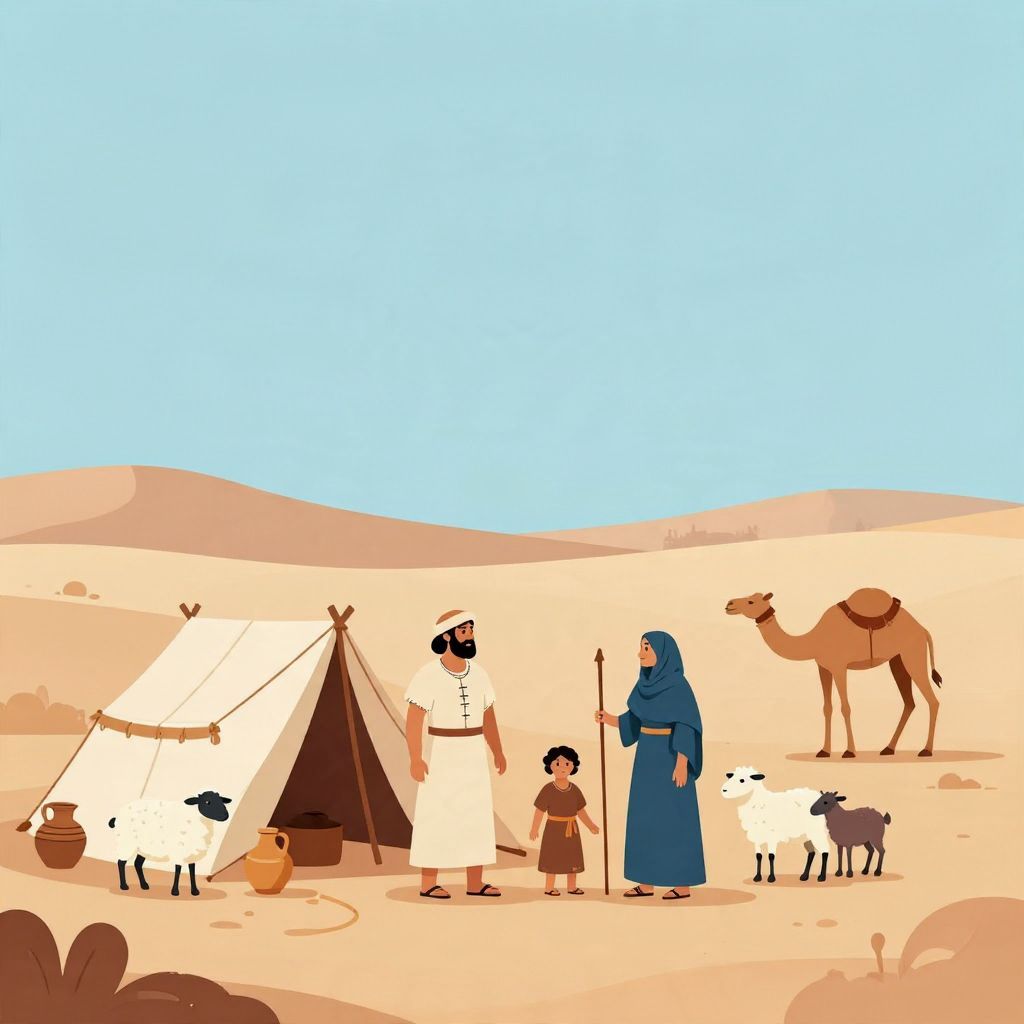
When was Abraham born? It is one of the most important questions in biblical history, but it does not have a single universally agreed date. Abraham is a foundational figure in Judaism, Christianity, and Islam, yet the historical evidence for his exact birth date is indirect and debated.
Most scholars place Abraham in the early second millennium BCE, often somewhere around 2000–1800 BCE, though some traditional chronologies differ. Because Abraham belongs to the world of ancient memory, genealogy, and religious tradition rather than to a securely dated royal archive, the best answer is an approximate one.
When Was Abraham Born?
Abraham was probably born sometime in the early second millennium BCE, roughly between 2000 and 1800 BCE. That range is an informed historical estimate, not a fixed fact. The Bible does not give a birth year, and outside the biblical tradition there is no contemporary document that records Abraham’s life directly.
Why Abraham’s Birth Date Is Hard to Pin Down
Abraham is a central patriarch in the Book of Genesis, but the text was written and edited long after the period it describes. That means historians must work backward from later traditions, genealogies, and the broader ancient Near Eastern setting. Those sources can suggest a time period, but they cannot produce an exact birth year.
What the biblical timeline suggests
Genesis presents Abraham as living after the flood narratives and before the settlement of Israel in Canaan. It also places him in a world of pastoral migration, city-states, and kinship-based households. Some traditional chronologies, especially in Jewish and Christian interpretation, try to calculate his era from biblical genealogies, but these calculations vary widely depending on how one reads the text.
Why scholars avoid a precise year
Ancient genealogies often serve theological and literary purposes as much as chronological ones. They can compress generations, highlight important ancestors, or shape a sacred history. For that reason, scholars usually treat Abraham as a figure rooted in the early Bronze Age to Middle Bronze Age transition, rather than as a person whose birth can be dated to a specific calendar year.
Historical Context: The World Abraham Belonged To
Abraham’s story reflects the social and cultural world of the ancient Near East. If he is placed in the early second millennium BCE, then he would belong to a period when mobile pastoral groups, small kingdoms, trade routes, and urban centers all shaped life in Mesopotamia, Syria, and Canaan. This setting fits many details in Genesis better than a much later historical period.
Possible homeland and migration traditions
Genesis associates Abraham with Ur and later Haran, then with Canaan. These place names matter historically because they connect the narrative to real regions known from ancient Mesopotamian and Levantine history. Still, the text reflects memory and tradition, not a modern travel diary, so historians are cautious about treating every detail as literal biography.
Patriarchal age and ancient society
The Abraham narratives describe livestock, household servants, wells, alliances, inheritance concerns, and clan movement. These features resemble ancient pastoral life more than the later monarchy of Israel. That is one reason many historians think the traditions preserve early memories, even if the final written form of the stories is much later.
What the Major Chronologies Say
Different religious and scholarly traditions have tried to place Abraham on a timeline. None is definitive, but they show how people have understood his place in history.
- Traditional biblical chronologies: often place Abraham around 2000 BCE or earlier, depending on how Genesis genealogies are counted.
- Many modern historians: favor a broad early second millennium BCE setting, roughly 2000–1800 BCE.
- Some older interpretations: pushed Abraham into a later date, but this is less common in current scholarship.
The key point is that Abraham’s historical setting is approximate. The evidence supports a broad era, not a precise birth certificate.
Abraham in the Bible and in Later Tradition
Abraham is not only a historical question but also a religious one. In the Bible, he becomes the ancestor of Isaac and Jacob and the forefather of the people of Israel. In later Jewish, Christian, and Islamic tradition, Abraham is remembered as a model of faith and obedience. These traditions preserve his importance even where historical certainty is limited.
Abraham in Judaism
In Jewish tradition, Abraham is the first patriarch and a covenant partner with God. The promise of land, descendants, and blessing makes him a central figure in the identity of the people of Israel. His story is foundational to understanding biblical history and covenant theology.
Abraham in Christianity
Christian texts present Abraham as an example of faith and as part of the lineage leading to Jesus. The New Testament often uses Abraham to discuss belief, promise, and righteousness. For Christians, his significance is theological as well as historical.
Abraham in Islam
In Islam, Abraham appears as Ibrahim, a major prophet and a model of devotion to one God. Islamic tradition places him within a sacred history that connects him to the origins of monotheism and to the ancestral line of later prophets.
Can Archaeology Prove When Abraham Was Born?
Not directly. Archaeology can illuminate the world described in Genesis, but it cannot identify Abraham’s exact birth date. There is no known inscription, tomb, or artifact that can be securely linked to him as an individual. What archaeology can do is help assess whether the social world of the stories fits a particular era.
What archaeology can support
Archaeological and textual evidence from the ancient Near East shows that the regions mentioned in Abraham’s story were active centers of movement, trade, and settlement in the second millennium BCE. That makes the traditional setting historically plausible in broad terms, even if the figure of Abraham remains difficult to verify independently.
What archaeology cannot prove
It cannot confirm Abraham’s birth year, age, or exact itinerary. It also cannot settle the question of how much of Genesis preserves direct memory and how much reflects later literary shaping. Historians therefore distinguish between the plausibility of the setting and the certainty of the biography.
Abraham’s Timeline in Historical Perspective
A useful way to understand Abraham is to place him in a broad timeline rather than a single date. The following sequence reflects the usual historical approach, though the dates remain approximate.
- c. 2000–1800 BCE: probable era in which Abraham is traditionally placed.
- Middle Bronze Age context: a world of clans, migration, and regional city-states in the ancient Near East.
- Later biblical composition: Abraham’s story is preserved and shaped in texts written centuries after the period it describes.
- Second Temple and later traditions: Jewish, Christian, and Islamic communities develop Abraham into a major theological ancestor.
This timeline helps separate the likely historical setting from the later literary and religious development of Abraham’s legacy.
Why Abraham Still Matters
Even though his exact birth date is uncertain, Abraham remains one of the most influential figures in world history. His story links ancestry, covenant, migration, faith, and identity. For historians, he is a window into the formation of ancient tradition. For believers, he is a foundational spiritual ancestor.
The enduring importance of Abraham lies partly in that blend of history and memory. He belongs to a very ancient world, but he also lives on through texts and traditions that shaped millions of people’s understanding of origins, promise, and faith.
Conclusion
So, when was Abraham born? The most careful historical answer is that Abraham was probably born sometime around 2000–1800 BCE, in the early second millennium BCE. That date is approximate, not certain, because the evidence comes from ancient tradition rather than a direct contemporary record. If you want to place Abraham more precisely within biblical chronology, you may also find it helpful to read about when Moses was born and how later biblical timelines were constructed.