
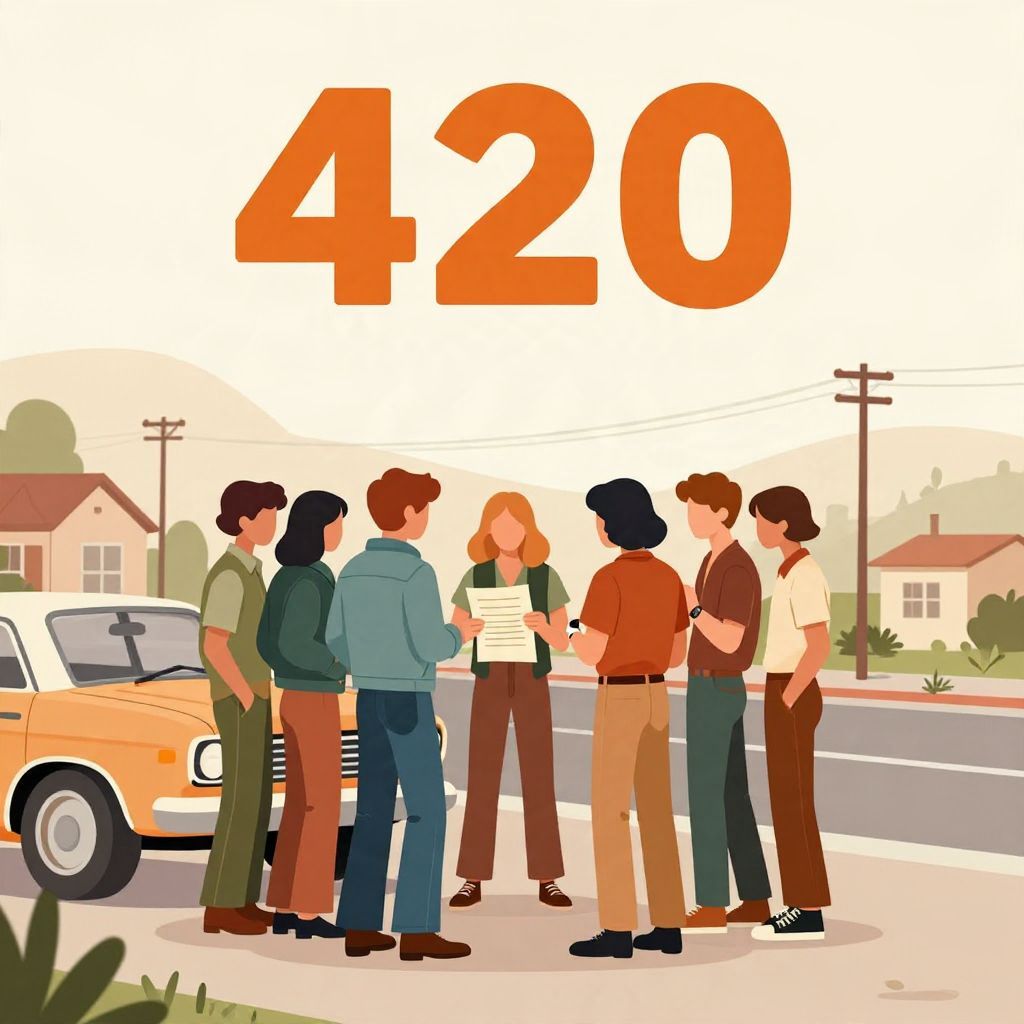
Why is 420 weed day? The short answer is that “420” became a cannabis code word in the early 1970s, then spread through youth culture, music, and later mass media until it turned into an annual informal holiday. The number did not begin as a government designation or an ancient tradition; it grew from a very specific local slang term and was later reinterpreted by millions of people.
Its history shows how a private joke can become a global cultural symbol. What began as a school-day meeting time in California eventually became a date, a time of day, and a broader marker of cannabis identity, activism, and commercialization.
Why Is 420 Weed Day?
420 became weed day because a group of California high school students used “420” as a code for meeting after school to look for an abandoned cannabis crop, and the term spread from there. By the 1990s, it had entered wider cannabis culture, especially through the Grateful Dead scene and media repetition, and April 20 became the day associated with it.
The most widely accepted origin of 420
The Waldos and the San Rafael story
The most accepted historical explanation traces 420 to a group of students at San Rafael High School in Marin County, California, in the early 1970s. They called themselves “the Waldos,” and according to their account, they used “420” as shorthand for a plan to meet at 4:20 p.m. to search for a rumored cannabis patch near Point Reyes. The code helped them speak discreetly in school and among friends.
This origin is supported by the group’s long-standing testimony and by later evidence that the term circulated among people connected to the Grateful Dead community. Historians of popular culture generally treat this as the strongest documented explanation, though the exact details of the original search are less important than the fact that the code spread beyond the original group.
Why a code word mattered
In the early 1970s, cannabis use was illegal in the United States and still strongly stigmatized. Young people who used it often relied on slang, nicknames, and coded references to avoid attention from adults, school authorities, or police. A simple number could function as a private signal, and that secrecy made it easy to repeat and adapt.
How 420 spread from a local joke to a cultural symbol
The Grateful Dead connection
The Waldos had ties to the Grateful Dead’s social orbit, and that connection helped the term travel. The band’s fan community was large, mobile, and deeply networked, which made it an effective carrier of subcultural language. As the phrase moved through concerts, friendships, and informal conversation, it became detached from its original school setting.
By the late 1970s and 1980s, “420” was increasingly recognized among cannabis users as a shorthand term. It was not yet a mainstream holiday, but it had become part of a shared vocabulary that could signal belonging within a counterculture.
From code word to calendar date
The shift from a time of day to a date happened because people naturally linked “4:20” with April 20, written in American date format as 4/20. Once that association took hold, April 20 became an easy annual reference point for gatherings, smoke-outs, jokes, and later public events. The date was memorable, simple, and already embedded in the language.
This is a good example of cultural evolution: a small, local expression becomes meaningful because communities adopt it, repeat it, and reshape it for new purposes.
What 420 means in cannabis culture
A symbol of identity and belonging
For many people, 420 is more than a date. It can signal membership in a cultural world shaped by cannabis use, legalization politics, music, and a relaxed anti-authoritarian style. It is often used playfully, but it can also carry political meaning, especially in places where cannabis reform has been a public issue.
As cannabis laws changed in parts of North America and elsewhere, 420 became less purely underground and more openly commercial. Dispensaries, brands, festivals, and media outlets began using it as a marketing tool, which helped normalize it while also diluting some of its countercultural edge.
Not a single universal tradition
It is important to note that 420 is not an ancient ritual or a universally recognized “holiday” in the formal sense. It is a modern cultural observance, mostly associated with cannabis communities. Different places celebrate it differently: some hold rallies or educational events, while others treat it as a casual social occasion.
Its meaning has always depended on context. For some, it is a joke; for others, a protest symbol; for many, simply a date associated with cannabis culture.
Popular myths about 420
False explanations that circulated later
Because 420 became so famous, many invented explanations grew around it. Some people claimed it was police radio code for marijuana possession, a criminal statute, or a reference to a specific number of active chemicals in cannabis. These stories are widely repeated but do not hold up well historically.
The problem with such myths is that they sound plausible after the fact. Once a number becomes famous, people search for hidden meanings in it. But historical evidence points much more strongly to the Waldos’ school-based code than to any official law-enforcement or scientific origin.
Why myths spread so easily
Myths about 420 spread because the number’s rise was informal and decentralized. There was no single institution controlling its meaning, so speculation filled the gaps. In popular culture, especially around taboo subjects, people often prefer a neat legend to a messy social history.
That is why the origin story has been retold in many versions. The best historical approach is to separate the well-supported local origin from the later folklore attached to it.
How April 20 became a public event
The 1990s and media amplification
April 20 gained broader visibility in the 1990s, when cannabis culture became more visible in music, magazines, and student life. Media coverage helped standardize the date as “420 day,” and public gatherings made it easier for people to recognize the term even if they did not know its origin.
As the phrase entered mainstream awareness, it also became a commercial opportunity. Businesses, especially in places where cannabis was legal or decriminalized, began using April 20 for promotions, sales, and branding. That commercialization made 420 more visible, but it also changed its meaning from insider slang to public spectacle.
Legalization and changing significance
In the 21st century, the history of 420 has been shaped by cannabis legalization debates. In some places, April 20 became a day for advocacy, voter mobilization, and public education about drug policy. In others, it remained a relaxed cultural celebration. The same date can therefore represent both leisure and political change.
That dual meaning matters historically. 420 is not only about cannabis use; it also reflects shifting attitudes toward law, medicine, youth culture, and personal freedom.
Why the number 420 stuck
Simple, memorable, and repeatable
Some slang terms disappear quickly, but 420 endured because it is short, easy to remember, and flexible. It can refer to a time, a date, a code word, or a broader cultural identity. Numbers also travel well across communities because they are less obvious than plain language and can be used casually in conversation.
The number’s success also came from repetition. Once people saw it in songs, posters, jokes, and media references, it became self-reinforcing. The more it circulated, the more it seemed like an established tradition.
A symbol shaped by subculture and mainstream culture
420 is a useful example of how subcultural language moves into the mainstream. It began as a small-group code, was adopted by a wider counterculture, and then entered commercial and public life. Each stage changed what it meant, but the original association with cannabis remained at the center.
That layered history explains why 420 can feel both playful and serious. It carries the memory of secrecy, the energy of youth culture, and the politics of legalization all at once.
Historical timeline of 420
- Early 1970s: The Waldos reportedly use “420” as a meeting code in San Rafael, California.
- 1970s–1980s: The term spreads through social networks connected to the Grateful Dead and cannabis culture.
- 1990s: Media coverage and public use help turn 4/20 into a recognized cannabis date.
- 2000s onward: April 20 becomes a mix of protest, celebration, and commercial branding, especially in places with changing cannabis laws.
So what is the real historical meaning of 420?
Historically, 420 is best understood as a modern cultural code that grew out of a specific California student subculture and then expanded into a global symbol of cannabis identity. Its rise was not inevitable; it depended on social networks, media repetition, and changing attitudes toward marijuana.
In that sense, 420 is a reminder that history is often made not only by governments and wars, but also by slang, youth culture, and the everyday habits of ordinary people. If you want to explore more cultural history, related topics such as the history of cannabis legalization and the Grateful Dead’s influence on American counterculture can help place 420 in a broader historical context.