
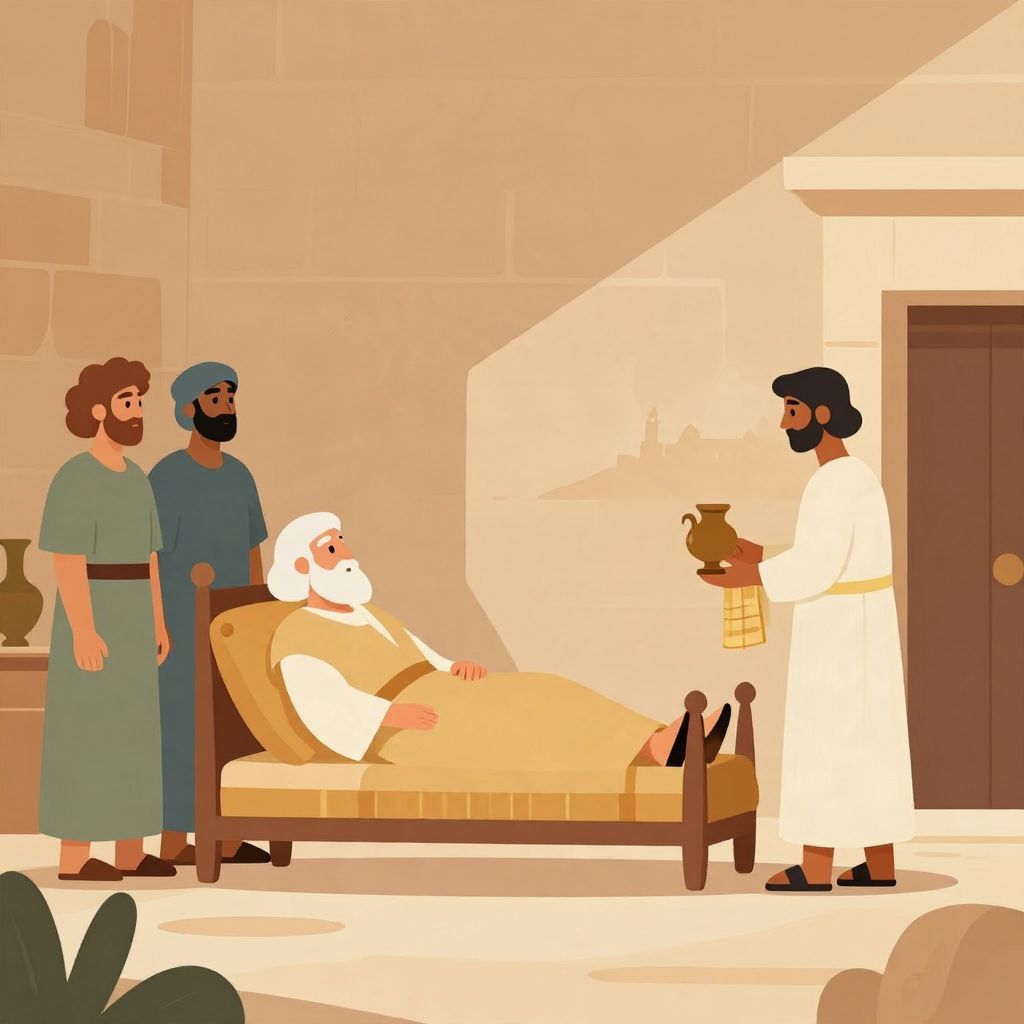
How did King David die? The Bible gives a clear answer to the question, but the historical record is more limited than many readers expect. David’s death belongs to the world of ancient Israelite tradition, where theology, kingship, and history are closely intertwined.
According to the biblical account, David died of old age after a long reign in Jerusalem, and his death was followed by Solomon’s succession. Historians can describe the text and its setting with confidence, but they cannot independently verify the exact medical cause of death.
How Did King David Die?
King David died naturally, “in a good old age,” according to 1 Kings 2:10 and the parallel succession traditions in the Hebrew Bible. The text does not describe a battle wound, assassination, or sudden illness. Instead, it presents David as an elderly king who died after a long life and was buried in Jerusalem.
What the Bible Says About David’s Death
The most direct source for David’s death is the biblical narrative. In 1 Kings 1–2, David is described as old and frail near the end of his life. He is unable to stay warm even when covered with blankets, and attendants bring in Abishag the Shunammite to care for him. Soon afterward, David gives final instructions to Solomon and dies. The text emphasizes his age and the orderly transfer of power more than any specific disease.
The final years before his death
David’s last days, as portrayed in the Bible, were marked by political tension. His sons Adonijah and Solomon were competing for succession, and court politics shaped the final chapters of his life. This matters because the narrative of David’s death is not only a personal ending; it is also a political turning point in the history of the Israelite monarchy.
Burial and remembrance
The Bible says David was buried in the City of David in Jerusalem, the royal burial place associated with his dynasty. Later biblical texts and Jewish tradition treated David’s tomb as a significant site, though the exact historical location of the burial place cannot be confirmed archaeologically with certainty.
What Was the Likely Cause of Death?
The most cautious historical answer is that David likely died of age-related decline. The biblical account suggests weakness, reduced mobility, and physical frailty rather than violence. Since the text gives no medical diagnosis, historians avoid naming a precise illness. In ancient terms, “a good old age” usually meant a peaceful death after long life, not a dramatic or suspicious end.
Why historians are careful here
David is a figure from the early Iron Age, and the surviving evidence comes mainly from later biblical composition and tradition. That means historians can study how his death was remembered, but they cannot reconstruct it the way they might with a modern death certificate or forensic report. The safest conclusion is that he died naturally and peacefully, as presented in the biblical narrative.
David’s Death in Historical Context
David is traditionally placed around the 10th century BCE, though the exact chronology of his reign is debated among scholars. He is remembered as the second king of Israel and the founder of the Davidic dynasty in Jerusalem. Whether one reads him as a highly historical monarch, a partly legendary ruler, or a figure shaped by later royal memory, his death marks the transition from David’s rule to Solomon’s.
Why the succession mattered
In ancient monarchies, a king’s death could trigger civil conflict if succession was unclear. The biblical account of David’s final days reflects that reality. By naming Solomon as successor, the narrative presents David’s death as the moment when the kingdom moves from a contested reign to a more stable dynastic order. That political framing is one reason the story of his death is so prominent in biblical history.
Key Events Leading Up to David’s Death
Several events shaped the final stage of David’s life and the way later readers understood his death:
- David grows old and is described as physically weak.
- Abishag the Shunammite is brought in to care for him, showing his frailty.
- Adonijah attempts to claim the throne before David’s death.
- Bathsheba and Nathan intervene to support Solomon’s succession.
- David gives final instructions to Solomon about leadership and justice.
- David dies and is buried in Jerusalem.
This sequence shows that David’s death was not just a private event. It was the final act in a carefully remembered royal transition, one that shaped the future of the kingdom in biblical tradition.
Was David Murdered or Killed in Battle?
No historical source supports the idea that David was murdered or killed in battle. Those possibilities may sound dramatic, but they do not fit the biblical account. Unlike Saul, who dies in combat, David is portrayed as dying peacefully after a long reign. Later legends may expand on his life, but the core tradition is consistent: David died of old age.
Separating history from legend
Because David is such an important religious and cultural figure, later traditions sometimes surround him with heroic or symbolic details. Still, the simplest reading of the biblical text remains the strongest: he died naturally, not violently. When discussing ancient figures like David, it is important to distinguish between the historical core of a tradition and the devotional meaning attached to it.
Why David’s Death Still Matters
David’s death matters because it closes one of the most influential reigns in biblical history. He became a model of kingship in Jewish, Christian, and Islamic tradition, and his dynasty became central to later hopes for legitimate rule. The story of his death also helps explain how ancient writers linked personal biography with national destiny.
For historians, David’s death is significant not because it can be medically reconstructed in detail, but because it shows how ancient Israel remembered its kings: as mortal rulers whose deaths carried political, religious, and literary meaning. The account of David’s final days is therefore both a historical tradition and a theological statement about succession, mortality, and legacy.
In short, King David died of old age according to the biblical record, after a long reign in Jerusalem and before Solomon’s secure accession. If you want more context on his later life, see how old David was when he became king and related background on ancient biblical court life such as what a eunuch was in the Bible.