
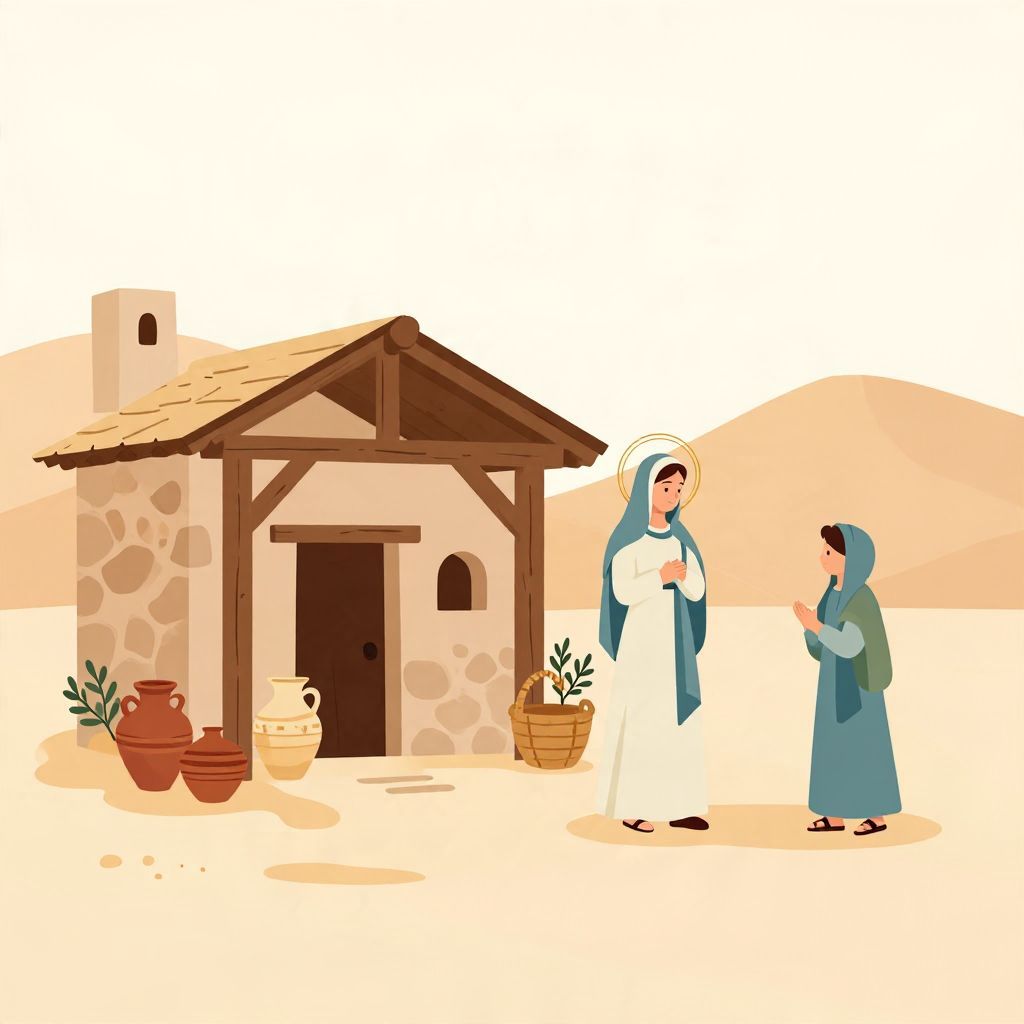
The question “How old was the Virgin Mary?” is one of the most common historical and religious questions about the New Testament. The short answer is that no reliable ancient source gives her exact age, so historians cannot state it with certainty.
What can be said is that Mary was likely a young woman of marriageable age in first-century Judea, probably in her mid-teens to early twenties according to the social norms of the time. That estimate comes from historical context, not from a surviving record of her birth date.
How old was the Virgin Mary?
There is no documented exact age for Mary in the historical record. Most historians and biblical scholars infer that she was probably a teenager or very young adult when Jesus was born, because girls in ancient Jewish society were typically betrothed and married soon after puberty. This is an informed estimate, not a proven fact.
What the sources actually say
The New Testament does not record Mary’s age at the Annunciation, her marriage to Joseph, or Jesus’ birth. The Gospels of Matthew and Luke focus on theology and meaning rather than biographical detail. Later Christian tradition also does not preserve a universally accepted age for Mary.
That means any precise number you see online is usually a later guess, devotional tradition, or modern reconstruction. The historical evidence supports context, not certainty.
Why historians cannot give an exact number
- No birth record for Mary survives.
- The canonical Gospels do not mention her age.
- Ancient writers were usually more interested in religious significance than personal biography.
- Later traditions vary and are not equally reliable as historical evidence.
The most likely historical age range
In the world of first-century Judea, girls were often betrothed young, sometimes in their early teens, and marriage followed soon after. For that reason, many historians think Mary was likely somewhere between about 12 and 16 when she became pregnant with Jesus, though some place her slightly older, into her late teens or early twenties. The evidence does not allow a firmer conclusion.
This estimate is based on social history: marriage patterns, family structure, and the customs of the eastern Mediterranean under Roman rule. It is not based on a direct statement from the sources.
Why age estimates differ
Different scholars weigh the evidence differently. Some emphasize Jewish marriage customs and conclude Mary was probably very young. Others caution that customs varied by region, class, and family circumstance, so she may have been older than the most popular estimates suggest. Because the sources are silent, the safest answer is “probably young, but unknown.”
Mary’s age in historical context
To understand the question properly, it helps to place Mary in the social world of Roman Judea. This was a rural, patriarchal society where family honor, arranged betrothal, and early marriage shaped women’s lives. A young woman’s transition into adulthood often happened much earlier than it does in modern societies.
Mary is traditionally understood as living in Nazareth, a small Galilean village. In such a setting, marriage was not only a personal matter but also a family and community arrangement. Her engagement to Joseph would have been a legally and socially significant step, even before the marriage was completed.
Betrothal and marriage in the first century
- Betrothal was a formal commitment, not a casual promise.
- Marriage often followed soon after betrothal.
- Girls commonly married younger than women do in most modern societies.
- Family and religious expectations strongly influenced timing.
Mary’s timeline in the Gospels
Although her age is unknown, the main sequence of events in Mary’s story can be outlined from the New Testament tradition. This timeline helps show why historians discuss her as a young woman rather than an older adult.
- Betrothal to Joseph — Mary is engaged to Joseph before Jesus’ birth.
- The Annunciation — the angel Gabriel announces that she will conceive Jesus.
- The birth of Jesus — Mary gives birth in Bethlehem according to the Gospel of Luke and Matthew’s nativity account.
- Jesus’ childhood — Mary appears in the stories of Jesus’ early life, including the presentation in the Temple and the visit to Jerusalem when Jesus is twelve.
- Later ministry — Mary appears at key moments in Jesus’ public life, especially in the Gospel of John.
This timeline is historically important because it shows that Mary’s role in the Christian tradition spans several decades, even though her exact dates are not preserved.
Did Mary have to be a teenager?
Not necessarily. The popular image of Mary as a very young teenager comes from the marriage customs of the ancient world and from later Christian art and devotion. But “likely young” is not the same as “certainly 12 or 13.” Ancient life was varied, and the surviving evidence does not let us pin down a specific birthday or even a single exact age range.
Some modern readers are surprised by the idea of early marriage, but in the ancient Mediterranean world it was common. Historical context explains why the question is usually answered with an approximate age rather than a precise one.
What popular tradition often assumes
In art, sermons, and devotional literature, Mary is often imagined as a very young maiden. That image became deeply influential in Christian culture. However, devotional tradition is not the same as historical documentation, and it should not be treated as proof.
How historians approach the question
Historians ask two different questions here: what did later Christians believe about Mary, and what can be reconstructed about the historical woman behind the tradition? The first question belongs to the history of belief. The second belongs to the history of first-century Judaism and early Christianity.
For the historical Mary, scholars use indirect evidence: social customs, family life, language, and the setting of the Gospels. That method can suggest probability, but it cannot produce certainty where the sources are silent.
Evidence historians consider
- Jewish marriage customs in the late Second Temple period
- Roman-era family life in Galilee and Judea
- How the Gospels portray Mary’s stage of life
- Later Christian traditions, used cautiously and critically
Mary in Christian tradition and memory
As Christianity developed, Mary became one of its most important figures. Over time, believers reflected not only on her role as Jesus’ mother but also on her purity, obedience, and faith. These theological themes shaped how people imagined her age and character.
In many traditions, especially in art and liturgy, Mary is presented as youthful. That emphasis reflects spiritual symbolism as much as historical reconstruction. Youth can symbolize innocence, readiness, and divine favor, which helps explain why later generations often pictured her as very young.
Historical fact versus devotional image
It is important to separate the two. The devotional Mary is shaped by centuries of Christian interpretation. The historical Mary, by contrast, is known only through sparse early sources. Both matter, but they answer different questions.
So how old was Mary when Jesus was born?
The most careful answer is: we do not know exactly. If you want the best historical estimate, Mary was probably a young woman, likely in her mid-teens to early twenties, when Jesus was born. If you want the strictest scholarly answer, the age is unknown because the sources do not say.
That is the most responsible conclusion. It avoids pretending certainty where none exists, while still recognizing the historical setting of Mary’s life.
Why this question still matters
People keep asking how old Mary was because the answer affects how they picture the Christmas story, the family life of Jesus, and the social world of the New Testament. It also highlights a broader historical lesson: many famous ancient figures are known only partially, and later tradition often fills the gaps.
Studying Mary’s likely age also reminds us to read ancient texts carefully. The Gospels were written to convey faith and meaning, not modern biography. Historical inquiry can illuminate the world behind the text without pretending to know more than the evidence allows.
In the end, the Virgin Mary’s exact age is unknown, but the most plausible historical reading is that she was a young woman in first-century Judea. For a closer look at related questions, see how old Mary was when Jesus was born and how old the Virgin Mary was when she had Jesus.