
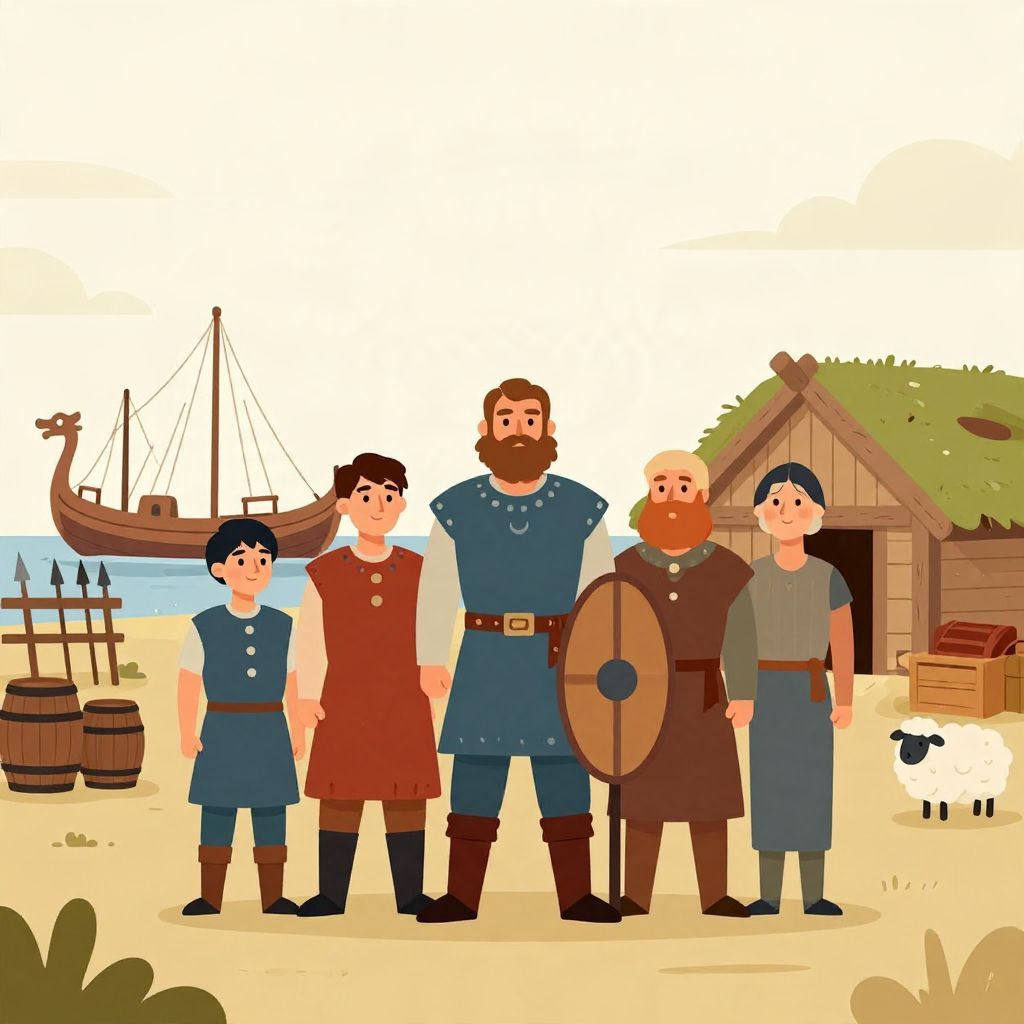
How tall were Vikings? The short answer is that most Viking-age men were shorter than modern Northern Europeans, but not dramatically so. Skeletal evidence suggests an average male height of about 5 feet 7 inches to 5 feet 8 inches (roughly 170–173 cm), while women averaged around 5 feet 2 inches to 5 feet 3 inches (about 158–160 cm).
That average varied by region, diet, childhood health, and social status. Vikings were not a single “race” or a uniformly built people; they were medieval Scandinavians living between the late 8th and mid-11th centuries, and their height reflects the realities of early medieval life more than any heroic legend.
How tall were Vikings?
Most Viking-age men stood around 170–173 cm tall on average, with women averaging about 158–160 cm. Some individuals were taller and some shorter, but the evidence from graves and skeletons shows that Vikings were generally similar in height to other people in northern Europe of the same era, and shorter than many modern populations.
What the evidence says about Viking height
Our best evidence comes from archaeology, especially skeletons recovered from Viking-age burials in Scandinavia, Britain, and other areas connected to Norse settlement and trade. Because written sources rarely describe exact body measurements, osteological study is the main way historians estimate height. These studies show variation, but they consistently place Viking-age adults below modern averages.
Why skeletons are the main source
Height is not usually recorded in saga literature, and medieval writers were more interested in lineage, honor, and deeds than in precise physical measurements. Archaeologists estimate stature by measuring long bones such as the femur and tibia. Those measurements are then compared with modern formulas to reconstruct likely living height. This method is useful, but it still produces ranges rather than exact figures.
Typical ranges, not a single number
It is misleading to imagine all Vikings as the same size. A well-fed man from a prosperous household could be taller than average, while someone who experienced illness or poor nutrition in childhood might be shorter. The same is true for women. In other words, “how tall were Vikings” is best answered as an average, not a fixed trait.
Why were Vikings shorter than many people today?
The main reason was nutrition and childhood health. Viking-age Scandinavians lived in a world without modern medicine, antibiotics, fortified foods, or stable year-round food security. Even in relatively prosperous communities, repeated illness, seasonal shortages, and hard physical labor could limit growth during childhood and adolescence.
Diet mattered, but not in a simple way
The Viking diet could be varied and nutritious by medieval standards, including fish, dairy, grains, meat, and preserved foods. Coastal communities often had access to protein-rich diets, and some people were well nourished. Still, food supply depended on harvests, livestock survival, and local conditions. A good diet helped people grow taller, but it did not guarantee modern stature.
Health and workload also shaped height
Frequent infections, parasite exposure, and physically demanding lives all affected growth. Children who survive repeated illness often end up shorter than they might have been under healthier conditions. Viking-age communities also faced harsh winters and social inequalities. Elite households may have offered better nutrition, but even they lived in a preindustrial world with limited medical care.
Were Vikings tall for their time?
Yes, often slightly. Compared with many populations in medieval Europe, Scandinavians were not unusually short, and some studies suggest they were modestly taller than people in parts of southern Europe. But the difference should not be exaggerated. Vikings were not giants; they were ordinary early medieval people whose average height reflected regional environment and lifestyle.
Popular myths versus historical reality
Modern popular culture often imagines Vikings as towering warriors. That image is partly a product of later romanticism, art, and film. The historical record does not support the idea of a uniformly huge warrior people. Some individuals were imposing, but the average Viking would likely have looked fairly close in size to other medieval Europeans.
Armor, weapons, and the illusion of size
Another reason Vikings can seem larger in the imagination is the equipment associated with them. Helmets, mail shirts, and broad-shouldered cloaks can make people appear more massive than they were. Burial finds and reconstructions also tend to emphasize martial identity. In reality, a warrior’s reputation depended far more on skill, status, and courage than on height alone.
The timeline of Viking-age Scandinavia
The Viking Age is usually dated from the late 8th century to the mid-11th century, roughly 793 to 1066, though historians sometimes use slightly different end dates. Height evidence comes from this broad period, and it is important because living conditions changed over time, especially as trade, settlement, and Christianization altered Scandinavian society.
- Late 8th century: The earliest major Viking raids begin, including the attack on Lindisfarne in 793.
- 9th century: Expansion accelerates through raiding, trading, and settlement across the North Atlantic and the British Isles.
- 10th century: More stable kingdoms form in Scandinavia; trade networks widen and some communities grow wealthier.
- 11th century: Christianization and state formation reshape society; the classic Viking Age gradually ends.
This chronology matters because height is not static across centuries. As societies become wealthier or healthier, average stature can rise. The Viking Age spans a period of change, so a person buried in the early 9th century may not have had exactly the same life chances as someone buried in the late 11th century.
How Viking height connects to historical significance
Height may seem like a small detail, but it helps historians reconstruct everyday life. Stature is a biological record of childhood conditions, food supply, disease burden, and social inequality. In the Viking case, it shows that Scandinavians were integrated into the broader patterns of early medieval Europe rather than standing apart as a physically exceptional people.
What height reveals about society
Average height can indicate whether a population was under stress or relatively well nourished. For Viking-age communities, the evidence suggests a mixed picture: access to protein and maritime resources in some areas, but also the constraints of a premodern economy. This balance helps explain why Vikings could be robust travelers, traders, and raiders without needing to be unusually tall.
Why the question still matters
People often ask how tall Vikings were because height is tied to popular images of strength and power. But the more interesting historical point is that Viking society was shaped by adaptation: to climate, seafaring, warfare, farming, and long-distance exchange. Their bodies, like their ships and settlements, reflected the conditions of their world.
So, how tall was a Viking in everyday terms?
If you want a practical image, imagine a Viking man around the height of an average modern man in some countries, though generally shorter than today’s average in many parts of Europe and North America. A Viking woman would likely have been around average female height for the medieval world, not unusually tall by modern standards.
A careful comparison with the present
Modern average heights are higher in many regions because of better childhood nutrition, sanitation, and healthcare. That does not mean Vikings were weak or small for their time. It means they lived under different biological conditions. A Viking’s stature should be judged against the early medieval world, not against modern athletic or cinematic expectations.
Conclusion
Vikings were generally of moderate height by medieval standards: men averaged about 170–173 cm, women about 158–160 cm, with plenty of natural variation. Their size tells us less about legend than about lived reality—food, health, climate, and social conditions in the Viking Age. For more on their appearance and daily life, see what Vikings looked like and what language Vikings spoke.