
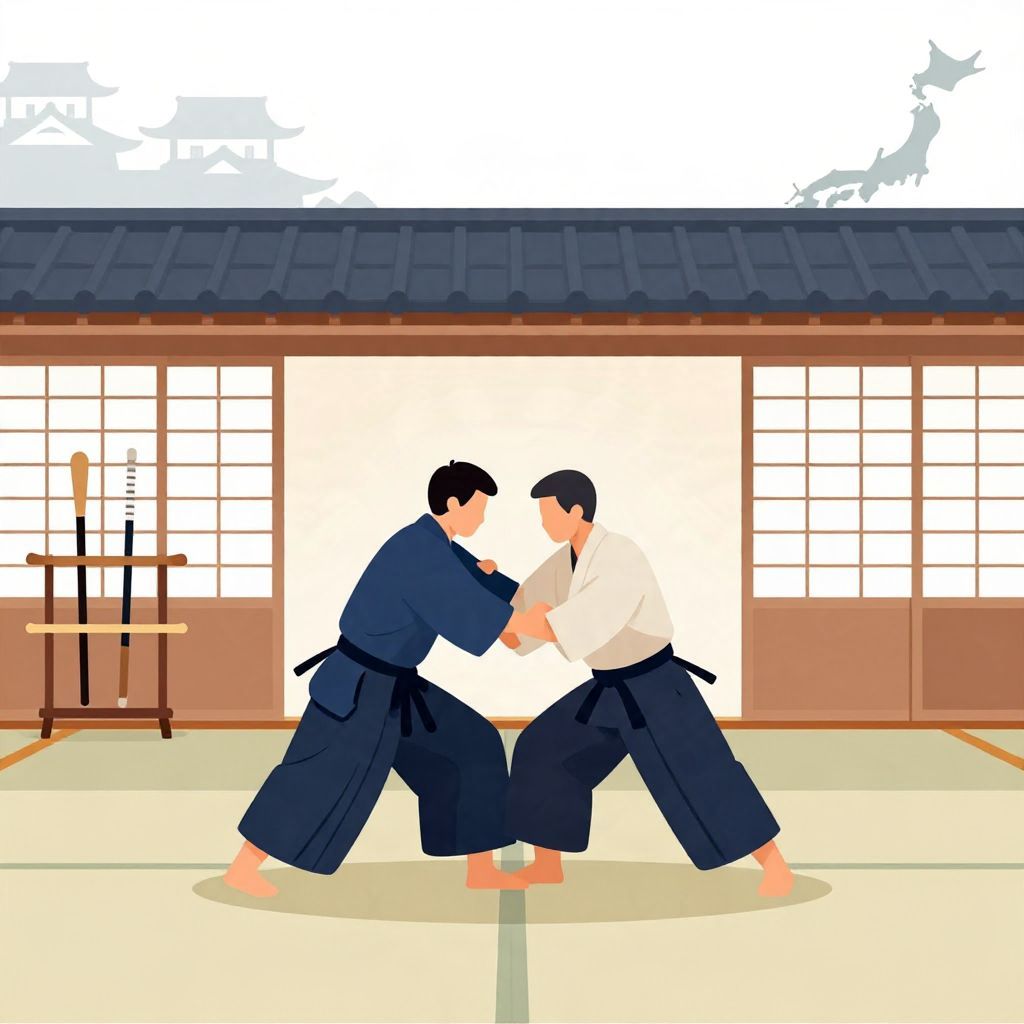
Jiu jitsu is from Japan, where it developed as a set of battlefield and self-defense techniques used by samurai. Its roots stretch back centuries, long before modern combat sports, and the art later spread and changed as it encountered new social conditions in Japan and abroad.
Because “jiu jitsu” can mean different things today, the answer depends on whether you mean traditional Japanese jujutsu, modern Brazilian jiu-jitsu, or the broader family of grappling arts that grew from them. Historically, however, the original source is Japan, especially the warrior culture of the feudal period.
Where Is Jiu Jitsu From?
Jiu jitsu originated in Japan, most likely taking shape during the medieval and early modern periods as jujutsu or jūjutsu. It was designed for close-range combat when a warrior had lost the use of a sword or needed to subdue an armored opponent. The modern global forms of jiu jitsu later developed from this Japanese base.
The Japanese Origins of Jiu Jitsu
Feudal Japan and the needs of the samurai
Traditional jiu jitsu emerged in a society shaped by warfare, class hierarchy, and armed retainers. In feudal Japan, samurai trained not only with swords, spears, and bows, but also in methods for grappling, joint locks, throws, and strikes at close range. These techniques were practical in situations where weapons were unavailable, broken, or ineffective.
Rather than being a single invention by one person, jiu jitsu developed across many schools, or ryū, over time. Different lineages emphasized different methods depending on their battlefield experience, philosophy, and teaching traditions. Some schools focused on armor combat, while others adapted to peacetime self-defense and policing.
What the word means
The term jujutsu is usually translated as “gentle art” or “soft technique,” though that can be misleading. The idea was not softness in the modern sense, but the strategic use of yielding, timing, and leverage to overcome force. Instead of meeting strength with strength, a practitioner used an opponent’s movement against them.
This principle became one of the defining features of the art. It helped distinguish jiu jitsu from purely striking systems and from weapon-based training. In practice, it included throws, pins, chokes, joint manipulations, escapes, and sometimes striking techniques meant to create openings.
How Jiu Jitsu Developed in Japan
From battlefield methods to organized schools
Historical evidence suggests that grappling methods existed in Japan well before the early modern era, but jujutsu became more clearly organized during the centuries of samurai rule. By the late medieval and early Edo periods, instructors were systematizing techniques into schools with named curricula and transmission lines.
During the long peace of the Tokugawa period, beginning in the early 1600s, the role of martial arts changed. Large-scale warfare declined, and many warrior arts shifted toward personal discipline, self-defense, and law enforcement. This helped jujutsu survive and evolve, even as the battlefield that had shaped it became less central.
Not one style, but many traditions
There was never just one original jiu jitsu. Instead, there were many schools with different emphases. Some traditions preserved older combat methods; others adapted to the needs of towns, officials, and unarmed restraint. This variety is one reason the term can be confusing today.
- Battlefield-oriented schools emphasized throws and disabling techniques suited to armored combat.
- Civilian and police-oriented schools focused on control, arrest, and restraint.
- Later reform schools influenced modern martial arts and physical education.
Because of this diversity, historians usually describe jiu jitsu as a family of Japanese grappling arts rather than a single fixed system.
How Jiu Jitsu Became Known Outside Japan
Meiji-era change and international spread
In the late 19th century, Japan modernized rapidly after the Meiji Restoration. Many traditional martial arts faced pressure to adapt or disappear. At the same time, Japanese teachers and travelers began introducing jujutsu to audiences outside Japan. This was the beginning of its global transformation.
Western interest grew through demonstrations, military contacts, and the fascination of foreign observers with Japanese culture. As jujutsu spread, its methods were simplified, renamed, or merged with other systems. The art no longer remained only a Japanese battlefield tradition; it became part of an international martial arts exchange.
The path toward judo and Brazilian jiu-jitsu
One of the most important developments came from Jigoro Kano, who founded judo in the 1880s by reorganizing selected jujutsu techniques into a modern educational and competitive system. Judo preserved the grappling essence of older jujutsu while making it safer and more standardized for training.
From judo, and indirectly from jujutsu, came the later development of Brazilian jiu-jitsu. Japanese judo and jujutsu practitioners traveled abroad in the early 20th century, and their teaching influenced martial culture in Brazil. There, the art was adapted further into a ground-fighting system that became famous worldwide.
Jiu Jitsu, Jujutsu, and Brazilian Jiu-Jitsu: What Is the Difference?
Traditional jujutsu
Traditional Japanese jujutsu refers to the older schools that developed in Japan over centuries. These systems often included a broad range of techniques and were tied to samurai culture. They were not sports in the modern sense, though some schools used controlled practice methods.
Judo
Judo is a modern Japanese martial art created from jujutsu principles. It emphasizes throws, pins, and submissions, and it was designed as both a martial discipline and a form of physical education. Judo helped preserve many older ideas while reshaping them for a modern nation-state.
Brazilian jiu-jitsu
Brazilian jiu-jitsu, often abbreviated BJJ, is a later offshoot that developed in Brazil from Japanese grappling instruction. It places especially strong emphasis on ground fighting, positional control, and submissions. Although it shares ancestry with Japanese jujutsu, it is a distinct modern art with its own history.
In everyday speech, people sometimes use “jiu jitsu” to mean any of these forms. That is why the question “Where is jiu jitsu from?” can have a simple answer and a more detailed one at the same time.
Why Japan Became the Home of Jiu Jitsu
Warrior culture and practical training
Japan’s feudal political structure created ideal conditions for the growth of martial systems. Samurai needed methods that worked in real conflict, including at close quarters and in unpredictable situations. Grappling arts were especially useful when armor limited striking and when combat moved into confined spaces.
Philosophy and adaptability
The Japanese martial tradition also valued discipline, refinement, and transmission from teacher to student. Jujutsu schools were not just collections of techniques; they were cultural institutions. They reflected ideas about loyalty, efficiency, and the disciplined use of force.
That adaptability helped the art survive major historical transitions. When warfare changed, jujutsu changed too. When Japan opened to the world, the art traveled and evolved again. Its history is therefore not a straight line, but a series of adaptations rooted in Japan.
Common Misconceptions About Jiu Jitsu Origins
It did not begin in Brazil
Brazilian jiu-jitsu is famous worldwide, but it is not the original source of the art. Brazil was the place where one major modern branch developed, not where the whole tradition began. The deeper historical origin lies in Japan.
It was not invented all at once
Another misconception is that jiu jitsu was created by a single founder. In reality, it emerged gradually through many schools and generations of teachers. This is common in older martial traditions, where techniques are inherited, revised, and renamed over time.
“Gentle” does not mean weak
The “soft” or “gentle” idea in jiu jitsu refers to strategy, not passivity. The art depends on timing, leverage, and efficient movement. Historically, that made it effective for smaller or less powerful practitioners against stronger opponents.
Historical Significance of Jiu Jitsu
Jiu jitsu matters historically because it shows how practical combat knowledge can become a cultural tradition. What began as a samurai survival skill eventually influenced modern sport, self-defense, military training, and global martial arts culture. Its history also illustrates how Japanese traditions were transformed through modernization and international exchange.
The art’s journey from feudal Japan to the modern world reflects a larger pattern in history: local practices can become global when they are adapted to new social needs. Jiu jitsu did not remain frozen in one era. It changed with Japan, then changed again as it spread abroad.
So, Where Is Jiu Jitsu From?
Jiu jitsu is from Japan, where it developed as a family of grappling and self-defense systems associated with samurai culture. Over time, it evolved into different forms, including judo and Brazilian jiu-jitsu. If you are asking about the original historical source, the answer is Japan; if you are asking about the modern sport, the story becomes broader and more international.
For readers interested in related martial and cultural origins, you may also enjoy where karate is from and, for a different kind of Japanese cultural history, where sushi is from.