
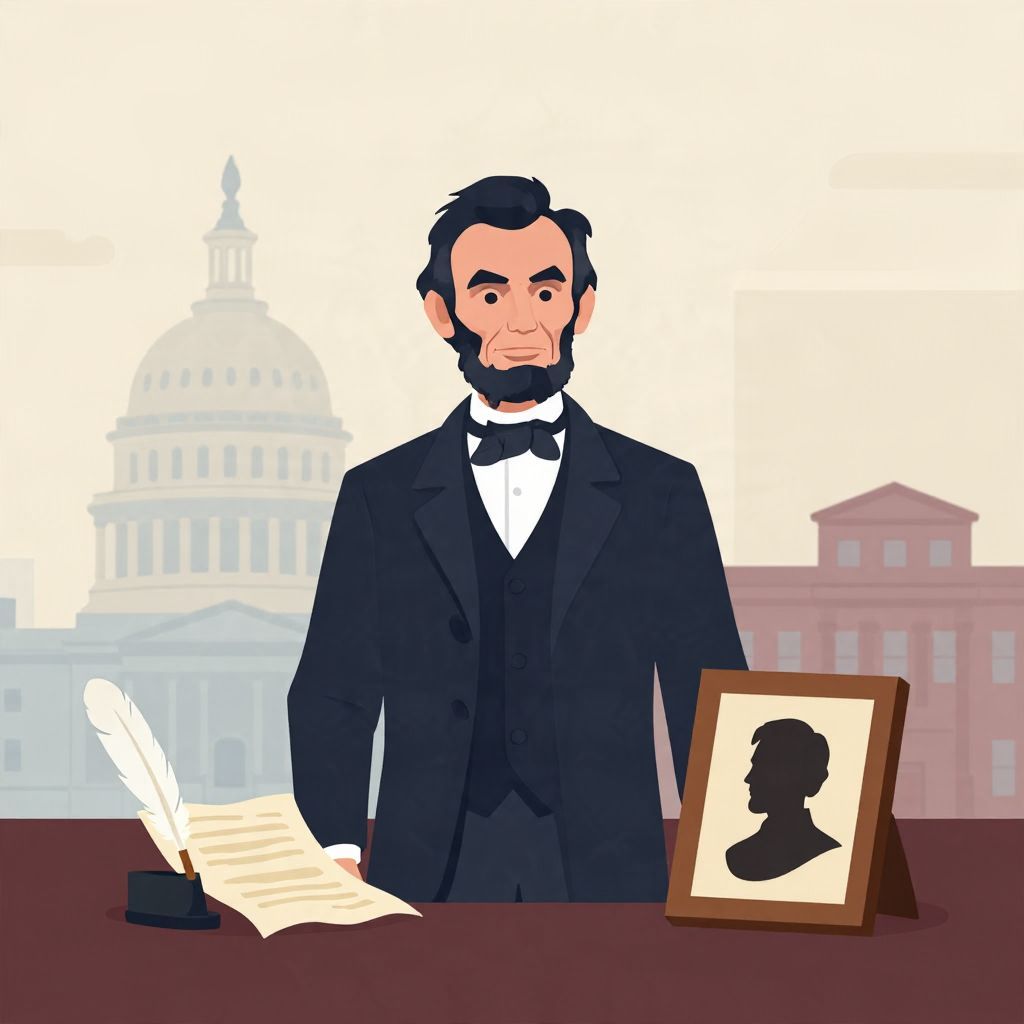
Was Abraham Lincoln Black? The short historical answer is no: Abraham Lincoln was not Black. He was born in 1809 in Kentucky to a white family of English and Scots-Irish ancestry, and the historical record consistently identifies him as a white man.
That said, the question persists because Lincoln became the president most closely associated with the destruction of slavery in the United States. His legacy in emancipation, equality, and race has led to myths, speculation, and modern debates about identity that are separate from the evidence about his own background.
Was Abraham Lincoln Black?
No. Abraham Lincoln was not Black. The documentary record from his lifetime identifies him as white, and his family background traces to white settlers in Kentucky and Indiana. He opposed slavery and issued the Emancipation Proclamation, but those actions do not change his racial identity.
What the Historical Evidence Shows
Lincoln was born on February 12, 1809, in Hardin County, Kentucky, to Thomas Lincoln and Nancy Hanks Lincoln. Both parents were part of white frontier families. Lincoln grew up in a rural, enslaving society, but there is no credible evidence that he was Black, biracial, or descended from an African American parent.
Family background and ancestry
Historians generally describe Lincoln’s ancestry as English and Scots-Irish, with some uncertainty common to early American family histories. That uncertainty does not support claims of African ancestry; rather, it reflects the limits of surviving records from frontier Kentucky and Indiana.
How Lincoln was identified in his own time
In the 19th century, newspapers, legal records, political writings, and census documents treated Lincoln as white. He lived in a society that rigidly categorized people by race, and there is no reliable contemporary source describing him as Black. The historical consensus is therefore based on the evidence available from his lifetime, not on later speculation.
Why Do Some People Ask the Question?
The question often arises because Lincoln is so strongly connected to the end of slavery that some people assume he must have had African ancestry or a hidden racial identity. Others confuse moral opposition to slavery with shared racial identity. In history, however, political action and personal identity are not the same thing.
Lincoln’s anti-slavery role
Lincoln did not begin his career as an abolitionist in the modern sense. He opposed the expansion of slavery into new territories and believed slavery was morally wrong, but he also moved cautiously because he wanted to preserve the Union. During the Civil War, his policies evolved, culminating in the Emancipation Proclamation of 1863 and support for the Thirteenth Amendment in 1865.
Legacy and symbolism
Because Lincoln became a symbol of emancipation, equality, and national reunification, later generations sometimes projected broader meanings onto him. In African American history and memory, he is often remembered as the president who ended slavery, even though his views changed over time and he was not free from the racial assumptions common among white Americans of his era.
Lincoln’s Views on Race and Slavery
Understanding Lincoln’s racial identity also requires understanding his racial views, which were complex and changed over time. He opposed slavery as an institution, but he did not begin as a social egalitarian by modern standards. Like many white politicians of the 1800s, he held views that today would be seen as limited or paternalistic.
From opposition to slavery to emancipation
Lincoln’s early public statements focused on restricting slavery’s spread rather than immediate abolition everywhere. As the Civil War progressed, military necessity, moral conviction, and political pressure pushed him toward emancipation. This shift matters because it shows how historical figures can change under the force of events.
Equality in the Declaration of Independence
Lincoln repeatedly returned to the Declaration of Independence and its claim that all men are created equal. He used that principle to argue against slavery’s expansion and to redefine the Union’s purpose. That language helped shape later civil rights struggles, but it should not be mistaken for evidence about his own race.
Myths, Misreadings, and Popular Claims
Claims that Lincoln was Black usually come from mythmaking, political symbolism, or misunderstandings rather than from historical documentation. Some stories circulate because people want a more inclusive national hero, while others arise from attempts to reinterpret famous figures through modern identity debates.
No reliable evidence supports a Black Lincoln
There is no verified genealogical, archival, or contemporary evidence that Lincoln was Black. Serious historical research depends on sources such as family records, census data, letters, and public statements. Those sources consistently place Lincoln within a white family and a white political world.
Why the myth survives
Myths often survive when they serve a symbolic purpose. In Lincoln’s case, the idea of a Black Lincoln can function as a way of claiming him for African American history or challenging older racial narratives. But symbolic value is not the same as historical fact, and responsible history must keep the two separate.
Lincoln, Slavery, and the Reality of Race in the 1800s
To answer the question fully, it helps to remember that race in the United States during Lincoln’s lifetime was a harsh legal and social system, not a flexible identity category. Being white gave Lincoln access to rights, mobility, and political power that Black Americans were largely denied. That context shaped both his life and his politics.
What his whiteness meant historically
Lincoln’s whiteness mattered because it placed him inside the dominant political class of his era, even as he challenged slavery’s expansion. He could speak as a national leader in ways enslaved people could not. At the same time, his antislavery leadership helped create conditions in which African Americans could press for freedom, citizenship, and civil rights.
The limits of a modern lens
Modern readers sometimes ask whether a famous person was “really” Black in order to recover overlooked histories or challenge exclusion. Those are understandable impulses, but they must be grounded in evidence. In Lincoln’s case, the historical record does not support the claim. What it does support is a more nuanced understanding of how a white president came to play a central role in Black freedom.
Why Lincoln Still Matters in African American History
Even though Lincoln was not Black, he remains important to African American history because his presidency marked a turning point in the destruction of slavery. His actions did not end racism, and freedom after the Civil War was incomplete and contested, but his leadership helped transform the constitutional order of the United States.
Emancipation was a beginning, not an ending
The Emancipation Proclamation applied only to areas in rebellion, and freedom for enslaved people became fully secured only as Union victory advanced and the Thirteenth Amendment abolished slavery nationwide. Afterward, Reconstruction opened new possibilities while also revealing how deeply racial inequality remained embedded in American life.
A complicated legacy
Lincoln is remembered both for antislavery leadership and for the limits of his era. He was not a modern civil rights advocate, and he was not Black. But he was a president whose decisions helped make emancipation a national reality. That is the historically grounded reason his name remains central in discussions of race.
Conclusion
So, is Abraham Lincoln Black? No. The historical evidence shows that Lincoln was a white man born to a white family in Kentucky. The more important historical story is not his race, but how a white president came to lead the United States through slavery’s destruction and toward constitutional freedom. If you want to explore more, see when Abraham Lincoln was president and, for a comparison of how racial questions can surround famous figures, whether Babe Ruth was Black.