
The question “Is Caucasian white?” sounds simple, but historically it has had more than one answer. In everyday modern English, “Caucasian” is often used as a synonym for “white,” especially in the United States. Yet the term began as a scientific label in the 18th century and has shifted meaning many times since then.
To understand it properly, we need to separate older racial classifications from modern usage. The history of the word shows how ideas about race were created, changed, and sometimes misused over time.
Is Caucasian White?
Yes, in modern American usage, Caucasian usually means white. Historically, though, the word did not originally mean “white people” in the broad sense we use today. It began as a racial category in 18th-century scholarship and later became a common label for people of European ancestry.
Where Did the Word “Caucasian” Come From?
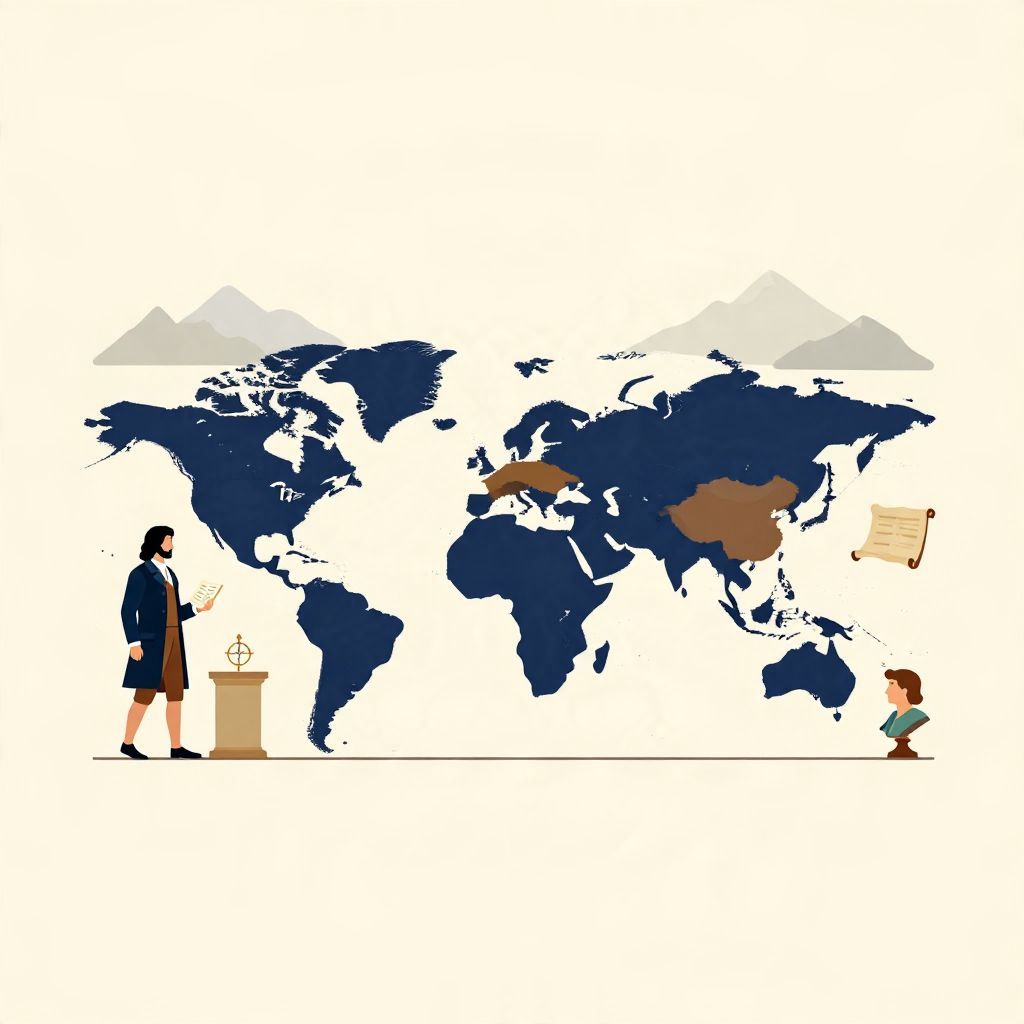
The term “Caucasian” first became influential in the late 1700s through the work of German scholar Johann Friedrich Blumenbach. He used it to describe one of his human groupings, naming it after the Caucasus region between the Black Sea and the Caspian Sea. Blumenbach thought people from that region represented an especially “beautiful” form of humanity, but his theory reflected the racial thinking of his era rather than modern biology.
Blumenbach’s classification system
Blumenbach divided humanity into several broad groups, including Caucasian, Mongolian, Ethiopian, American, and Malayan. His categories were based on physical appearance and geography, not on genetics as understood today. Although his ideas were influential, they were part of an early attempt to sort human diversity into fixed “races,” a framework later challenged by science.
Why the Caucasus?
Blumenbach chose the name partly because he believed the region was near the origin of humanity and partly because he admired the physical features he associated with its inhabitants. That choice was not a neutral geographic label. It reflected a European intellectual tradition that often placed Europe and nearby regions at the center of human history.
How Did “Caucasian” Become a Word for White People?
Over the 19th century, “Caucasian” moved from a specialist term into broader popular and legal use, especially in the United States and Britain. It became a polite or formal-sounding way to refer to people considered white. In practice, the word was often used to describe Europeans and their descendants, even though the original term was much narrower and more theoretical.
Race science and social hierarchy
During the 1800s, many writers used racial categories to rank human groups. “Caucasian” was often placed at the top of these systems and treated as a label for whiteness, civilization, or supposed superiority. Today historians recognize these ideas as products of colonialism, slavery, and pseudoscience rather than objective fact.
Legal and bureaucratic use
In the 20th century, “Caucasian” appeared in census forms, immigration records, court language, and medical descriptions. In the United States, it could function as a formal synonym for “white,” though the exact meaning varied by context. This bureaucratic use helped make the term sound precise, even when racial boundaries were socially constructed and inconsistent.
Is “Caucasian” the Same as “White” Everywhere?
No. The words are not always interchangeable. In modern English, “white” is the more common social and political term, while “Caucasian” is often a formal or outdated label. In some contexts, “Caucasian” may be used loosely to mean white; in others, it can be technically incorrect or misleading.
Different meanings in different places
- In the United States: “Caucasian” is often used as a synonym for “white.”
- In older academic writing: It referred to a broad racial category that included many peoples from Europe, parts of West Asia, and sometimes elsewhere.
- In modern anthropology and genetics: The term is generally avoided because human variation does not fit neatly into old racial boxes.
Why the term can be confusing
People from the Caucasus region are not all “white” in the way the word is used in American racial categories, and many people considered white in the United States do not come from the Caucasus at all. That mismatch shows that the term is historically loaded rather than scientifically exact.
What Do Historians and Scientists Say Today?
Most historians and anthropologists treat “Caucasian” as a historically important but outdated racial term. Modern science shows that human populations vary gradually across regions and share far more genetic overlap than older racial theories assumed. Because of that, race is now understood mainly as a social and historical category, not a fixed biological one.
Why old racial categories fell out of favor
Older systems tried to divide humanity into a small number of races based on appearance alone. But migration, intermarriage, empire, slavery, and centuries of population change made those categories unstable. The word “Caucasian” survived longer than many others because it sounded scholarly, but that did not make it scientifically accurate.
Why the term still appears
The word remains in some legal, medical, and historical materials because institutions often preserve older language. It also survives in everyday speech, especially among older speakers or in formal documents. Still, many organizations now prefer “white,” “European ancestry,” or more specific ethnic descriptions when appropriate.
Why Does This History Matter?
The history of “Caucasian” matters because it reveals how racial language was invented and normalized. A word that now seems ordinary began as part of a larger effort to classify human beings into hierarchies. Understanding that history helps explain why racial terms can carry social power even when they seem neutral.
Race as a historical idea
Race did not emerge as a timeless scientific truth. It developed through empire, slavery, colonial expansion, and attempts to justify inequality. Terms like “Caucasian” were part of that process. They shaped law, education, medicine, and everyday identity, long after their original assumptions had been questioned.
Language changes, but history remains
Today, many people use “Caucasian” casually without knowing its origins. But the word still reflects older ideas about who belonged to which group and why. Knowing that background makes it easier to use language carefully and to understand why some terms feel outdated or politically loaded.
So, Is Caucasian White?
In modern usage, yes: Caucasian usually means white. Historically, however, the term began as an 18th-century racial classification and was never a perfect match for the social category “white.” Its meaning changed over time, and today it is best understood as a historical label rather than a precise scientific one.
The simplest takeaway is this: “Caucasian” became a common word for “white,” but its history shows how racial categories were created, expanded, and often distorted. If you want to explore related questions about identity and historical classification, you may also find why Michael Jackson was described as white and how Martin Luther King changed the world useful for further context.