
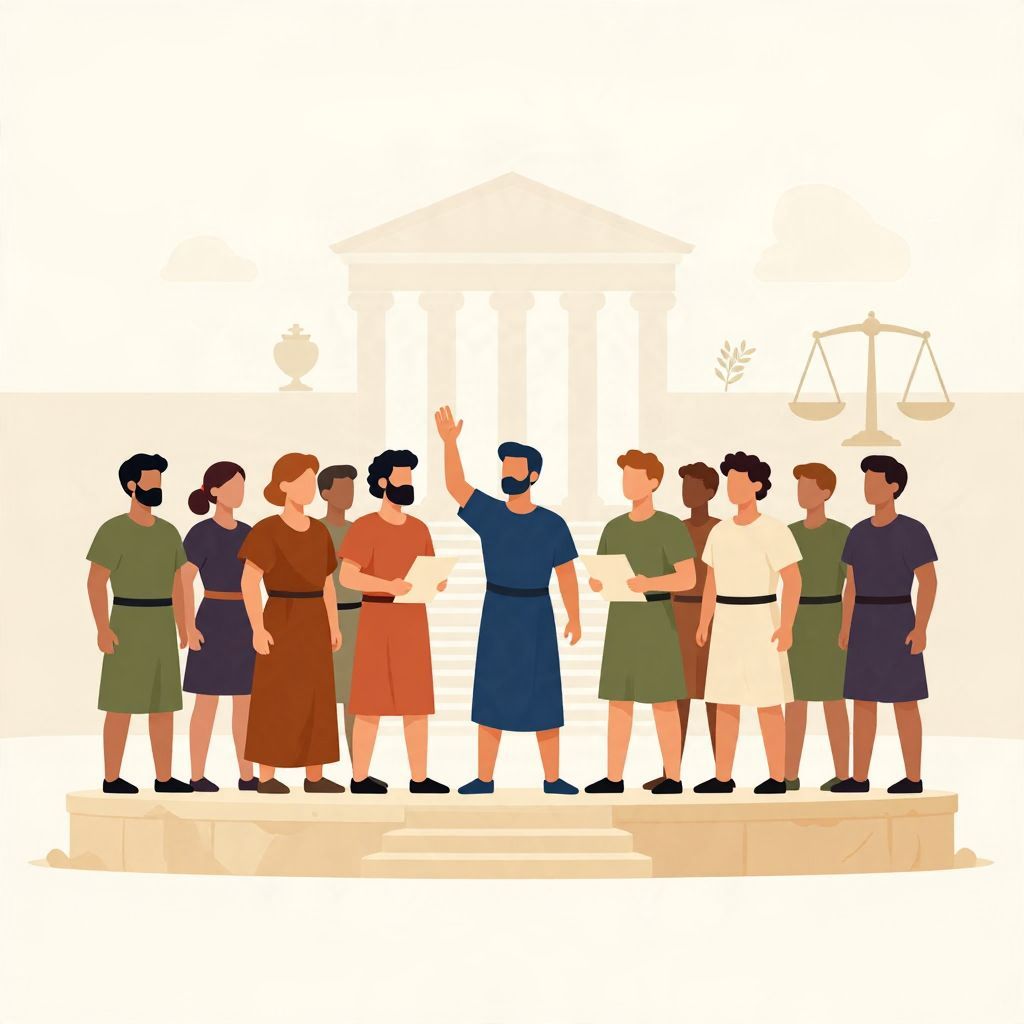
What are political rights, and why have they mattered so much across history? In simple terms, political rights are the rights that let people take part in governing their community or state. They include voting, running for office, joining political debate, and petitioning rulers or lawmakers.
These rights did not appear all at once. They developed slowly through ancient city-states, medieval assemblies, revolutions, and modern democratic movements, often after long struggles over who counted as a member of the political community.
What Are Political Rights?
Political rights are the legal and civic rights that allow people to influence government. They usually include the right to vote, stand for office, join political parties, express political opinions, and petition authorities. Historically, these rights were often limited by class, sex, race, property, religion, or status.
The Historical Origins of Political Rights
The idea behind political rights is very old, but the modern language of “rights” developed gradually. Ancient societies often gave political participation to a narrow group of free male citizens, while excluding women, enslaved people, foreigners, and the poor. Over time, struggles over membership and representation expanded political rights in many places.
Ancient Greece and Rome
In classical Athens, citizen men could speak and vote in the assembly, though citizenship was restricted and many residents had no political voice. In the Roman Republic, political participation also depended on citizenship and status, and power was unevenly distributed. These systems helped shape later ideas about citizenship, representation, and public debate, even though they were far from equal democracies.
Medieval and Early Modern Limits
In medieval Europe, political power was usually tied to monarchy, aristocracy, church authority, or local custom rather than universal participation. Some towns and estates had assemblies, councils, or charters, but these bodies represented only select groups. Political rights were therefore more about privilege than equal citizenship.
How Political Rights Changed in the Age of Revolutions
Political rights became a major historical issue in the 17th and 18th centuries, when revolutions and constitutional movements challenged absolute monarchy and inherited privilege. Thinkers and activists argued that legitimate government required the consent of the governed, not just the authority of kings.
The American and French Revolutions
The American Revolution helped popularize the language of rights and representation, though voting remained limited in practice. The French Revolution pushed the idea further by attacking feudal privilege and declaring citizenship central to political life. Yet even in revolutionary France, political rights were contested, unstable, and often restricted by gender and property.
Rights Were Still Unequal
Despite revolutionary rhetoric, most states in the 18th and 19th centuries did not grant political rights to everyone. Women were usually excluded from voting and office-holding. Enslaved people, colonized populations, and racial minorities were often denied citizenship or meaningful participation. The history of political rights is therefore also the history of exclusion.
What Political Rights Usually Include
Although the exact list varies by country and era, political rights commonly refer to several core freedoms and powers connected to self-government.
- The right to vote in elections or referendums
- The right to stand for election or hold public office
- The right to join political parties or civic organizations
- The right to free political speech and debate
- The right to assemble peacefully for political purposes
- The right to petition government or seek redress
- The right to access fair procedures in political participation, such as equal treatment in elections
Political Rights and Civil Rights
Political rights are closely related to civil rights, but they are not exactly the same. Civil rights protect individual freedom and equal treatment under the law, while political rights focus on participation in government. In practice, the two are deeply connected: people usually need civil liberties such as speech, assembly, and due process in order to exercise political rights effectively.
The Expansion of Political Rights in the 19th and 20th Centuries
The modern history of political rights is largely a story of expansion. During the 19th century, many countries gradually widened the vote from elite men to broader male populations. Reform movements, labor politics, and mass parties pushed governments to recognize that political legitimacy depended on wider participation.
Mass Suffrage and Democratic Reform
In Britain, the franchise expanded through a series of reform acts in the 19th century, though not all adults received the vote at once. Similar changes occurred in other European states and in settler societies such as the United States, Canada, Australia, and New Zealand, though each followed its own uneven path. Expansion was often slow, contested, and shaped by local power struggles.
Women’s Suffrage
One of the most important developments was the women’s suffrage movement. Campaigners argued that women should have the same political rights as men because they were subject to the same laws and taxes. Different countries enfranchised women at different times, with some granting the vote in the late 19th and early 20th centuries and others much later. This was a major shift in the meaning of citizenship.
Decolonization and Racial Equality
In the 20th century, anticolonial movements and civil rights struggles challenged empires and segregation systems that denied political rights to large populations. Independence movements in Asia and Africa often framed self-rule as a political right of nations. In the United States and elsewhere, campaigns against racial discrimination sought not only legal equality but real access to voting and office-holding.
Political Rights in Modern Law and International Human Rights
After the Second World War, political rights became central to international human rights language. Documents such as the Universal Declaration of Human Rights and later treaties affirmed the right to participate in government, vote in genuine elections, and access public service on equal terms. These principles did not eliminate authoritarian rule, but they gave political rights a global legal vocabulary.
Why Governments Restrict Political Rights
Throughout history, rulers have restricted political rights to preserve order, maintain hierarchy, or protect their own power. Authoritarian governments may limit opposition parties, censor speech, manipulate elections, or exclude groups from citizenship. Even in democracies, political rights can be weakened by intimidation, unequal access, gerrymandering, or legal barriers to participation.
Why Political Rights Matter in History
Political rights matter because they determine who gets to shape laws, choose leaders, and influence public life. When political rights are narrow, government tends to serve a small group. When they expand, more people can contest power, demand accountability, and claim a stake in the state. Many of the major turning points in modern history have centered on this struggle.
A Living Historical Idea
Political rights are not a fixed invention from one moment in time. They are a historical achievement built through conflict, compromise, and reform. Different societies have defined them differently, but the central question has remained the same: who has the right to participate in power?
In that sense, political rights are both a legal category and a record of historical struggle. They connect ancient citizenship, revolutionary ideals, and modern democracy, while reminding us that participation in government has often been won only after long exclusion. For related reading, see what two rights are named in the Declaration of Independence and what political engagement means.