
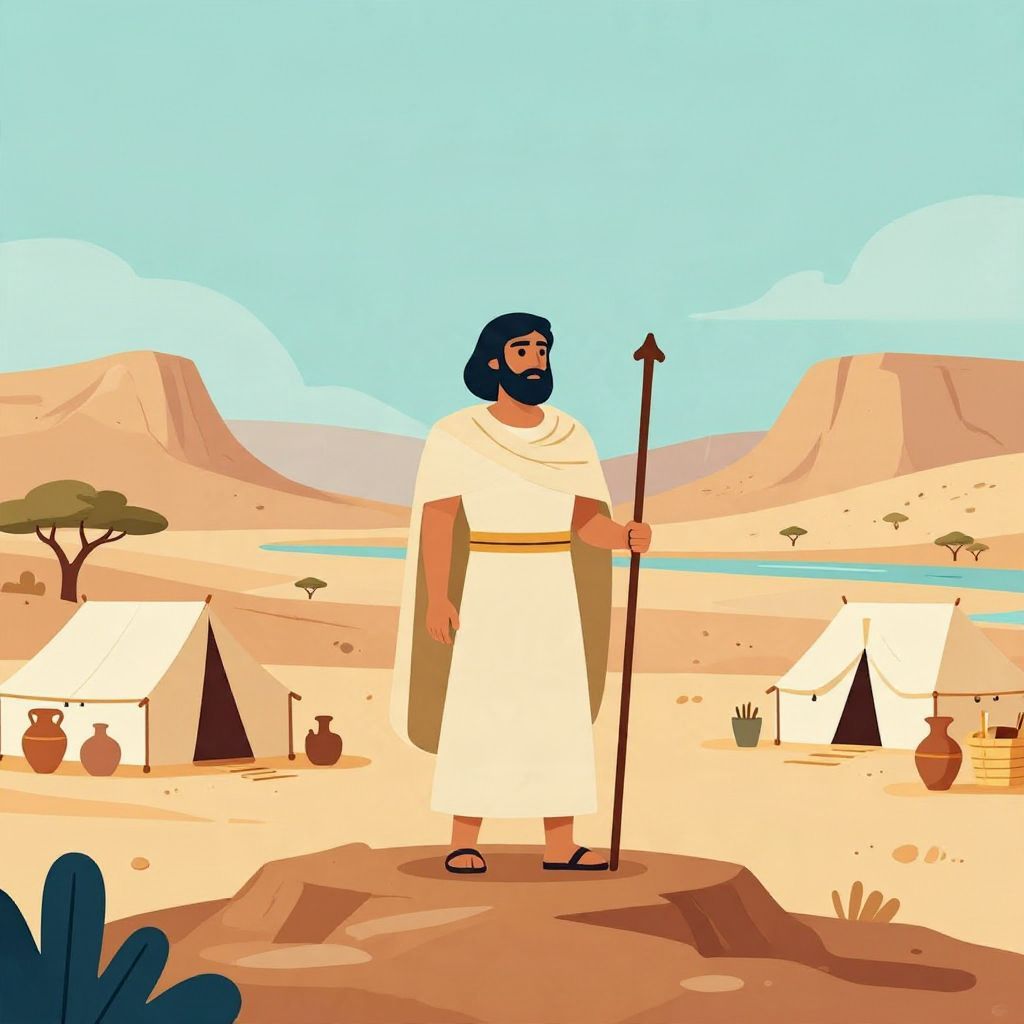
What did Moses look like? The short historical answer is that we do not know with certainty. Moses is a figure from the ancient biblical tradition, and no contemporary portrait, statue, or verified description survives from his lifetime. What people imagine today comes mostly from later Jewish, Christian, and artistic traditions rather than from direct historical evidence.
That uncertainty matters. Moses is one of the most influential figures in religious history, but his appearance belongs to the realm of interpretation, memory, and symbolism. To understand what he may have looked like, we have to separate history from later image-making and ask what the sources actually allow us to say.
What Did Moses Look Like?
There is no historically secure physical description of Moses. The Bible does not give his height, facial features, hair color, or complexion. Later traditions sometimes portray him as elderly, bearded, and authoritative, but those images reflect cultural convention more than evidence. Historically, the safest answer is that Moses likely appeared as an ancient Near Eastern man of his time, though the details are unknown.
What the Sources Actually Say
The biblical texts give almost no physical description
The Hebrew Bible focuses on Moses’ role as prophet, lawgiver, and leader, not on his appearance. This is common in ancient literature, where character and status mattered more than physical portraiture. The text does mention that Moses was old at the end of his life and that his eyesight had not failed, but that is not the same as a description of his face or body.
One of the most famous passages about Moses involves his radiant face after speaking with God. In that story, Moses covers his face with a veil. This scene shaped later art, but it does not tell us what he looked like in ordinary life. It describes a transformed, sacred appearance, not a standard portrait.
Later traditions filled in the gaps
As Judaism, Christianity, and Islam developed, artists and writers began to imagine Moses visually. Some depicted him as an aged patriarch with a long beard and staff; others emphasized his role as a prophet or lawgiver by giving him a stern, commanding expression. These are meaningful religious images, but they are not eyewitness evidence.
In medieval and Renaissance art, Moses often appears with horns or horn-like rays of light, a result of how one Latin translation rendered the Hebrew word for “radiant.” That image became famous in Western art, especially in works by European painters and sculptors. It tells us more about translation history and artistic symbolism than about Moses’ actual face.
What Can Historians Infer About Moses’ Appearance?
Moses likely looked like an ancient Levantine man
If Moses was a historical person, he would probably have looked broadly like other people from the ancient Near East in the Late Bronze Age or early Iron Age, depending on how one dates the Exodus tradition. That would mean features typical of populations in the Levant and surrounding regions, not the later Europeanized images often seen in art.
However, this is only a general inference. Ancient populations were diverse, and no single “standard” face can be assigned to Moses. Historians can say something about broad regional context, but not about his exact appearance.
His social role may have affected how he was remembered
Moses was remembered as a leader, mediator, and lawgiver. In many ancient cultures, such figures were depicted in ways that emphasized authority rather than realism. A beard, staff, and robes could signal wisdom and rank. Over time, those visual cues became part of Moses’ iconography, even if they were not based on direct observation.
In other words, the image of Moses was shaped by what later communities wanted him to represent: divine authority, covenant, law, and liberation. His appearance became symbolic.
Why the Question Is So Hard to Answer
Moses belongs to a tradition with limited independent evidence
The main challenge is that Moses is known primarily through religious texts that were written, edited, and transmitted over a long period. Scholars debate the historical core behind the traditions, and many details of Moses’ life remain uncertain. If the chronology of his life is uncertain, then his physical appearance is even harder to reconstruct.
There are no confirmed archaeological remains identified as Moses, and no contemporary Egyptian or Levantine portrait that can be linked to him. Without such evidence, any precise description would be speculation.
Ancient writers often did not describe faces the way modern biographies do
Modern readers often expect a historical figure to come with a clear physical profile. Ancient texts, however, usually cared more about lineage, deeds, speech, and divine favor. Moses is described through his actions: leading the Israelites, confronting Pharaoh, receiving the law, and guiding a people through the wilderness. His body matters mainly when it serves the story.
This is one reason the question “What did Moses look like?” has no simple answer. The sources were not trying to preserve a portrait.
The Most Famous Visual Traditions About Moses
Bearded prophet and lawgiver
The most familiar image of Moses in Western tradition is an older man with a long beard, often holding tablets of the law. This image became standard because it fit the role Moses played in biblical interpretation: a solemn, authoritative figure associated with divine law. It is a powerful symbol, but not a verified likeness.
Radiant or horned Moses in art
After Moses descended from Mount Sinai, biblical tradition says his face shone. In art, this was sometimes represented as rays of light or, in some famous European works, as horns. The horned image arose from translation issues in the Latin Vulgate, where the Hebrew term could be read in a way that suggested horns or rays. This was a linguistic and artistic development, not a historical claim about his anatomy.
Moses in Jewish, Christian, and Islamic memory
Different religious traditions preserved Moses in different visual and narrative forms. Jewish art often emphasized the law and covenant. Christian art frequently linked Moses to prefiguration of Christ and the Ten Commandments. Islamic tradition honors Moses, known as Musa, as a major prophet, though visual representation is handled differently across Islamic cultures. Each tradition shaped his image according to its own theological needs.
Timeline: How the Image of Moses Developed
Because Moses’ appearance is a matter of tradition rather than direct evidence, the timeline is really a history of interpretation.
- Late Bronze Age or early Iron Age tradition — The Moses story emerges in the biblical memory of Israel’s origins, though the historical setting is debated.
- First millennium BCE — Biblical texts present Moses as a foundational prophet and lawgiver, with little physical description.
- Second Temple period — Jewish interpretation expands Moses’ significance as a model of revelation and leadership.
- Late antiquity and the Middle Ages — Christian and Jewish art increasingly visualizes Moses as an elderly, authoritative figure.
- Renaissance and later European art — Moses becomes one of the most recognizable biblical subjects, often shown with tablets, beard, staff, and radiant or horn-like features.
- Modern scholarship — Historians emphasize the limits of evidence and distinguish between the historical Moses, the biblical Moses, and the artistic Moses.
Historical Significance of Moses’ Image
His appearance became a symbol of authority
Moses’ visual image mattered because it helped communities communicate ideas about law, prophecy, and divine encounter. A stern, aged, bearded Moses could embody wisdom and legitimacy. In many societies, visual tradition is not just decoration; it is a way of teaching history and belief.
His image also shows how memory changes over time
The changing appearance of Moses reveals how historical memory works. When evidence is scarce, later generations do not simply preserve the past; they interpret it. Moses’ face in art and literature tells us as much about later Jewish, Christian, and European culture as it does about the ancient figure behind the tradition.
That makes Moses an important case study in historical method. It reminds us that not all famous people can be reconstructed visually with confidence, especially when they belong to the distant ancient world.
So, What Did Moses Probably Look Like?
Historically speaking, Moses probably looked like an ancient man from the Levant, but beyond that we cannot say much with confidence. He may have worn clothing typical of his era and region, and later memory likely imagined him as a dignified elder. Yet the beard, robes, tablets, and glowing face belong more to tradition than to verified biography.
The most honest answer is that Moses’ true appearance is unknown. What survives is not a portrait but a legacy: a leader remembered through scripture, art, and centuries of interpretation. If you want to explore more about his life context, see when Moses was born and how old Moses was.