
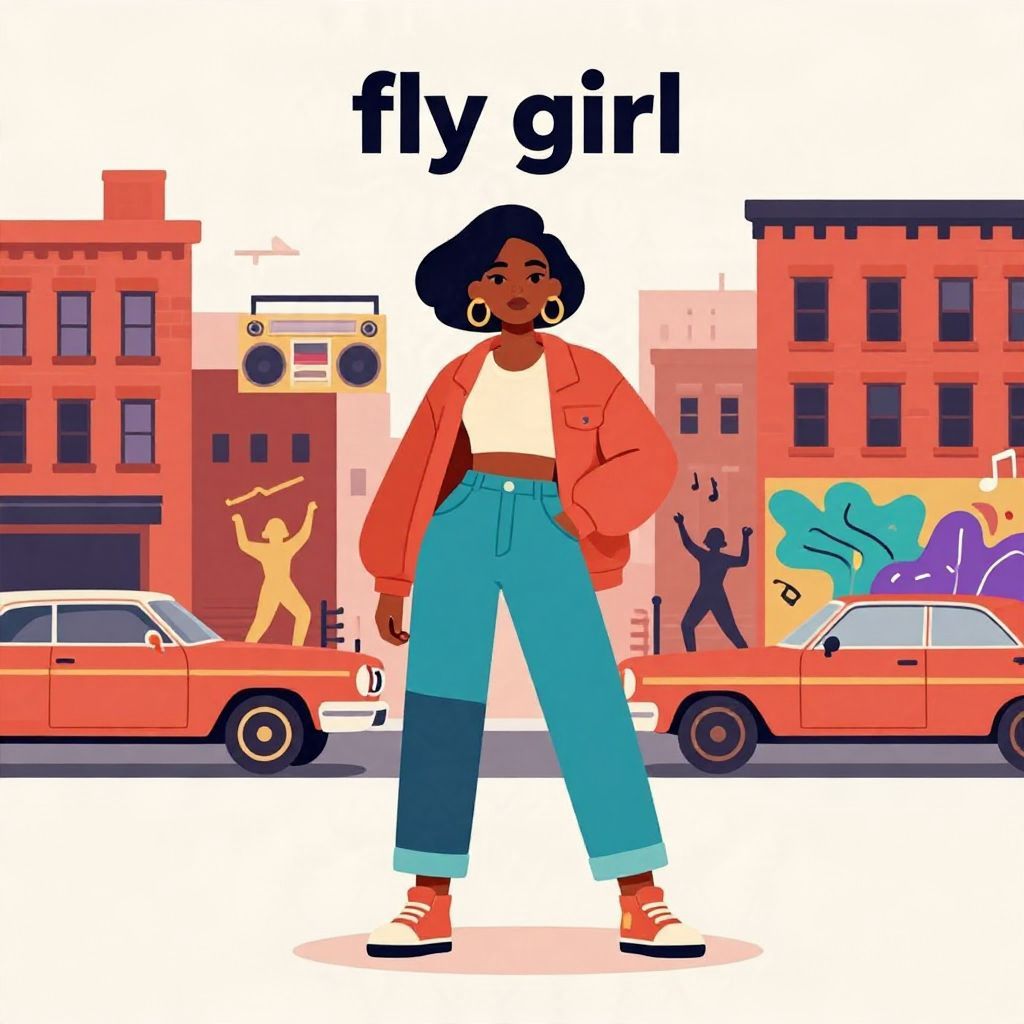
What is a fly girl? The phrase has had more than one meaning, but in modern American culture it most often refers to a stylish, confident young woman who is admired for her look, attitude, and self-possession. It became especially visible in Black popular culture in the late 20th century, where it carried ideas of fashion, coolness, and independence.
Its history is tied to music, dance, slang, and changing ideas about femininity. To understand it well, you have to look at how the word moved from everyday speech into hip-hop and youth culture, where it gained a richer cultural meaning.
What Is a Fly Girl?
A fly girl is a woman or girl who is seen as fashionable, attractive, and confident, often with an effortless sense of style. In historical and cultural context, the term is most strongly associated with African American slang and the rise of hip-hop culture in the 1980s and 1990s, where “fly” meant excellent, sharp, or stylish.
Where Did the Term “Fly Girl” Come From?
The word fly as slang for something impressive or stylish developed in African American English before becoming widely familiar in mainstream American speech. By the late 20th century, pairing “fly” with “girl” created a phrase that praised a young woman’s appearance, confidence, and cultural cool. The exact first use is hard to pin down, but the expression grew out of Black urban slang rather than formal language.
“Fly” as slang
In slang, “fly” did not mean airborne; it meant sharp, attractive, or on point. Like many slang terms, it reflected community taste and social identity. To call someone “fly” was to recognize their style and status in a peer culture where clothing, speech, and attitude mattered.
Why “girl” mattered
Adding “girl” made the phrase personal and gendered. It described not just fashion but a whole presentation of self. A fly girl was not simply wearing nice clothes; she was performing a look and a confidence that others noticed.
How Did “Fly Girl” Become Popular?
The phrase became widely recognizable in the 1980s and early 1990s through Black youth culture, television, music, and dance. One major boost came from the television sketch show In Living Color, which featured the “Fly Girls,” a dance troupe that helped bring the term into mainstream awareness. The group’s name linked the phrase to performance, choreography, and urban cool.
Hip-hop and style culture
Hip-hop culture played a central role in spreading the term. In that world, style was never only about clothes. It included music taste, body language, dance, and the ability to project confidence. “Fly girl” fit that environment perfectly because it celebrated self-presentation as a form of cultural power.
Media exposure
As television, magazines, and music videos circulated hip-hop aesthetics more broadly, the phrase crossed from local slang into national conversation. Once that happened, it could be used more loosely by people who did not share the original cultural setting, sometimes preserving its meaning and sometimes flattening it into a generic compliment.
The Cultural Meaning of a Fly Girl
Historically, being called a fly girl meant more than being pretty. It suggested agency, polish, and an awareness of current style. In many Black communities, the phrase could signal pride in appearance and a refusal to be invisible. It was a way of naming a woman who owned her image rather than letting others define it.
Style as identity
Fashion has long been a language of identity, especially for groups whose social status was limited by race, class, or gender. For many women, being “fly” was a way to claim visibility and respect. The phrase celebrated creativity in dress, hair, makeup, and movement.
Confidence and attitude
A fly girl was expected to carry herself with confidence. The term often implied charisma and independence, not just physical attractiveness. That is part of why it endured: it described an entire social presence, not a single trait.
Fly Girl in Black Popular Culture
The phrase has deep roots in Black popular culture, where language often evolves through music, neighborhood speech, dance scenes, and social networks before entering the wider public. In that setting, “fly girl” could be both complimentary and aspirational. It named a standard of style that was admired within the community.
Connection to dance and performance
Because dance was central to hip-hop and related entertainment forms, the phrase was especially fitting for performers. The “Fly Girls” on In Living Color were not just background dancers; they helped define a visual style that mixed choreography, fashion, and attitude. Their visibility gave the term a recognizable public face.
Influence on women’s self-presentation
In the late 20th century, Black women in music and entertainment increasingly shaped mainstream ideas of beauty and cool. The fly girl ideal fit into that shift. It emphasized that style could be self-authored, playful, and powerful rather than passive.
Is “Fly Girl” the Same as “Fly Girl” in Earlier Eras?
Not exactly. While the modern phrase is most associated with 1980s and 1990s slang, earlier English uses of “fly” and “girl” did not carry the same cultural meaning. The modern sense is a product of specific social and cultural conditions, especially African American speech and the rise of hip-hop. Older uses may sound similar, but they are not historically identical.
Why historians are careful with slang history
Slang rarely has a single birth date. Words spread orally, change meaning, and move between groups. That makes it difficult to identify one inventor or one exact first use. A careful historical answer should therefore explain the likely cultural origin without pretending the evidence is more precise than it is.
How the Meaning Changed Over Time
Like many slang terms, “fly girl” changed as it moved through different audiences. In its original cultural setting, it could carry pride, wit, and social meaning. In mainstream use, it sometimes became a generic label for a fashionable woman, losing some of its connection to Black cultural expression. Over time, it could also sound nostalgic, tied to a particular era of music and fashion.
From specific to general
When a slang term becomes widely known, it often becomes less tied to the community that created it. That process can broaden its reach, but it can also dilute its original meaning. “Fly girl” followed that pattern: it became familiar to many people, yet its strongest cultural resonance remained linked to Black urban style and hip-hop history.
Changing ideas about femininity
The phrase also reflects broader changes in how femininity was discussed. Earlier popular culture often emphasized modesty or passivity. By contrast, the fly girl ideal celebrated visibility, self-fashioning, and control over one’s image. That made it appealing to many young women, especially in urban youth culture.
What a Fly Girl Was Not
It is easy to misunderstand the phrase if it is reduced to “a pretty girl.” Historically, that is too narrow. A fly girl was not just attractive; she was stylish in a culturally legible way. The term also did not simply mean flirtatious or trendy. It carried social meaning rooted in community taste, performance, and confidence.
- Not only beauty: style and attitude mattered as much as appearance.
- Not purely mainstream: the phrase came from Black slang and youth culture.
- Not static: its meaning shifted as it spread through media.
Why the Term Still Matters
The history of “fly girl” matters because it shows how language carries culture. A small slang phrase can reveal larger stories about race, gender, media, and self-expression. It also shows how Black cultural innovation has shaped American popular language, often before that language was widely recognized or credited.
Language, power, and visibility
Terms like “fly girl” matter because they capture how people describe themselves and each other. They can affirm identity, create belonging, and mark style as something meaningful rather than superficial. In that sense, the phrase is part of a larger history of cultural self-definition.
Conclusion
So, what is a fly girl? Historically, it is a stylish, confident young woman, especially in the context of late 20th-century Black popular culture and hip-hop. The phrase grew from African American slang, spread through music and television, and came to symbolize fashion, self-assurance, and cultural cool. For related cultural history, you may also be interested in what an all-black American flag means and what a black flag means.