
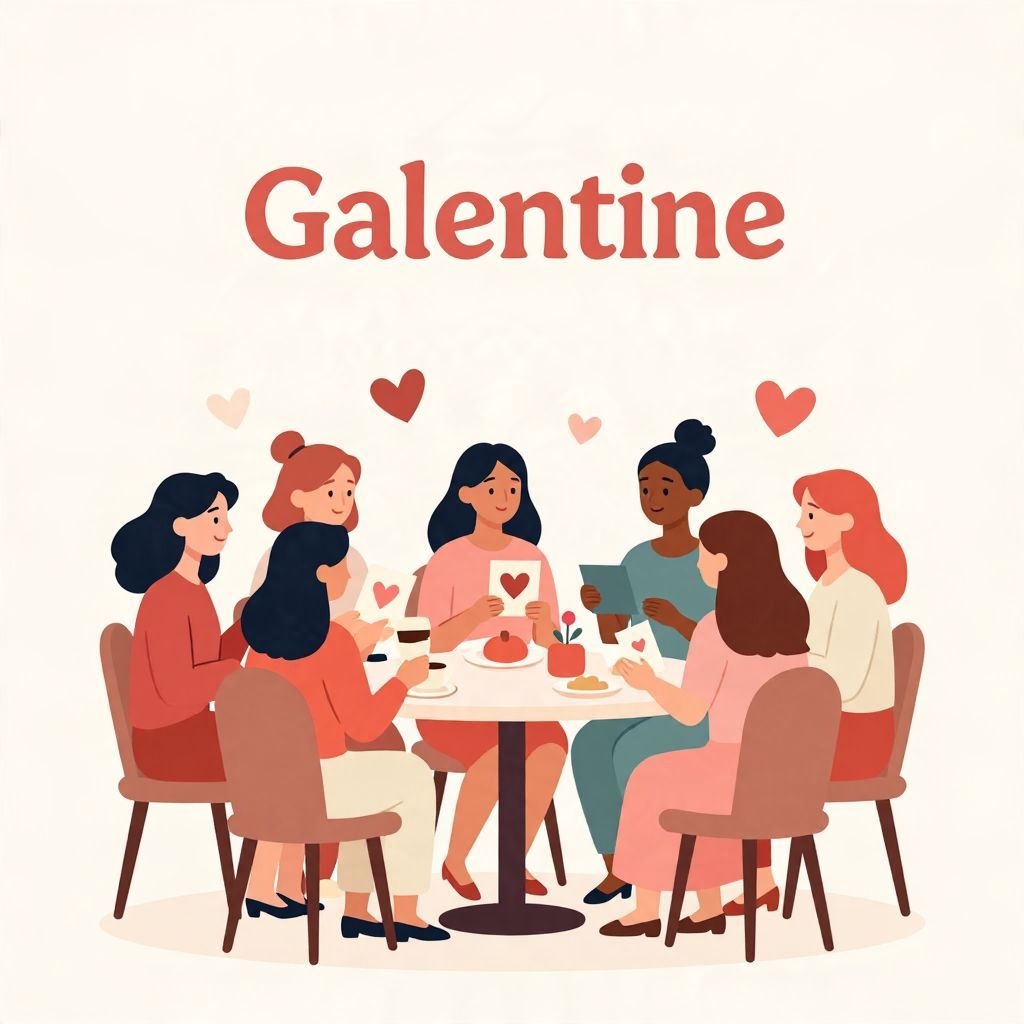
If you’ve heard someone ask, “What is a Galentine?” the answer is more modern than ancient. A Galentine is a female friend celebrated on Galentine’s Day, a friendship-focused observance that grew out of popular culture rather than formal tradition.
The term became widely known through the television comedy Parks and Recreation in 2010, but it quickly spread beyond the show and into everyday language. Its history is a good example of how a fictional phrase can become a real cultural practice.
What is a Galentine?
A Galentine is a woman celebrated as part of Galentine’s Day, a day devoted to female friendship rather than romance. The word is most often used for a friend, and sometimes for the gathering itself, but it is not an old historical term; it is a 21st-century cultural creation that became popular through television and social media.
Where did Galentine’s Day come from?
Galentine’s Day was introduced in a 2010 episode of Parks and Recreation, an American sitcom created by Greg Daniels and Michael Schur. In the episode, the character Leslie Knope, played by Amy Poehler, hosts a breakfast for her female friends on February 13, the day before Valentine’s Day. The idea was humorous, affectionate, and instantly memorable.
Although the holiday began as a scripted joke, viewers embraced it because it filled a real social need: a lighthearted way to honor friendship, especially among women, in a season dominated by romantic Valentine’s Day imagery. The phrase spread quickly online and soon entered everyday conversation.
Why did the idea catch on so quickly?
Galentine’s Day resonated because it turned a familiar holiday into something broader and more inclusive. Valentine’s Day has long centered couples, courtship, and romantic love. Galentine’s Day offered an alternative that celebrated friendship, community, and mutual support. That made it easy to adapt for brunches, gift exchanges, and social media posts.
A holiday shaped by modern culture
The rise of Galentine’s Day reflects a broader modern pattern: media can create traditions that feel older than they are. In earlier centuries, holidays usually emerged from religion, civic ritual, or seasonal custom. Galentine’s Day, by contrast, came from entertainment and then spread through consumer culture, digital sharing, and personal reinvention.
Is Galentine’s Day a real holiday?
Galentine’s Day is “real” in the sense that many people observe it, but it is not an official public holiday and has no long historical lineage. It is best understood as a contemporary cultural observance. Its meaning comes from popular use, not from law, religion, or state recognition.
Informal traditions versus formal holidays
Historians often distinguish between official holidays and informal celebrations. Official holidays are recognized by governments or religious institutions. Informal traditions arise from custom, media, or community practice. Galentine’s Day belongs to the second category, which helps explain both its flexibility and its rapid spread.
The meaning of “Galentine” in everyday use
In common use, “Galentine” usually means a female friend invited to a Galentine’s Day celebration. The word “gal” is a casual, old-fashioned slang term for “girl” or “woman,” while “Valentine” refers to the February holiday of love. Combined, the term suggests a playful, sisterly counterpart to Valentine’s Day.
Some people use “Galentine” to refer to the event itself, but the more precise term is Galentine’s Day. Because the phrase is informal, its usage can vary. Still, its core meaning remains the same: friendship first, romance optional.
How Galentine’s Day differs from Valentine’s Day
Valentine’s Day has a much longer history, with roots that are debated and layered. Over centuries it developed from religious associations, medieval courtship customs, and later commercial traditions. Galentine’s Day is far newer and more specific. It does not replace Valentine’s Day; instead, it sits beside it as an alternative social ritual.
Key differences
- Focus: Galentine’s Day celebrates friendship; Valentine’s Day often emphasizes romance.
- Origin: Galentine’s Day began in a television comedy; Valentine’s Day developed over centuries.
- Timing: Galentine’s Day is usually observed on February 13.
- Tone: Galentine’s Day is playful, informal, and communal.
Why female friendship matters in the history of the term
The popularity of Galentine’s Day reflects changing ideas about women’s social lives. For much of history, women’s friendships were often undervalued in public culture, especially compared with marriage and family roles. The rise of Galentine’s Day gave friendship a visible place in mainstream celebration, even if in a lighthearted form.
This does not mean the idea of women honoring one another is new. Women have long built support networks through kinship, neighborhood ties, religious groups, labor, and friendship circles. What is new is the public naming and branding of that practice as a holiday.
The social history behind the word
Galentine’s Day emerged in an era when people increasingly used social media to mark identity, community, and belonging. The early 2010s were a period when online culture helped turn jokes, memes, and fictional references into real-world customs. That environment made the phrase easy to share, repeat, and commercialize.
Businesses soon noticed the appeal. Restaurants, gift companies, and lifestyle brands began promoting Galentine’s Day events and products. As with many modern observances, commercial adoption helped normalize the phrase and broaden its audience.
From TV line to cultural shorthand
Not every memorable line from a television show enters common speech. Galentine’s Day did because it was simple, funny, and socially useful. It named something many people already wanted: a reason to gather with friends and celebrate companionship without the pressure of romance.
How historians should understand Galentine’s Day
From a historical perspective, Galentine’s Day is a small but revealing example of how traditions are made. It shows that culture is not only inherited from the distant past; it is also invented in the present. A fictional scene can become a real ritual when enough people find it meaningful.
That process has happened before in different forms. National holidays, school traditions, and many seasonal customs have all been shaped by media, commerce, or deliberate invention. Galentine’s Day is unusual mainly because its origin is so recent and so well documented.
What it tells us about modern celebration
The spread of Galentine’s Day suggests that people want holidays that reflect their actual relationships. In a society where friendship, chosen family, and social networks matter deeply, a day for friends can feel as important as a day for couples. Its popularity is therefore not just a pop-culture joke; it is also a sign of changing social values.
Common misconceptions about Galentine
Because the term sounds like it might have an older background, people sometimes assume it has a long folk history. In fact, there is no evidence that “Galentine” was a traditional holiday term before 2010. It is also not tied to a saint, a historical figure, or a regional custom.
Another misconception is that Galentine’s Day is only for single women. In practice, it is broader than that. Many people use it to celebrate female friends regardless of relationship status. The emphasis is on friendship, not on being unattached.
Why the term still matters
Even though Galentine’s Day is modern, it has historical significance as a cultural artifact. It shows how language evolves, how entertainment shapes social life, and how people create new rituals to fit contemporary needs. In that sense, the question “What is a Galentine?” opens onto a larger history of friendship, media, and modern celebration.
Today, a Galentine is simply a female friend honored in a February celebration of friendship. But the term’s rapid rise from television joke to widely recognized custom is what makes it historically interesting. For more on unusual modern traditions, see what Festivus is or explore the political history behind a lame duck president.