
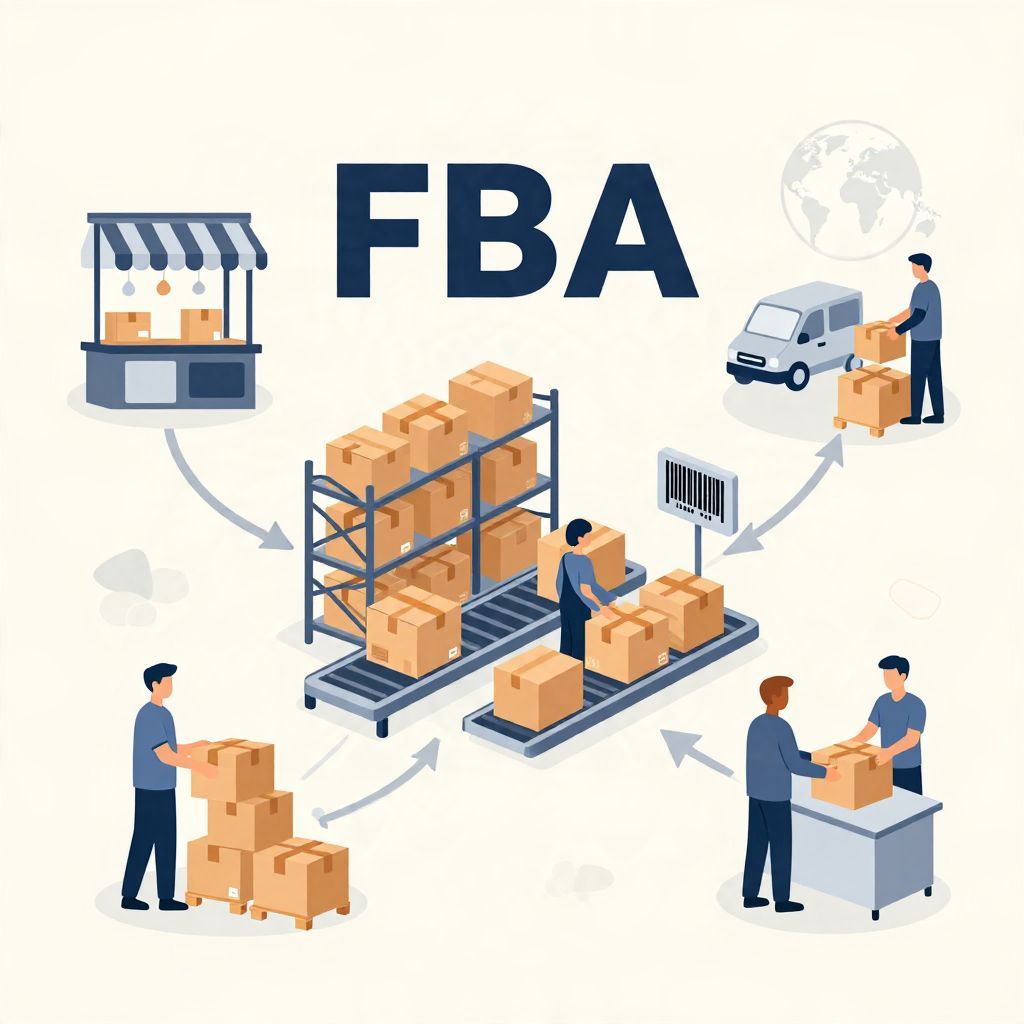
What does FBA stand for? In modern usage, the most common answer is “Fulfilled by Amazon”, a logistics program launched by Amazon in the early 2000s. But the meaning of “FBA” depends on context, and that makes its history more interesting than a simple acronym lookup.
To understand what FBA stands for historically, it helps to trace how the term emerged from the growth of e-commerce, warehouse automation, and platform-based retail. The phrase is relatively recent, but it reflects a much longer story about how goods have been stored, packed, shipped, and sold.
What does FBA stand for?
FBA usually stands for “Fulfilled by Amazon,” Amazon’s service that lets sellers store inventory in Amazon warehouses while Amazon handles packing, shipping, customer service, and returns. In some specialized fields, however, FBA can mean other things, so the correct expansion depends on the setting in which the acronym appears.
The origin of FBA in modern commerce
“Fulfilled by Amazon” belongs to the history of digital retail, not ancient or medieval history. The service emerged as Amazon expanded from an online bookstore into a broad marketplace in the late 1990s and early 2000s. As third-party sellers joined the platform, Amazon needed a system to manage inventory and delivery at scale.
Why the term mattered
The word fulfilled is important. In retail, fulfillment means everything that happens after a customer places an order: picking the item, packing it, shipping it, and sometimes processing returns. FBA gave Amazon a way to centralize those tasks, allowing smaller sellers to benefit from the company’s logistics network.
This was historically significant because it changed the relationship between merchants and marketplaces. Instead of each seller building its own shipping system, sellers could plug into Amazon’s infrastructure. That shift helped accelerate the rise of platform commerce in the 21st century.
How FBA developed over time
The history of FBA is tied to the broader development of e-commerce logistics. Before programs like FBA, online merchants often had to store products themselves or rely on separate fulfillment companies. That model worked for some businesses, but it could be slow, expensive, and difficult to scale.
A brief timeline
- Late 1990s: Amazon grows rapidly as an online retailer and begins moving beyond books.
- Early 2000s: Amazon expands its marketplace model, allowing third-party sellers to list products on the site.
- Mid-2000s: Fulfillment services become a key part of Amazon’s seller ecosystem, eventually formalized as FBA.
- 2010s: FBA becomes central to many small and medium-sized online businesses, especially those selling through Amazon’s marketplace.
- 2020s: FBA remains a major part of Amazon’s logistics system, though sellers increasingly weigh its fees, storage rules, and competition concerns.
The exact launch date of FBA is often given as the mid-2000s, but the service evolved gradually rather than appearing all at once. That matters historically: FBA was not a single invention so much as a business model refined over time.
Why FBA changed online selling
FBA had a major impact because it lowered barriers to entry for online sellers. A small business could list products on Amazon without building a warehouse network or hiring a shipping department. Amazon’s scale made fast delivery more accessible, especially for sellers trying to reach national or international customers.
Key advantages for sellers
- Access to Amazon’s storage and shipping infrastructure
- Eligibility for faster delivery options, which improved customer appeal
- Reduced need for sellers to manage packing and returns themselves
- Potentially greater visibility within Amazon’s marketplace system
At the same time, FBA also introduced new costs and dependencies. Sellers had to pay storage and fulfillment fees, follow Amazon’s inventory rules, and compete in a marketplace controlled by a powerful platform. Historians of commerce often see this as part of a larger shift toward platform capitalism, where a few large intermediaries shape access to buyers and sellers alike.
Historical significance of FBA
FBA is historically important because it represents a turning point in the organization of retail logistics. For much of commercial history, merchants controlled their own stockrooms, delivery routes, and distribution systems. Industrialization later created large-scale warehousing and shipping networks. FBA took that older logistics tradition and integrated it into a digital marketplace.
From warehouse to platform
In earlier eras, the physical movement of goods was often separated from the act of selling. By contrast, FBA fused those functions inside one platform. A customer could buy from a small independent seller, but Amazon would manage the delivery experience. This blurred the line between retailer, marketplace, and logistics provider.
That change had several consequences. It helped standardize shipping expectations, encouraged faster delivery norms, and made online shopping more seamless. It also concentrated power in the hands of a single company that controlled both the marketplace and much of the fulfillment infrastructure.
Other meanings of FBA
Because acronyms often have multiple meanings, FBA does not always refer to Amazon. In different academic, professional, or regional contexts, it can stand for other phrases. The correct meaning depends on the subject area, and historians should be careful not to assume one expansion fits every source.
Why context matters
For example, someone reading about business, logistics, or online sales is very likely encountering Fulfilled by Amazon. In a different field, FBA could refer to a technical, educational, or organizational term unrelated to commerce. Since acronym use changes over time, the safest historical approach is to interpret FBA according to the document, era, and setting in which it appears.
What FBA reveals about modern history
FBA is a small acronym with a large historical footprint. It reflects the rise of e-commerce, the expansion of global supply chains, and the growing importance of digital platforms in everyday life. It also shows how modern business history is often shaped less by one dramatic event than by the steady redesign of systems people use to buy and sell goods.
Longer-term context
Seen in a broader timeline, FBA belongs to a long history of commercial innovation: from ancient marketplaces, to merchant guilds, to railroads and department stores, to container shipping and online retail. Each stage changed how goods moved and how merchants reached customers. FBA is one of the latest examples of that enduring pattern.
So, what does FBA stand for? Most commonly, it means Fulfilled by Amazon. Historically, that phrase marks a major shift in retail logistics and the rise of platform-based commerce. If you are exploring related business history topics, you may also be interested in the development of the history of e-commerce and Amazon’s rise as a global company.