
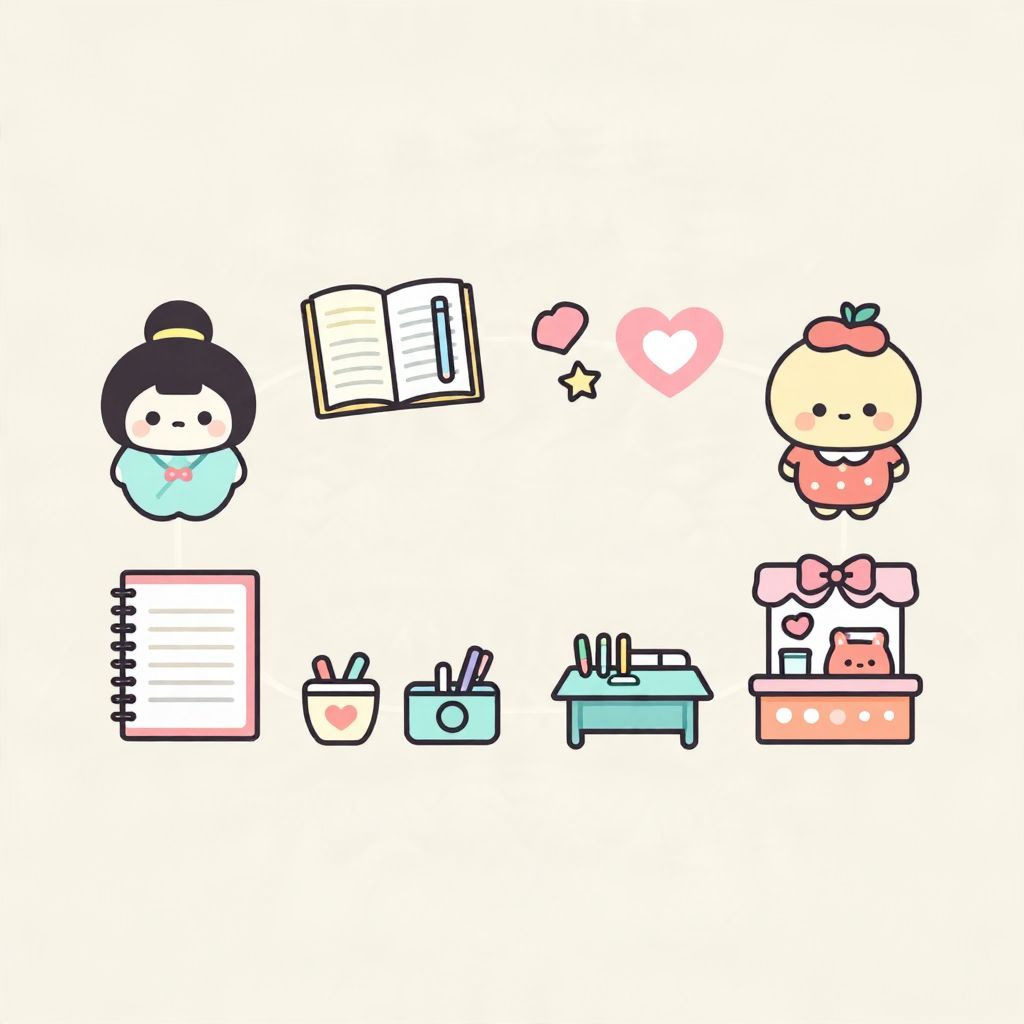
What is kawaii? In Japanese, kawaii most simply means “cute,” “adorable,” or “charming,” but the word has a longer cultural history than a dictionary gloss suggests. It describes not only small or pretty things, but also a style of behavior, design, and feeling that became one of Japan’s most recognizable cultural exports.
As a historical concept, kawaii developed over centuries and changed meaning in modern Japan. Its rise reflects shifts in language, childhood, consumer culture, fashion, media, and youth identity, especially from the late 20th century onward.
What Is Kawaii?
Kawaii is a Japanese word and cultural aesthetic meaning “cute,” “lovable,” or “endearing.” Historically, it grew from older ideas of pity, tenderness, and vulnerability, then expanded in modern Japan into a broad style associated with innocence, softness, playfulness, and emotional appeal in art, fashion, products, and popular culture.
Where Did the Word Kawaii Come From?
The word kawaii is usually traced to older Japanese language forms related to feeling pity or compassion for something small, weak, or vulnerable. Over time, the meaning shifted from “pitiful” or “worthy of affection” toward the more familiar modern sense of “cute.” That semantic change is important: kawaii was not originally just about visual prettiness.
From compassion to cuteness
In premodern Japanese usage, words in the same semantic family could express tenderness toward a child, an animal, or a fragile object. Scholars often note that the emotional core of kawaii included protectiveness and warmth. In other words, something kawaii was not merely attractive; it inspired a gentle response from the viewer.
Why the meaning changed
Language changes when social life changes. As Japan modernized, Western ideas of childhood, consumer goods, fashion, and mass media helped reshape how people used the word. By the 20th century, kawaii increasingly described a visual and emotional style rather than only a feeling of pity or compassion.
How Did Kawaii Develop Historically?
Kawaii did not appear suddenly as a modern trend. Its history stretches from older courtly and literary sensibilities to the postwar consumer boom. The modern aesthetic emerged gradually, especially in the decades after World War II, when new forms of youth culture and mass-produced goods gave “cute” a public, commercial life.
Early cultural roots
Japanese literature and art long valued delicacy, fragility, and emotional sensitivity. These qualities were not called kawaii in the modern sense, but they helped create a cultural environment in which tenderness and smallness could be admired. Traditional aesthetics in Japan often included an appreciation for subtlety and transience, even when they were not specifically “cute.”
Postwar consumer culture
After 1945, Japan’s rapid economic recovery transformed everyday life. Mass-produced stationery, toys, home goods, and packaging created new opportunities for appealing design. Teenagers and young women became especially important consumers, and companies learned that rounded shapes, soft colors, and friendly characters could sell products. Kawaii became both a style and a market strategy.
The rise of youth handwriting and style in the 1970s
One of the most important moments in kawaii history came in the 1970s, when schoolgirls began developing playful, rounded handwriting styles and decorating notebooks with hearts, stars, and cartoon-like symbols. This trend was initially seen by some adults as frivolous or even rebellious. But it spread quickly and helped establish kawaii as a visible youth aesthetic.
Why Did Kawaii Become So Popular in Japan?
Kawaii became popular because it connected emotion, identity, and consumer life. It offered a way to express innocence, softness, and individuality in a society often associated with discipline and conformity. At the same time, businesses and media industries found that kawaii imagery was highly effective for branding and merchandising.
The appeal of innocence
In a fast-changing industrial society, kawaii offered comfort. Cute characters and soft designs suggested safety, familiarity, and emotional warmth. For children, this was obvious; for teenagers and adults, the appeal could be more complex. Kawaii could signal friendliness, approachability, or a deliberate rejection of stern adult seriousness.
Gender and social expression
Kawaii has often been associated with femininity, especially in postwar Japan, but its history is more complicated than a simple gender label. Young women were central to its spread, yet men also adopted kawaii objects, mascots, and styles. Over time, kawaii became less a fixed identity than a flexible visual language used in many settings.
Corporate branding and mass media
Japanese companies and media played a major role in normalizing kawaii. Mascots, toys, convenience-store packaging, and cartoon characters made cute design part of ordinary life. By the late 20th century, kawaii was not confined to subculture; it had become part of mainstream consumer society.
What Does Kawaii Look Like in Practice?
Kawaii is best understood as an aesthetic system rather than a single look. It can appear in clothing, handwriting, illustration, architecture, packaging, advertising, and digital culture. Common features include soft colors, rounded forms, oversized eyes in character design, simplified faces, and an emphasis on friendliness over realism.
Key visual traits
- Pastel or soft color palettes
- Rounded, non-threatening shapes
- Childlike or simplified facial features
- Decorative details such as bows, hearts, and stars
- Playful or innocent emotional expression
More than appearance
Kawaii also includes behavior and tone. A voice, gesture, slogan, or product can be described as kawaii if it feels gentle, affectionate, or endearing. That broader meaning is one reason the term became so powerful: it could describe both an object and the emotional response it produced.
How Did Kawaii Spread Beyond Japan?
From the late 20th century onward, kawaii became an international cultural influence. Japanese animation, toys, fashion, and character licensing carried the aesthetic abroad. In global use, “kawaii” often refers specifically to Japanese-style cuteness, even when similar cute styles exist in other cultures.
Anime, manga, and character culture
Japanese popular media helped globalize kawaii. Characters from anime, manga, and video games often embodied the style through expressive faces, simplified design, and emotional immediacy. Licensed characters became central to a worldwide market for toys, stationery, clothing, and digital stickers.
Fashion and street style
Japanese street fashion also exported kawaii in many forms, from Lolita fashion to Harajuku-inspired looks. These styles are not identical to kawaii, but they often overlap through their use of decorative excess, playfulness, and deliberate innocence. Outside Japan, fans adapted these looks in local ways.
Global misunderstanding and adaptation
International audiences sometimes reduce kawaii to “anything cute from Japan,” but the term carries social and historical meanings that do not always travel neatly. In Japan, kawaii can be affectionate, ironic, commercial, childish, stylish, or subversive depending on context. Abroad, it is often simplified into a general label for cuteness.
Is Kawaii Only About Cuteness?
No. Although “cute” is the closest translation, kawaii has broader cultural significance. It can express vulnerability, nostalgia, intimacy, or even resistance to adult seriousness. In some contexts, kawaii is playful and innocent; in others, it can be strategic, commercial, or self-consciously ironic.
Kawaii as social language
People use kawaii to shape how others perceive them. A cute item, outfit, or manner of speaking can soften social distance and create emotional warmth. This helps explain why kawaii has remained so adaptable: it works as both a personal style and a social signal.
Criticism and debate
Not everyone has viewed kawaii positively. Critics have sometimes argued that it encourages childishness, passivity, or excessive consumerism. Others have seen it as a meaningful aesthetic that gives people room to experiment with identity. Historians and cultural scholars generally treat kawaii as a serious social phenomenon, not a trivial one.
What Is the Historical Significance of Kawaii?
Kawaii matters historically because it shows how language, commerce, and identity can reshape one another. A word that once carried feelings of pity and tenderness became a major modern aesthetic, linked to Japan’s postwar transformation, youth culture, and global media influence. It is a small word with a large cultural history.
A marker of modern Japan
By the late 20th century, kawaii had become one of the most recognizable features of Japanese popular culture. It appeared in everything from public mascots to corporate branding. In this sense, kawaii is not just a style but a window into how modern Japan balanced tradition, modernization, and global visibility.
Why historians pay attention to it
Historians study kawaii because it reveals how everyday life changes over time. It connects childhood, gender, consumption, media, and emotion. Far from being a trivial trend, kawaii helps explain how modern societies turn feelings into design, and design into identity.
Conclusion
Kawaii began as a word associated with tenderness and vulnerability, then evolved into a modern aesthetic of cuteness that reshaped Japanese culture and spread worldwide. Its history shows how a simple term can carry deep social meaning. For more on the cultural context of Japan, you may also enjoy related history articles on Japanese popular culture and the history of modern Japan.