
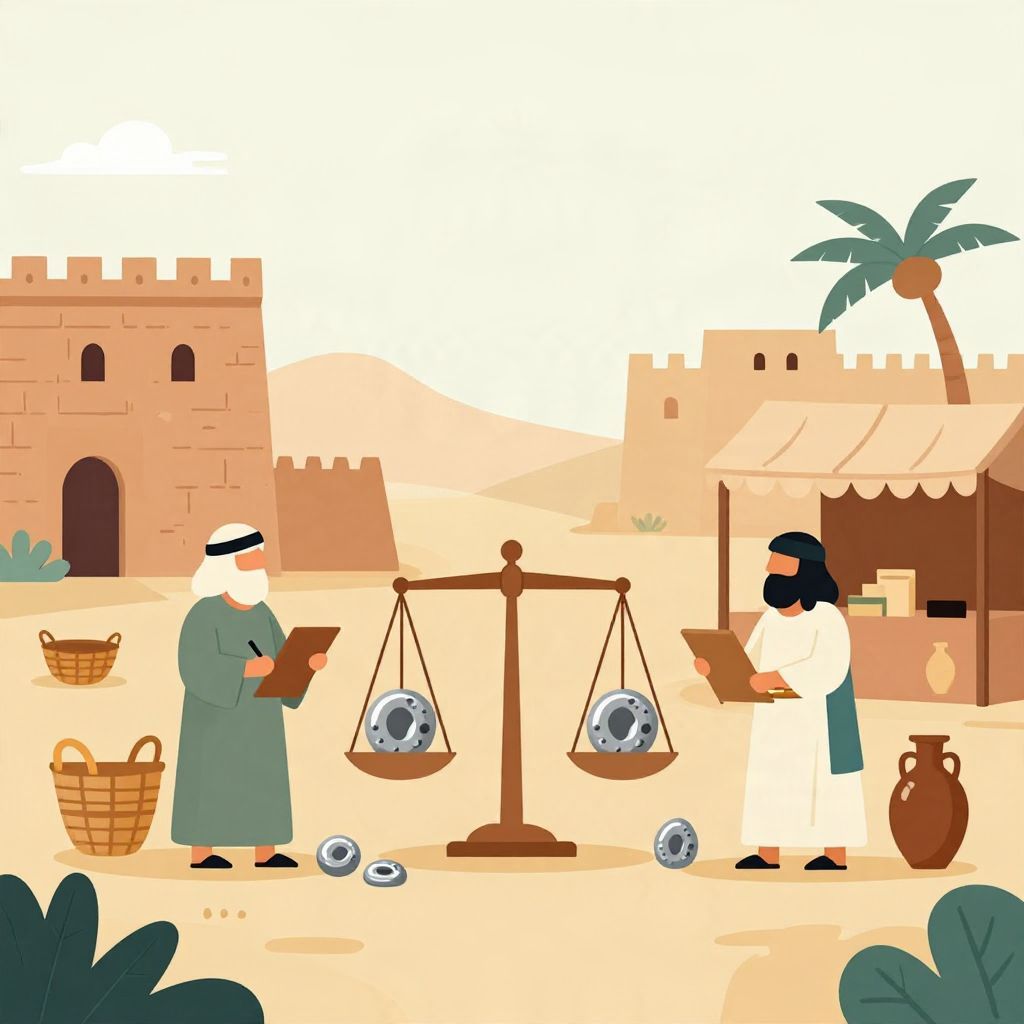
What is a shekel? The word has meant different things across history: first a unit of weight in the ancient Near East, then a unit of silver used in trade, and much later the name of modern currencies in Israel. Because of that long history, “shekel” is both an ancient economic term and a modern money name.
Its story begins in Mesopotamia and the Levant, where merchants, temples, and rulers needed standard ways to measure precious metals. Over time, the shekel became one of the best-known units in the biblical and broader Near Eastern world, and its legacy still survives today.
What Is a Shekel?
A shekel was originally a unit of weight, not a coin, used in the ancient Near East to measure silver and other valuable goods. In later periods, the term came to refer to actual currency units. Today, the shekel is the official money of Israel, but historically it was first a standard for weighing precious metal.
Where Did the Shekel Come From?
The shekel originated in the ancient Near East, probably in Mesopotamia, sometime in the third millennium BCE. The word is closely tied to Semitic languages and likely comes from a root meaning “to weigh.” In early trade societies, value was often expressed by weight rather than by stamped coins, so a shekel was essentially a measured amount of silver or another commodity.
A unit before it was a coin
Long before coinage was invented, people needed reliable ways to settle debts, pay taxes, and conduct trade. A shekel answered that need. Instead of counting pieces of metal, merchants could agree on a weight. This made the shekel part of a wider ancient system of weights and measures that also included larger units such as the mina and talent.
How much was a shekel?
The exact weight of a shekel varied by time and place. That is important: there was no single universal shekel in the ancient world. In many contexts, a shekel was roughly 8 to 12 grams, though local standards differed. Because standards changed, historians must be careful not to treat every “shekel” in ancient texts as identical.
The Shekel in the Ancient Near East
The shekel became especially important in the economies of Mesopotamia, Canaan, Phoenicia, and surrounding regions. These societies used silver as a major medium of exchange, especially for larger transactions. Temples, palaces, and merchants all relied on standardized weights to manage grain, livestock, labor, and precious metals.
Trade, taxes, and administration
In ancient states, weights were not just about commerce; they were also tools of government. Rulers collected tribute and taxes, paid workers, and stored wealth in silver. A standard like the shekel made administration possible across different towns and regions. It helped create a shared language of value in a world without banks in the modern sense.
Shekels in archaeology and texts
Archaeologists have found ancient weights marked with symbols or inscriptions that likely correspond to shekel standards. Written records from Mesopotamia and the Levant also mention shekels in lists of payments, rations, and fines. These sources show that the shekel was not merely theoretical; it was a practical part of everyday economic life.
The Shekel in the Bible
The shekel appears frequently in the Hebrew Bible, where it serves both as a real economic unit and as a literary symbol of value. Biblical references mention shekels in contexts such as purchases, offerings, censuses, and legal penalties. These passages reflect the broader ancient Near Eastern world in which silver by weight was a normal way to measure worth.
Religious and legal uses
In biblical law, the shekel could be used to specify payments for sacred offerings or compensation. Some passages also distinguish between the “shekel of the sanctuary” and other measures, suggesting an effort to maintain a trusted standard. This does not necessarily mean a separate currency; rather, it reflects concern over accurate weights in a world where standards could vary.
Why the biblical shekel matters
The biblical shekel helps historians understand how ancient Israelites and their neighbors thought about money. Wealth was often measured in silver weight, not in coins. That means many biblical stories involving shekels are best understood as references to precious metal by weight, even when modern readers imagine coins.
When Did Shekels Become Coins?
Coinage appeared later than the shekel itself, first in western Asia Minor in the 7th century BCE and then across the Mediterranean world. Once coins became common, the shekel could also function as a named currency unit. In some later states, especially in the Hellenistic and Roman periods, the term was associated with minted currency or with local monetary standards.
From weight to money name
This shift is important. A shekel began as a measurement, then became linked to monetary value, and eventually could name a coin or currency unit. The transition was gradual and uneven. In some places, people still thought in terms of weight even after coins were in use, because the value of coinage was often tied to its metal content.
Different shekels in different eras
Several historical societies used the term in different ways. For example, the Phoenicians, Israelites, and later Jewish communities each encountered the shekel within their own economic systems. Because of this, historians always ask: which shekel, in which place, and at what time?
Shekels in the Jewish and Roman Worlds
During the Second Temple period, the shekel remained important in Jewish religious and civic life. The best-known example is the Tyrian shekel, a high-silver-content coin widely used in the eastern Mediterranean. It was especially valued because of its consistent metal purity, which made it useful for temple payments and large transactions.
The Tyrian shekel
The Tyrian shekel was minted in the Phoenician city of Tyre and became famous for its reliable silver content. Although it was not “Jewish” in origin, it was widely used in Jewish contexts because of its quality. This is one reason the word shekel became associated in later memory with both commerce and religious obligation.
Roman rule and changing money systems
Under Roman domination, local monetary systems operated alongside imperial coinage. The shekel did not disappear, but it existed within a more complex economy shaped by Roman power, taxation, and long-distance trade. Over time, the ancient shekel as a standard weight became less central, though the term remained culturally significant.
The Shekel in the Modern Era
The modern shekel is not the same as the ancient unit, though it deliberately draws on that historical legacy. In the 20th century, the name “shekel” was revived in the State of Israel for modern currency. Today, Israel uses the new shekel, officially the Israeli new shekel, introduced in 1985.
Why revive an ancient name?
Reviving the name shekel linked modern Israeli currency to ancient Hebrew and broader Near Eastern history. It was a symbolic choice as much as an economic one. Modern currencies often use names that connect a state to historical identity, and the shekel is a strong example of that practice.
Old shekel, new shekel
Israel has used several versions of the shekel in modern times. The original Israeli shekel replaced the Israeli pound in 1980, and the new shekel replaced the old shekel in 1985 after high inflation. So when people refer to “the shekel” today, they usually mean the modern Israeli currency, not the ancient unit of weight.
Why the Shekel Matters in History
The history of the shekel shows how money develops from practical measurement systems. Before coins, societies needed a way to compare value, and weight provided that standard. The shekel also reveals how economic language can survive for thousands of years, changing form while keeping cultural memory alive.
A word that outlived its original system
Few ancient economic terms have had such a long afterlife. The shekel began as a weight, became part of monetary systems, entered sacred texts, and reappeared as a modern national currency. That continuity makes it a useful window into the history of trade, state power, and cultural identity.
Quick Summary of the Shekel’s History
- Third millennium BCE: The shekel emerges as a unit of weight in the ancient Near East.
- Ancient Mesopotamia and the Levant: It is used to measure silver and other valuables.
- Biblical era: The shekel appears in legal, religious, and economic texts.
- After coinage develops: The term becomes associated with currency as well as weight.
- Modern Israel: The shekel is revived as the name of national currency.
So, what is a shekel? Historically, it is a standard of weight that became a money term and later a modern currency name. Its long evolution reflects the history of trade, state administration, and cultural memory across the ancient Near East and beyond. For broader background on the region that shaped early trade and measurement systems, see the Fertile Crescent and the Holy Roman Empire.