
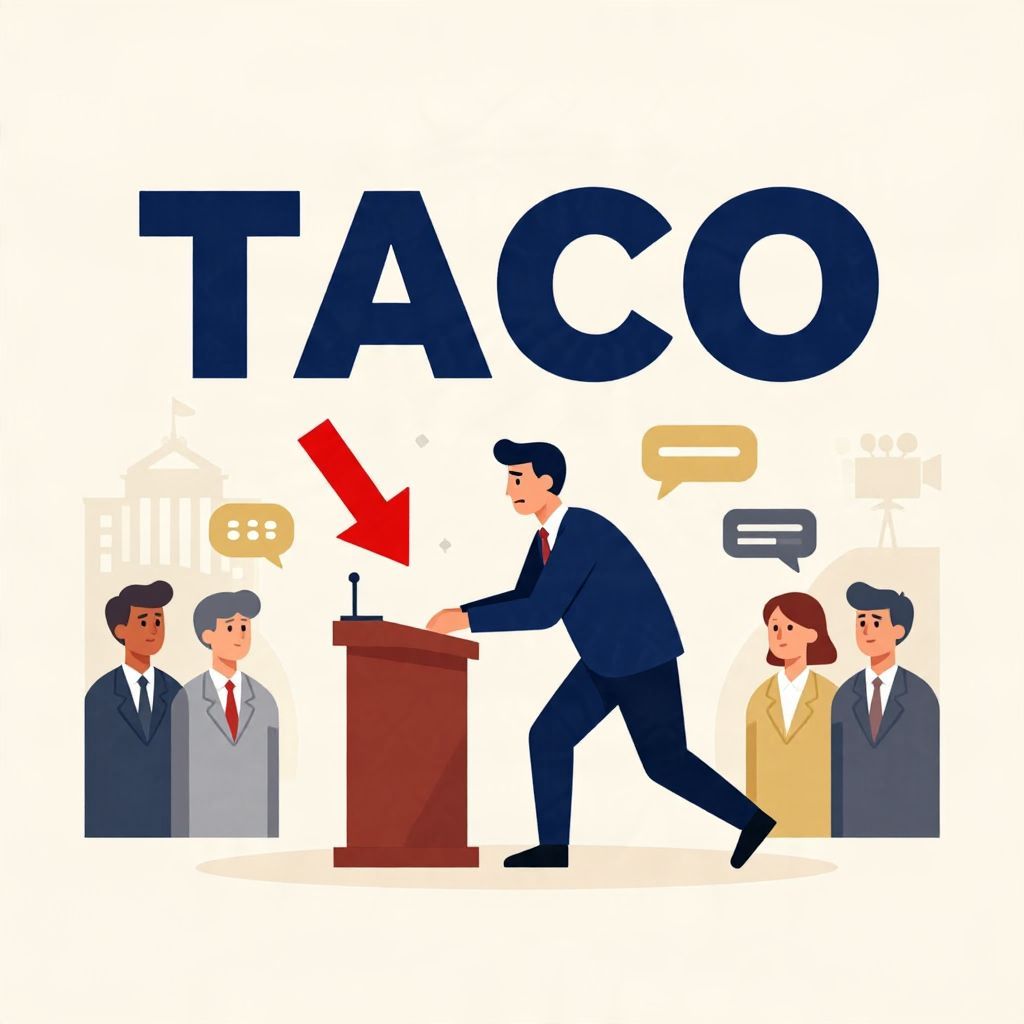
Why is Trump called “Taco”? The short answer is that it is a modern political nickname, not a historical title or an established surname. In online and media culture, “Taco” is usually shorthand for the phrase “Trump Always Chickens Out,” a mocking label used by critics to describe policy reversals or threats that are later softened or dropped.
This nickname belongs to the age of social media, partisan commentary, and rapid-fire political branding. To understand it properly, we need to separate the joke from the history: where the term came from, how it spread, and why it stuck.
Why Is Trump Called Taco?
Trump is called “Taco” because critics turned the initials of “Trump Always Chickens Out” into a catchy acronym. The phrase emerged in contemporary political discourse as a way to accuse him of making bold threats and then retreating. It is a modern insult, not an historical fact about his name, ancestry, or identity.
The meaning behind the nickname
“Taco” works as a political shorthand because it is short, memorable, and easy to repeat online. It is not meant literally. Instead, it compresses a broader criticism: that Trump often uses aggressive rhetoric, then backs away when the costs become clear. Supporters may reject that interpretation, but that is the logic behind the nickname.
Why acronyms matter in modern politics
Political nicknames have long been used to shape public perception, but the internet has made them faster and more viral. Acronyms, memes, and repeated slogans can spread in hours. “Taco” fits that pattern: it is humorous, pointed, and designed to be repeated in headlines, posts, and commentary.
Where Did the “Taco” Nickname Come From?
The nickname is a product of 21st-century political media rather than a formal campaign term or an official label. It appears to have grown from online commentary and partisan discussion, especially in spaces where Trump’s reversals were being cataloged and mocked. Like many political nicknames, its exact first use is hard to pin down with certainty.
From criticism to catchphrase
The phrase “Trump Always Chickens Out” did not need a single inventor to become useful. It developed the way many political slogans do: through repetition, parody, and adaptation. Once the acronym “TACO” was attached to Trump, it became a compact way to summarize a recurring criticism in one word.
Why the word “taco” itself?
The word was chosen because it creates a memorable acronym, not because of any historical connection to Mexican food or to Trump’s personal background. In this case, the humor comes from the contrast between a light, familiar food word and a sharp political accusation. That contrast helped the nickname travel quickly online.
What Historical Pattern Does This Fit?
“Taco” belongs to a much older tradition of political ridicule. Leaders have long been given nicknames that reduce complex behavior to a single memorable trait. In earlier eras, pamphlets, cartoons, and speeches served the same purpose that memes and posts serve today: they simplified politics into a label that supporters and opponents could repeat.
Political nicknames through history
- Ancient and early modern rulers were often mocked with epithets that emphasized cowardice, vanity, or indecision.
- 19th-century newspapers frequently used satirical nicknames to attack presidents, monarchs, and generals.
- Modern digital culture turns those habits into viral shorthand, often using acronyms, hashtags, and memes.
In that sense, “Taco” is not unusual at all. It is a modern version of an old political habit: giving a public figure a label that frames how people should interpret his actions.
Why this nickname spread so effectively
Trump has been one of the most heavily nicknamed political figures in modern American history. That is partly because he is highly visible, partly because his style invites imitation, and partly because his supporters and opponents both engage intensely in online political combat. A nickname like “Taco” thrives in that environment because it is brief, funny, and hostile enough to be shared widely.
Is “Taco” a Historical or Cultural Term?
No. In this context, “Taco” is not a historical title, ethnic term, or cultural designation. It is a contemporary political insult. Because the word is also strongly associated with food, some people may misunderstand it as having a deeper cultural meaning. Historically, however, its use here is tied to modern American political commentary.
Why context matters
Words can mean very different things depending on context. A term that refers to food in one setting can become a political joke in another. That is why it is important not to confuse the nickname with the cuisine or with any broader cultural identity. The meaning here is entirely rhetorical.
A note on sensitivity
Because the word “taco” is also connected to Mexican and broader Latin American food traditions, some people may find its use in political mockery distracting or insensitive if they assume it has ethnic meaning. Historically, though, the nickname’s purpose is political ridicule, not cultural description.
Why Did This Nickname Catch On During Trump’s Political Career?
Trump’s career created ideal conditions for shorthand labels. He frequently used dramatic language, made abrupt policy announcements, and then sometimes adjusted course after backlash from allies, markets, courts, or voters. Critics used “Taco” to argue that his hardline statements were often stronger than his final actions.
Rhetoric versus action
One reason the nickname resonated is that it pointed to a familiar political pattern: leaders may threaten a dramatic move to gain leverage, then compromise when the practical consequences become clear. Whether one agrees with that assessment of Trump or not, the nickname depends on that perceived gap between rhetoric and outcome.
Supporters and opponents read it differently
For critics, “Taco” is a concise way to accuse Trump of bluffing. For supporters, it is often dismissed as childish or unfair. That split reflects a deeper historical truth: political nicknames rarely describe everyone’s view equally. They are weapons in public argument, not neutral labels.
How Does “Taco” Compare with Other Trump Nicknames?
Trump has been associated with many nicknames, some invented by supporters, others by opponents. “Taco” is distinctive because it is built as an acronym rather than a descriptive insult. That gives it a slightly different flavor from older-style epithets.
Examples of modern political nickname-making
- “The Donald” framed Trump as a celebrity persona long before his presidency.
- “MAGA” became a movement label rather than a personal insult.
- “Taco” functions as a satirical critique of his behavior, especially perceived retreats.
These labels show how modern politics is fought not only through policy debates but also through branding. A nickname can become a political argument in miniature.
What Is the Historical Significance of the Nickname?
The significance of “Taco” lies less in Trump himself than in the media environment that produced it. It shows how contemporary politics is shaped by viral language, online humor, and compressed criticism. In earlier centuries, political mockery traveled through broadsheets and cartoons; today it travels through posts, clips, and memes.
A sign of polarized politics
The popularity of a nickname like this also reflects the intensity of polarization in the United States. When public debate becomes highly emotional, people often prefer memorable labels to nuanced explanations. That does not make the label historically deep, but it does make it revealing.
Why historians pay attention to nicknames
Historians study nicknames because they reveal how ordinary people talk about power. Even when a term is unserious, it can show what a society fears, mocks, or values. “Taco” tells us something about contemporary political culture: that ridicule now moves at internet speed and can become part of the public record almost instantly.
So, Why Is Trump Called Taco?
Trump is called “Taco” because critics use it as a mocking acronym for “Trump Always Chickens Out,” a phrase meant to describe his perceived tendency to retreat after making forceful threats. It is a modern political nickname shaped by online culture, not a historical or cultural title with older origins.
In the broader history of politics, it fits a long pattern of using ridicule to frame leaders and influence public opinion. For readers interested in the cultural background of the word itself, see when tacos were invented and, for a broader language-and-identity context, the difference between Hispanic and Latino.