
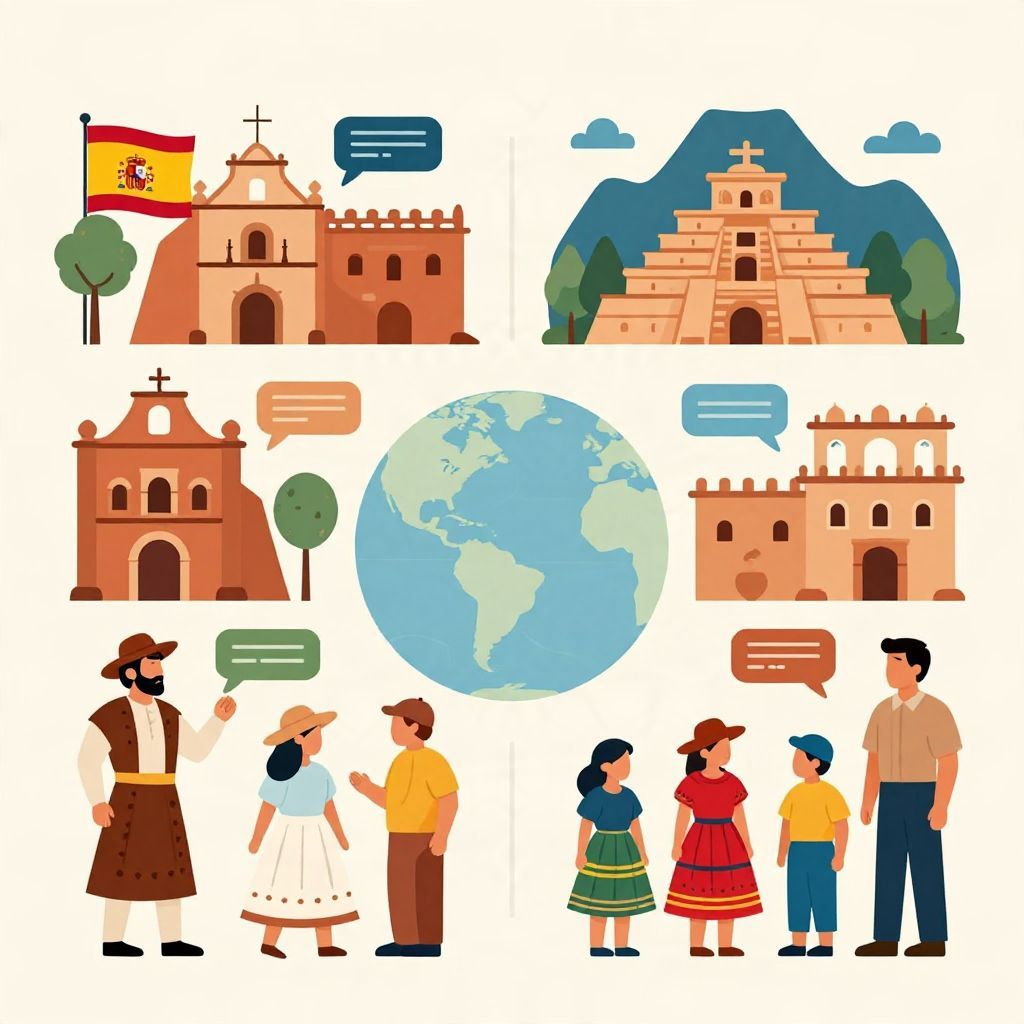
What is the difference between Hispanic and Latino? The short answer is that Hispanic refers to people connected to the Spanish language, while Latino refers to people connected to Latin America. The two terms overlap, but they are not identical, and their meanings have changed over time in the United States and across the Americas.
Understanding the difference matters because these labels reflect centuries of conquest, migration, language, race, and identity. They are modern social categories, not ancient ethnic groups, and people may choose one, both, or neither depending on family history and personal identity.
What Is the Difference Between Hispanic and Latino?
Hispanic generally describes people from Spanish-speaking countries or communities, including Spain and much of Latin America. Latino generally describes people from Latin America, regardless of language. That means a person from Brazil is usually Latino but not Hispanic, while a person from Spain is Hispanic but not Latino.
The simplest distinction
- Hispanic = linked to the Spanish language or Spanish-speaking heritage
- Latino = linked to Latin America
- Overlap = many people, such as Mexicans, Colombians, and Peruvians, may fit both labels
This distinction is useful, but it is not absolute. In everyday speech, government forms, media, and personal identity, the words are often used loosely or interchangeably, especially in the United States.
Where Did These Terms Come From?
Both labels are relatively modern in their current social meaning. They became especially important in the 20th century, when governments, activists, and institutions needed broad categories for people of Latin American or Spanish-speaking background. Their history is tied to empire, immigration, and census politics rather than to one single origin point.
The historical roots of “Hispanic”
The word Hispanic comes from Hispania, the Roman name for the Iberian Peninsula. Over time, it became associated with Spain and the Spanish language. In the modern era, especially in the United States, “Hispanic” was adopted as a broad label for people connected to Spanish-speaking heritage.
Its official use grew in the late 20th century. In the United States, federal agencies increasingly used “Hispanic” in the 1970s and 1980s to describe a population that included Mexican Americans, Puerto Ricans, Cubans, and other Spanish-speaking or Spanish-descended groups. The term was meant to provide a common category, but many people felt it did not fully reflect their identities.
The historical roots of “Latino”
Latino is short for latinoamericano, meaning Latin American. It refers to people from the countries of Latin America, a region shaped by Spanish and Portuguese colonization after the late 15th century. In the United States, “Latino” became more common later than “Hispanic,” especially from the late 20th century onward, as a more culturally and politically inclusive term.
Unlike “Hispanic,” Latino is not based on language alone. Portuguese-speaking Brazilians are Latino because Brazil is in Latin America. Spaniards are not Latino because Spain is in Europe, not Latin America. That geographic distinction is the key historical difference.
How History Shaped These Labels
The terms Hispanic and Latino emerged from a long historical process that began with Iberian expansion in the 15th and 16th centuries. Spanish and Portuguese empires spread across the Americas, creating multilingual, multiethnic societies through conquest, colonization, forced labor, migration, and cultural exchange. Modern identity labels later tried to group these diverse histories into broad categories.
Colonialism and language
Spanish colonization made the Spanish language dominant across much of the Americas, from Mexico to the Southern Cone and the Caribbean. Portuguese colonization made Portuguese dominant in Brazil. Because language became one of the clearest legacies of empire, “Hispanic” naturally developed as a language-based category.
But colonial history also produced deep diversity. Indigenous peoples, Africans brought through the slave trade, Europeans, and mixed communities all shaped Latin America. That is why neither Hispanic nor Latino describes a single race, ancestry, or culture.
Nationhood and regional identity
After independence movements in the 19th century, the countries of Latin America developed distinct national identities. Mexicans, Cubans, Puerto Ricans, Dominicans, Argentines, and others did not see themselves as one people in a political sense. The labels Hispanic and Latino came later, often from outside these communities, as umbrella terms for census, education, and media use.
In the United States, these terms became especially important as immigration from Latin America increased in the 20th century. Institutions wanted broad categories for statistics and public policy, but those categories often blurred important differences in nationality, race, class, and migration history.
Hispanic vs. Latino: A Historical Comparison
The difference between Hispanic and Latino is best understood as language versus geography. Hispanic centers on Spanish-speaking heritage; Latino centers on Latin American origin. Because Latin America includes Spanish-speaking and Portuguese-speaking countries, the categories overlap but do not match perfectly.
Examples that show the difference
- Mexican: usually both Hispanic and Latino
- Puerto Rican: usually both Hispanic and Latino in U.S. usage, though Puerto Rico is a U.S. territory, not a sovereign Latin American country
- Brazilian: Latino, but not Hispanic
- Spaniard: Hispanic, but not Latino
- Chilean: usually both Hispanic and Latino
- Guatemalan: usually both Hispanic and Latino
These examples show why the terms cannot be treated as exact synonyms. They are broad social categories, not rigid historical identities.
Why the Terms Are Often Confused
Hispanic and Latino are often confused because they are used in similar settings and often refer to overlapping populations. In the United States especially, both words have been used by media, schools, and government agencies to describe people with roots in Latin America or Spanish-speaking communities.
Government and census usage
Official categories have influenced public understanding. In the United States, “Hispanic” became a federal ethnic category used in census and administrative contexts, while “Latino” grew in popularity in everyday speech and activism. Because official forms and public language did not always match, many people came to use the terms interchangeably.
That confusion is also historical. The category “Hispanic” was often imposed from above, while “Latino” gained strength partly as a self-chosen identity for some communities. Even so, neither term is universally accepted.
Identity is personal, not only technical
Some people prefer “Hispanic,” some prefer “Latino,” some prefer “Latina,” “Latinx,” “Latine,” or their national identity alone, such as Mexican American or Cuban American. Others reject broad labels entirely. This variety reflects the historical reality that Latin American and Spanish-speaking populations have never been culturally uniform.
Why the Difference Matters Historically
The distinction matters because words shape how people are grouped, counted, and represented. In history, broad labels can hide differences in colonial experience, migration patterns, language use, and racial identity. A Brazilian immigrant, a Puerto Rican family in New York, and a Spaniard in Madrid all have very different histories, even if one label might fit some of them.
Race, empire, and mixed identities
Both terms can obscure the racial diversity of the peoples they describe. Latin America includes Indigenous communities, Afro-Latin populations, European-descended populations, and many mixed identities. Spanish language alone does not define a culture, and Latin American origin does not define a race.
This is why historians and social scientists often caution against treating Hispanic or Latino as fixed ethnic boxes. They are useful for broad discussion, but they simplify histories shaped by conquest, slavery, migration, and nation-building.
Regional differences in usage
Usage varies by country and context. In the United States, “Latino” and “Hispanic” are common umbrella terms. In Latin America, people are often more likely to identify by nationality first. In Spain, “Hispanic” may be understood differently because it can refer to Spanish language and culture, but Spaniards are generally not called Latino in the Latin American sense.
Common Misconceptions
Several misunderstandings persist because the terms are used loosely in popular culture. Clearing them up helps explain the historical difference more accurately.
- Myth: Hispanic and Latino mean the same thing.
Reality: They overlap, but Hispanic is language-based and Latino is geography-based. - Myth: Latino means race.
Reality: Latino is not a race; it is a regional and cultural label. - Myth: All Spanish speakers are Latino.
Reality: Spaniards are Hispanic, but not Latino in the usual U.S. sense. - Myth: All Latinos speak Spanish.
Reality: Brazilians, for example, speak Portuguese, and some Latino communities speak Indigenous languages or other languages as well.
The Historical Takeaway
The difference between Hispanic and Latino comes from the history of empire, language, migration, and identity in the Spanish- and Portuguese-speaking Americas. Hispanic points to Spanish language and heritage; Latino points to Latin American origin. Because these are modern umbrella terms, they overlap, but they do not mean exactly the same thing.
For a fuller picture of identity in the Americas, it also helps to compare related topics such as the history of Latin America and Spanish colonization in the Americas, which shaped the languages and societies behind these labels.