
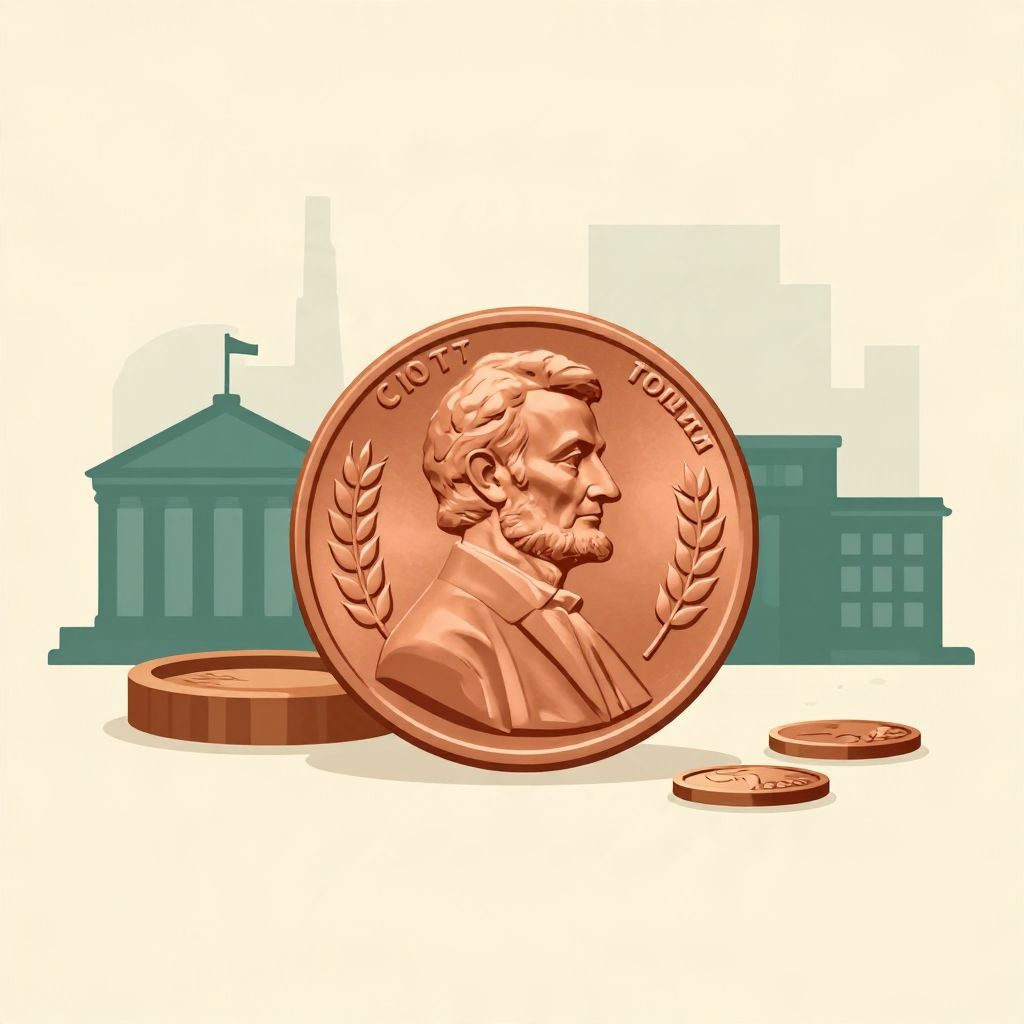
What is a wheat penny? It is the familiar nickname for the U.S. one-cent coin struck from 1909 to 1958, known for the pair of wheat stalks on its reverse side. Collectors prize it because it marks an important era in American coinage and includes several famous varieties.
More than just an old penny, the wheat cent reflects changes in U.S. design, economics, and everyday life in the early and mid-20th century. Its story begins with a national debate over how American coins should look and ends with one of the most recognizable small coins in U.S. history.
What Is a Wheat Penny?
A wheat penny is a Lincoln cent minted by the United States from 1909 through 1958. The coin’s obverse shows Abraham Lincoln, while the reverse features two stylized wheat ears framing the words “One Cent” and “United States of America.” The design gave the coin its popular nickname.
Why Was the Wheat Penny Created?
The wheat penny was introduced in 1909 to honor the 100th anniversary of Abraham Lincoln’s birth. It was the first regular U.S. coin to feature a real historical person rather than an allegorical figure such as Liberty. That change reflected a broader shift in American coinage toward national memory and symbolism.
The move away from classical imagery
For much of the 19th century, U.S. coins usually displayed idealized figures like Liberty instead of presidents or other identifiable Americans. By the early 1900s, however, public taste had shifted. Many Americans wanted coin designs that felt more distinctly national and modern, and Lincoln was an especially powerful choice because of his association with the Union and emancipation.
Victor David Brenner’s design
The wheat cent was designed by sculptor Victor David Brenner. His portrait of Lincoln was selected for the obverse, and his reverse design placed wheat stalks around the denomination. Brenner’s initials were originally placed prominently on the coin, which caused controversy and led to revisions during the first year of issue.
When Was the Wheat Penny Minted?
The wheat penny was minted from 1909 to 1958. It appeared first in 1909, the centennial year of Lincoln’s birth, and remained in circulation until a redesign in 1959 replaced the wheat ears with the Lincoln Memorial. The long run makes it one of the most recognizable and collected U.S. coins.
Key dates in the wheat penny’s history
- 1909 — First year of issue, replacing the Indian Head cent.
- 1909–1909 VDB — Early coins carried Brenner’s initials, which were quickly reduced in size.
- 1918 — Brenner’s initials were restored in a smaller, less controversial form on Lincoln cents.
- 1943 — Steel cents were produced because copper was needed for World War II.
- 1959 — The wheat reverse was replaced by the Lincoln Memorial design.
What Does the Wheat Penny Look Like?
The coin is easy to identify. The front, or obverse, shows Lincoln’s profile facing right. The back, or reverse, has two wheat ears curving upward along the sides. This simple design was elegant, symbolic, and practical, and it remained in use for nearly half a century.
Obverse details
Lincoln’s portrait was unusual because it placed a real president on a circulating coin. The design has since become one of the most familiar in American numismatics. Even though the portrait changed in small technical ways over time, the basic image stayed consistent throughout the wheat cent era.
Reverse details
The wheat stalks were not decorative filler. They suggested agricultural abundance and tied the cent to the nation’s rural economy. In the early 20th century, when farming still played a major role in American life, the imagery would have felt especially meaningful.
What Was the Wheat Penny Made Of?
Most wheat pennies were struck in the standard bronze composition used for U.S. cents in that era: mostly copper with small amounts of tin and zinc. During World War II, however, the composition changed temporarily. In 1943, pennies were made of zinc-coated steel to conserve copper for military use.
The wartime steel cent exception
The 1943 steel cent is sometimes mistaken for a wheat penny “made of silver,” but it was actually steel with a zinc coating. These coins are part of the wheat cent series because they kept the Lincoln-and-wheat design. The unusual material made them look different and gave them a distinctive place in coin history.
Why the metal changed
Material changes in coinage often reflect wartime shortages or economic pressures. During World War II, copper was needed for shell casings, wiring, and other military uses. The U.S. Mint responded by altering the cent’s composition, showing how even a small coin can reveal larger national priorities.
Why Are Wheat Pennies Collectible?
Wheat pennies are popular with collectors because they are historically significant, widely recognized, and still relatively accessible. Many people first encounter coin collecting through wheat cents found in change, old jars, or inherited collections. Some dates and mint marks are common, while others are scarce and valuable.
What makes certain wheat pennies valuable?
- Low mintage — Some years were produced in smaller numbers than others.
- Mint marks — Coins from Philadelphia, Denver, or San Francisco can differ in rarity.
- Condition — Uncirculated coins are worth more than heavily worn examples.
- Varieties and errors — Misstrikes, doubled dies, and other anomalies can increase value.
Famous examples
Among the best-known wheat cents is the 1909-S VDB, a coin from San Francisco bearing Brenner’s initials. It is famous because of its limited mintage and the public controversy surrounding the initials. Other collectible dates include certain early key dates and some wartime varieties, though value depends heavily on condition and authenticity.
Why Did the Wheat Penny End?
The wheat reverse was retired in 1958 because the U.S. Mint wanted a new cent design for the 150th anniversary of Lincoln’s birth in 1959. The replacement showed the Lincoln Memorial, which modernized the coin while keeping Lincoln as the central figure. The change was part of a broader pattern of updating circulating coin designs over time.
The shift to the Lincoln Memorial cent
The new reverse reflected a mid-century preference for national monuments and more detailed imagery. It also marked a transition from the simpler, agricultural symbolism of the wheat ears to a more civic and architectural image. Even so, the Lincoln portrait remained, preserving continuity with the earlier coin.
What Is the Historical Meaning of the Wheat Penny?
The wheat penny is more than a collectible coin. It captures a period when the United States was defining its modern identity through public symbols, industrial growth, and national memory. Lincoln’s image on a cent connected ordinary transactions to the memory of the Civil War era and to ideas of unity, sacrifice, and national endurance.
A coin of everyday American life
Because cents circulated so widely, the wheat penny passed through millions of hands. It was used for groceries, streetcars, newspapers, candy, and savings jars. That everyday presence is part of its historical importance: the coin was not just ceremonial, but deeply embedded in ordinary life.
A window into changing America
The wheat cent also shows how design, politics, and economics intersect in material culture. Its introduction reflected commemorative nationalism. Its wartime steel version reflected scarcity and mobilization. Its retirement reflected changing tastes and the desire to refresh a familiar symbol. In that sense, the coin is a small but revealing artifact of 20th-century America.
How Can You Identify a Wheat Penny?
To identify a wheat penny, look at the reverse side. If the coin has two wheat stalks framing the words “One Cent” and “United States of America,” it is a wheat cent. The date on the obverse will fall between 1909 and 1958, though some dates are more collectible than others.
Quick identification checklist
- Check the reverse for wheat ears along both sides.
- Look for a date between 1909 and 1958.
- Note the mint mark, if present, below the date.
- Inspect the coin’s condition and any unusual features.
The Lasting Appeal of the Wheat Penny
The wheat penny remains popular because it is both familiar and historically rich. It is a coin many Americans have seen, saved, or inherited, yet it also connects to major themes in U.S. history: commemoration, wartime adaptation, mass circulation, and the changing language of national symbols. That combination gives it enduring appeal.
In short, a wheat penny is the Lincoln cent issued from 1909 to 1958 with wheat stalks on the reverse. It is important because it marks a turning point in U.S. coin design and remains one of the most collected coins in American history. If you want to explore the broader story of U.S. coinage, see when pennies stopped being copper and what year they stopped making silver quarters.