
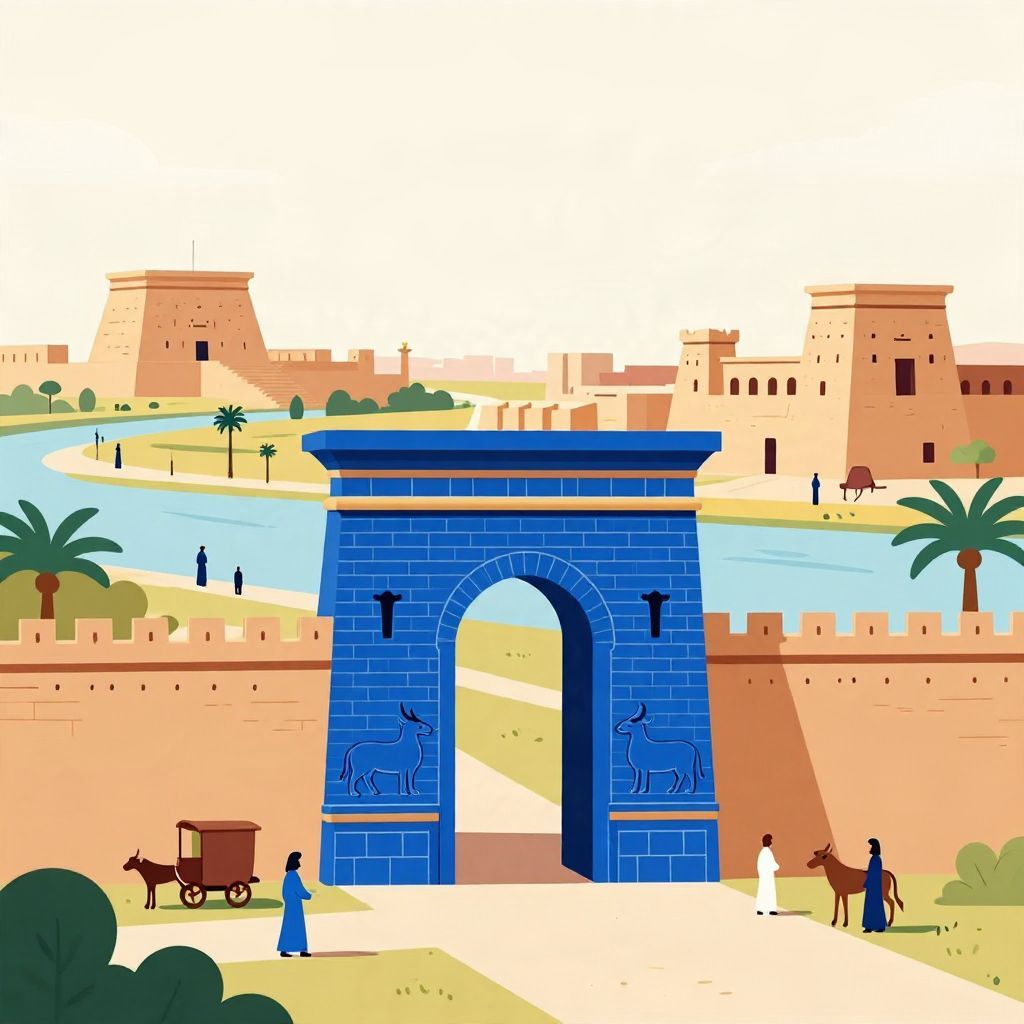
What is Babylon called today? The ancient city of Babylon is generally called Hillah today, or more precisely the archaeological area near the modern Iraqi city of Hillah, south of Baghdad. The name “Babylon” still refers to the historic ruins and the ancient city site, but there is no modern city that directly carries the old name in everyday use.
Babylon was one of the most famous cities of the ancient world, so the question often comes up when people see its ruins on a map of modern Iraq. The answer is simple, but the history behind it is more complicated: Babylon did not survive as a continuous living city under the same name.
What is Babylon called today?
Today, Babylon is not a functioning modern city with the same name. The ancient site lies in Babylon Governorate, Iraq, near the city of Hillah, about 85 kilometers south of Baghdad. In practice, people usually identify Babylon as the archaeological ruins near Hillah rather than as a modern settlement.
Why there is no modern city named Babylon
Babylon declined over many centuries after its political importance faded in the ancient world. As empires changed and trade routes shifted, the city lost its central role. By the medieval period, the ancient urban center had largely disappeared, leaving ruins, canals, and scattered occupation around the site.
Babylon, Hillah, and the archaeological site
Hillah is the nearest major modern city and the easiest reference point for visitors today. The famous ruins of Babylon include remains associated with the Neo-Babylonian period, especially the era of Nebuchadnezzar II in the 6th century BCE. So, if someone asks what Babylon is called today, the most accurate answer is: the Babylon ruins near Hillah in modern Iraq.
Where was ancient Babylon located?
Babylon was located in southern Mesopotamia, in what is now central-southern Iraq, along the Euphrates River. Its position gave it access to water, fertile land, and important trade routes, helping it become one of the most powerful cities in the ancient Near East.
Babylon in Mesopotamia
Mesopotamia means “the land between the rivers,” referring to the Tigris and Euphrates. Babylon grew in this river system, where irrigation supported agriculture and dense settlement. Its location also made it a political prize: whoever controlled Babylon could influence much of the region.
How the site is identified today
Archaeologists identify Babylon through its ruins, inscriptions, and ancient texts. The site is not a single intact city but a layered landscape of mounds, foundations, and reconstructed features. Because rivers shift and cities are rebuilt over time, ancient Babylon does not map neatly onto a modern street plan.
What did Babylon mean in history?
Babylon was more than a city name. It became a symbol of imperial power, learning, religious tradition, and later, foreign domination in biblical and literary memory. Its meaning changed over time, depending on who was telling the story.
The origin of the name Babylon
The name “Babylon” is related to the ancient Akkadian Bāb-ilim or Bāb-ilu, often understood as “Gate of God” or “Gate of the gods.” This is the traditional scholarly explanation, though ancient etymologies and later interpretations varied. The name itself reflects the city’s religious and cultural importance.
Babylon in religion and literature
In the Hebrew Bible, Babylon often appears as a place of exile and imperial power, especially after the Babylonian conquest of Judah in the 6th century BCE. Later Jewish, Christian, and Islamic traditions sometimes used “Babylon” symbolically to represent oppression, luxury, or moral corruption. These meanings are part of Babylon’s legacy, but they are not the same as the city’s original political identity.
A short history of Babylon
Babylon’s history stretches across many centuries, with periods of rise, decline, conquest, and rebuilding. It was never static. Different dynasties and empires shaped the city, and its fame came from both its actual achievements and the legends that grew around it.
Early growth and Old Babylonian power
Babylon was already an important city by the early second millennium BCE. It rose to major prominence under the Amorite dynasty, especially during the reign of Hammurabi in the 18th century BCE. Hammurabi is famous for his law code, though Babylon’s importance rested on more than legal tradition: it was also a political and administrative center.
The Neo-Babylonian Empire
Babylon reached its greatest fame under the Neo-Babylonian Empire, especially in the 7th and 6th centuries BCE. After the fall of Assyria, Babylon became the capital of a powerful empire. Nebuchadnezzar II expanded and embellished the city, and later tradition associated him with monumental building projects such as the Ishtar Gate and the city’s grand walls.
Conquest by the Persians
In 539 BCE, Babylon was taken by Cyrus the Great of Persia. The city remained important, but it was no longer the capital of an independent empire. Under Persian rule, Babylon retained prestige for a time, yet its political centrality gradually diminished as new imperial centers emerged elsewhere.
Later decline
Through the Hellenistic and later periods, Babylon slowly lost population and influence. Alexander the Great planned to make it a major center, but his death in 323 BCE interrupted those ambitions. Over time, the city’s canals silted up, trade patterns changed, and settlement shifted to other nearby locations. By the medieval era, Babylon had become a memory preserved in texts and ruins.
Why do people still ask about Babylon today?
Babylon remains famous because it sits at the crossroads of archaeology, religion, and world history. It appears in school textbooks, biblical narratives, and popular culture, so many people encounter the name long before they learn where it was or what happened to it.
Babylon as a symbol
For many readers, Babylon is not just an ancient city but a symbol of grandeur and decline. That symbolic power comes from its remarkable architecture, imperial role, and later reputation in religious texts. The city’s name survived even after the city itself ceased to function as a major urban center.
Babylon in modern Iraq
The ruins of Babylon are an important heritage site in Iraq. They have been studied, damaged, restored, and debated by archaeologists and historians for more than a century. Like many ancient sites, Babylon raises questions about preservation, national identity, and how modern states care for the remains of the ancient past.
What can visitors see at Babylon today?
Visitors to the Babylon site near Hillah can see reconstructed and excavated remains associated with the ancient city, though much of what people imagine when they think of Babylon no longer survives in full form. Some features are modern restorations, while others are ancient foundations or partially preserved structures.
Commonly associated remains
- The Ishtar Gate area and reconstructed displays
- Ancient city walls and foundations
- Palace remains linked to Nebuchadnezzar II
- Ruins and mounds from different periods of occupation
A note on reconstruction
Some parts of Babylon have been restored in modern times, especially during the 20th century. That means visitors should distinguish between original ancient fabric and later reconstruction. This is common at major archaeological sites, where preservation, interpretation, and political symbolism can overlap.
So, what is Babylon called today?
Babylon is called Hillah-area ruins in modern Iraq, or more simply, the Babylon archaeological site near Hillah. There is no modern city that has fully replaced ancient Babylon under the same name. The ancient city survives today as a historic and archaeological place, not as a living urban center.
Babylon’s story is a reminder that famous cities can outlast their political power in memory, religion, and archaeology. If you want to explore more ancient places and what became of them, you may also enjoy reading about what happened to Babylon and, for a different ancient city in the historical imagination, where Troy was located.