
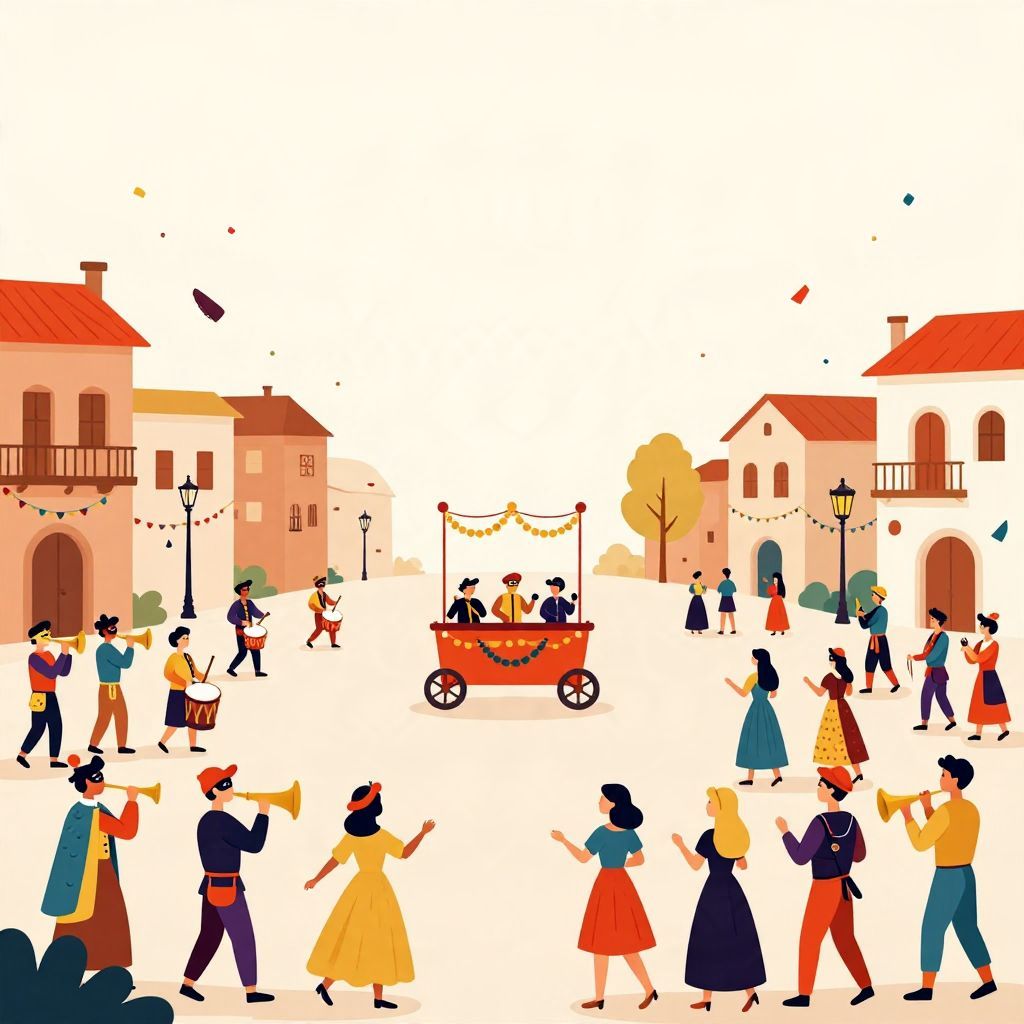
Carnival is one of the world’s most recognizable festive traditions, but it is also a historical phenomenon with deep religious, social, and cultural roots. It is best understood as a season of celebration before the fasting period of Lent in many Christian societies, though local customs have shaped it in very different ways over time.
Across Europe, the Americas, and beyond, Carnival has come to mean parades, masks, music, food, and a temporary loosening of social rules. Its history stretches from medieval Christian calendars to colonial encounters and modern street festivals, making it a revealing window into how societies celebrate, regulate, and reinvent public life.
What Is Carnival?
Carnival is a festive period traditionally held before Lent, especially in Catholic and some Orthodox Christian cultures. Historically, it marked a time for feasting, masquerade, dancing, and public entertainment before the more restrained season of fasting and reflection began. In many places, it also became a socially accepted moment of inversion, satire, and communal release.
The Religious Origins of Carnival
The word “carnival” is usually linked to the Latin carne levare or carne vale, meaning “to remove meat” or “farewell to meat,” referring to the approach of Lent. The exact etymology is debated, but the connection to pre-Lenten eating and celebration is well established. Carnival developed within Christian Europe as part of the liturgical calendar, not as a single invented event.
Why Lent mattered
Lent was a 40-day period of fasting and penitence leading to Easter. In medieval Christian communities, this meant restrictions on meat, fat, eggs, and sometimes dairy. Carnival therefore became the last major opportunity to consume rich foods and hold public festivities before the austerity of Lent. The contrast between abundance and restraint gave Carnival much of its emotional force.
Older seasonal customs
Although Carnival is rooted in Christianity, it also absorbed older winter and spring customs. Pre-Christian European festivals, local agricultural rites, and urban street traditions all influenced its style. Scholars are cautious about drawing a straight line from ancient pagan festivals to modern Carnival, but it is clear that Christian observance blended with older habits of feasting, disguise, and communal celebration.
How Carnival Developed in History
Carnival did not appear all at once. It grew gradually in medieval Europe as towns expanded, church calendars structured daily life, and public festivals became more visible. By the later Middle Ages, many cities had established Carnival customs involving processions, costumes, food markets, music, and licensed misrule. These events varied widely from place to place.
Medieval urban culture
In medieval towns, Carnival often reflected the energy of urban life. Guilds, neighborhoods, and religious confraternities organized processions and performances. Authorities sometimes tolerated rowdy behavior because it was seasonal and ritualized, though they also tried to control excess. Carnival was both a celebration and a managed social outlet.
Renaissance and early modern expansion
During the Renaissance and early modern period, Carnival became more elaborate in many European cities. Venice is especially famous for its masks and public spectacle, while in parts of Germany, France, Spain, and Italy, Carnival traditions took on distinctive local forms. Courts, churches, and civic governments all influenced how the season was celebrated and regulated.
What Carnival Meant Socially
Carnival was never only about entertainment. It created a temporary space in which ordinary rules could be relaxed, mocked, or reversed. That does not mean social hierarchy disappeared; rather, Carnival allowed people to comment on it through humor, disguise, and performance. This is one reason historians see Carnival as both festive and politically meaningful.
Masking and anonymity
Masks were central in many Carnival traditions because they enabled anonymity. A mask could blur class, gender, or occupation, allowing people to act outside their normal roles. This freedom could be playful, subversive, or simply practical. In some places, masking also helped protect participants from social consequences, making satire safer.
Inversion and satire
One of Carnival’s most famous features is inversion: the poor mock the powerful, fools become kings, and social order is symbolically turned upside down. Historians have debated how radical this really was. Some argue it reinforced the existing order by giving people a temporary release; others emphasize its critical edge. In practice, it often did both.
Carnival Around the World
Although Carnival began in Christian Europe, it spread and transformed through migration, empire, slavery, and cultural exchange. Today, the term can refer to a wide range of festivals, many of which are connected to pre-Lenten observance but differ greatly in style and meaning.
Italy and the classic European tradition
Italian Carnival traditions are among the best known, especially Venice, where masked festivities became famous by the late medieval and early modern periods. Other Italian cities developed their own customs, often involving parades, food, costumes, and public revelry. These celebrations were shaped by local politics, trade, and urban identity.
France, Germany, and Central Europe
In France and parts of German-speaking Europe, Carnival took forms such as Mardi Gras, Fastnacht, or Fasching. These traditions often featured parades, satirical performances, and strong local associations. Some were interrupted or reshaped by religious reform, state regulation, and changing attitudes toward public disorder, yet many survived and revived.
Latin America and the Caribbean
Carnival became especially prominent in Latin America and the Caribbean through Iberian colonial rule, Catholic liturgical practice, and the cultural creativity of enslaved Africans, Indigenous peoples, and European settlers. In places such as Brazil, Trinidad, Haiti, Cuba, and elsewhere, Carnival developed into a vibrant blend of music, dance, costume, and political expression.
These Atlantic-world Carnivals were not simple copies of European models. They were transformed by colonial society, racial hierarchy, urban life, and resistance. Drumming, street performance, and masquerade often carried meanings that went beyond festivity, helping marginalized communities assert identity and presence in public space.
Food, Music, and Performance
Carnival is inseparable from sensory experience. Food, sound, and movement give it much of its historical meaning. The festival’s traditional abundance before Lent encouraged rich dishes, sweets, and communal meals, while music and dancing turned streets into stages for collective participation.
Food before fasting
Because Lent restricted many foods, Carnival became a time to use up ingredients that would not be eaten during the fast. This practical rhythm helped shape regional dishes and customs. Pancakes, pastries, fried foods, and meat-heavy meals became associated with the season in different countries, though the specifics vary widely.
Music and procession
Music is one of the most durable elements of Carnival history. Drums, brass bands, chants, and later popular genres all helped create the festival’s atmosphere. Processions, floats, and street theater turned public space into a moving performance. In many places, the parade is not just entertainment but the central ritual form of Carnival.
Authorities, Reformers, and Control
Carnival has often worried authorities. Religious leaders, moral reformers, and governments have repeatedly tried to limit what they saw as disorder, drunkenness, gambling, or obscenity. Yet attempts to suppress Carnival rarely erased it completely. More often, they changed its timing, scale, or acceptable forms.
Church criticism
Some clergy criticized Carnival as excessive or sinful, especially when revelry seemed to contradict the seriousness of Lent. Still, the festival persisted because it was tied to the liturgical calendar and popular custom. The Church’s relationship to Carnival was therefore ambivalent: condemnation in principle, accommodation in practice.
State regulation
City governments and monarchies also tried to manage Carnival. They might permit processions but ban weapons, masks, or nighttime disorder. In some eras, authorities used Carnival for civic display, allowing official pageantry to coexist with popular festivity. This balance between control and celebration is a recurring theme in Carnival history.
Modern Carnival and Its Changing Meaning
In the modern era, Carnival has become both more global and more diverse. Some places preserve explicitly religious timing, while others emphasize tourism, heritage, or national identity. In many cities, Carnival now serves as a major cultural event, economic engine, and symbol of local pride.
From religious calendar to public spectacle
As societies became more secular, Carnival in some places lost its direct connection to fasting and Lent. Even so, the historical link remains important. The festival’s timing, imagery, and language still reflect its pre-Lenten origins, even when participants are celebrating for cultural rather than devotional reasons.
Heritage and tourism
Today, Carnival is often promoted as heritage. Cities and regions use it to attract visitors, strengthen community identity, and showcase performance traditions. This can preserve older customs, but it can also commercialize them. Modern Carnival therefore sits at the intersection of memory, economy, and spectacle.
So, What Is Carnival in Historical Terms?
Historically, Carnival is a pre-Lenten festival rooted in Christian Europe that grew into a broad tradition of feasting, masking, performance, and social inversion. Over time, it absorbed local customs and spread across the Atlantic world, where it became a powerful expression of identity, resistance, and communal celebration.
Its history shows that festivals are never just decorations on the calendar. Carnival has helped communities mark time, negotiate authority, and imagine social freedom, even if only for a season. For related historical topics, see what Festivus is and the history of buccaneers.