
What is Germany known for? The answer spans centuries: a patchwork of medieval kingdoms that became a major European power, a homeland of influential philosophers, composers, scientists, and inventors, and a modern state shaped by unification, war, division, and reunification. Germany’s reputation today is rooted in both its cultural achievements and its central role in European history.
To understand what Germany is known for, it helps to look at how the country developed over time. Its history is not a straight line from ancient tribes to a modern nation, but a long process of political fragmentation, cultural flowering, industrial growth, and dramatic twentieth-century upheaval.
What Is Germany Known For?
Germany is known for its major contributions to philosophy, music, science, engineering, and literature, as well as for its central place in European political history. It is also associated with the Holy Roman Empire, the Reformation, the unification of 1871, the world wars, postwar division, and today’s democratic and industrial strength.
Germany’s Historical Identity: From Roman Frontier to German Lands
The area now called Germany was never a single ancient kingdom in the way some countries were. In Roman times, much of the region lay beyond the empire’s frontier. Roman writers described various Germanic peoples, but these groups were diverse and politically separate. Over time, the lands east of the Rhine and north of the Alps became part of shifting medieval kingdoms and duchies.
By the early Middle Ages, the eastern part of the Frankish realm evolved into what historians call East Francia, a predecessor of the German kingdom. From the tenth century onward, German rulers also became emperors of the Holy Roman Empire, a loose political structure that lasted until 1806. This empire was neither fully “German” in the modern sense nor a centralized state, but it made the German-speaking lands a major force in European politics.
The Holy Roman Empire and Political Fragmentation
One reason Germany is known for its historical complexity is that it remained divided into many small states for centuries. Princes, bishops, free cities, and electors all held power. This fragmentation limited political unity, but it also encouraged local traditions, university life, trade, and regional cultures. Cities such as Cologne, Nuremberg, Augsburg, and Hamburg became important centers of commerce and learning.
This long period of division helps explain why German history often appears decentralized. Unlike France or England, Germany did not become a unified nation-state in the Middle Ages. That delayed unification mattered later, because it shaped the balance of power in Europe and the eventual rise of Prussia.
What Germany Is Known For in Culture and Ideas
Germany is especially known for its intellectual and artistic legacy. German-speaking lands produced major thinkers such as Immanuel Kant, Georg Wilhelm Friedrich Hegel, and Karl Marx, whose ideas influenced philosophy, politics, and economics far beyond Europe. In literature, figures like Johann Wolfgang von Goethe and Friedrich Schiller became central to European literary history.
Music is another defining part of Germany’s reputation. Composers such as Johann Sebastian Bach, Ludwig van Beethoven, and Johannes Brahms helped shape Western classical music. Although Beethoven was born in Bonn and later worked in Vienna, he is still closely associated with the German cultural world of his time. Germany also became known for its strong tradition of orchestras, opera houses, and music education.
Why German Thought Became So Influential
German intellectual life flourished partly because of the university system and the importance of print culture. The Reformation, the Enlightenment, and later nineteenth-century nationalism all created demand for religious debate, political theory, and literary expression. German universities became leading centers of research, especially in the nineteenth century, when modern academic disciplines took shape.
Germany is also known for its contributions to theology and biblical scholarship. The Protestant Reformation began in the German-speaking world, and scholars later developed methods of historical criticism that influenced modern study of religion and history.
The Reformation: A Turning Point in German and European History
One of the most important reasons Germany is known in world history is the Protestant Reformation. In 1517, Martin Luther, an Augustinian monk and professor in Wittenberg, challenged the sale of indulgences and broader abuses in the Catholic Church. His actions did not instantly create Protestantism, but they helped ignite a religious movement that transformed Europe.
The Reformation spread rapidly because printing made pamphlets and translations widely available, and because many rulers saw religious reform as a way to assert independence from Rome. Germany became the main battleground for this conflict. The result was not only religious change but also political division, war, and a lasting split between Catholic and Protestant regions.
The Peace of Augsburg in 1555 recognized the principle that a ruler could determine the religion of a territory, though it did not solve the deeper tensions. Those tensions later fed into the devastating Thirty Years’ War (1618–1648), which ravaged much of the German lands and killed large numbers of people through warfare, famine, and disease.
Unification in 1871: The Birth of Modern Germany
For centuries, “Germany” was more a cultural and linguistic idea than a single nation-state. That changed in the nineteenth century. After the Napoleonic Wars, German nationalism grew, but unification came only under Prussian leadership. Following victories over Austria in 1866 and France in 1870–1871, the German Empire was proclaimed in 1871 at Versailles.
This new empire made Germany known as a rising industrial and military power. It quickly became one of Europe’s strongest economies, with major advances in coal, steel, chemicals, electrical engineering, and railroads. Cities expanded, universities and research institutes grew, and Germany became a center of modern science and industry.
Prussia’s Role in German Power
Prussia was the dominant force behind unification. Its bureaucracy, army, and political leadership under Otto von Bismarck helped create the empire. Bismarck’s diplomacy aimed to preserve stability while strengthening Germany’s position in Europe. Yet the new empire also intensified rivalries, especially with France and Britain, as Germany became a major continental power.
Germany and the World Wars
Germany is also known for its central role in the two world wars, especially the catastrophic history of the twentieth century. After the First World War, the German Empire collapsed in 1918 and was replaced by the democratic Weimar Republic. Economic crisis, political extremism, and social instability weakened the republic during the 1920s and early 1930s.
In 1933, Adolf Hitler and the Nazi Party came to power. Under Nazi rule, Germany became a dictatorship that pursued aggressive expansion, persecution, and genocide. The Holocaust, in which six million Jews were murdered along with millions of other victims, remains one of the darkest chapters in human history. Germany’s wartime aggression led to the Second World War and enormous destruction across Europe.
After defeat in 1945, Germany was occupied by the Allied powers and divided into zones. In 1949, two states emerged: the Federal Republic of Germany in the west and the German Democratic Republic in the east. Berlin was also divided, symbolizing the wider Cold War split between East and West.
Division and Reunification
Germany became known during the Cold War as a divided nation at the center of global tension. West Germany developed into a prosperous democratic state aligned with the West, while East Germany became a socialist state under Soviet influence. The Berlin Wall, built in 1961, became the most visible symbol of that division.
In 1989, political change in Eastern Europe and mass protests in East Germany led to the fall of the Berlin Wall. German reunification followed on 3 October 1990. Since then, Germany has been one country again, and it has played a leading role in the European Union, NATO, and international diplomacy.
What Germany Is Known For Today
Modern Germany is known for several things at once: a strong economy, advanced engineering, high-quality manufacturing, environmental policy, and a stable democratic system. It is often associated with automobiles, precision machinery, chemical industries, and renewable energy development. German companies and research institutions remain influential in science and technology.
Germany is also known for its cultural heritage and public memory. The country has invested heavily in remembering the Nazi period and the Holocaust through memorials, museums, education, and legal protections against hate speech and extremist symbols. This commitment reflects an important historical lesson: Germany’s modern identity is shaped not only by achievement but also by responsibility.
Everyday Cultural Associations
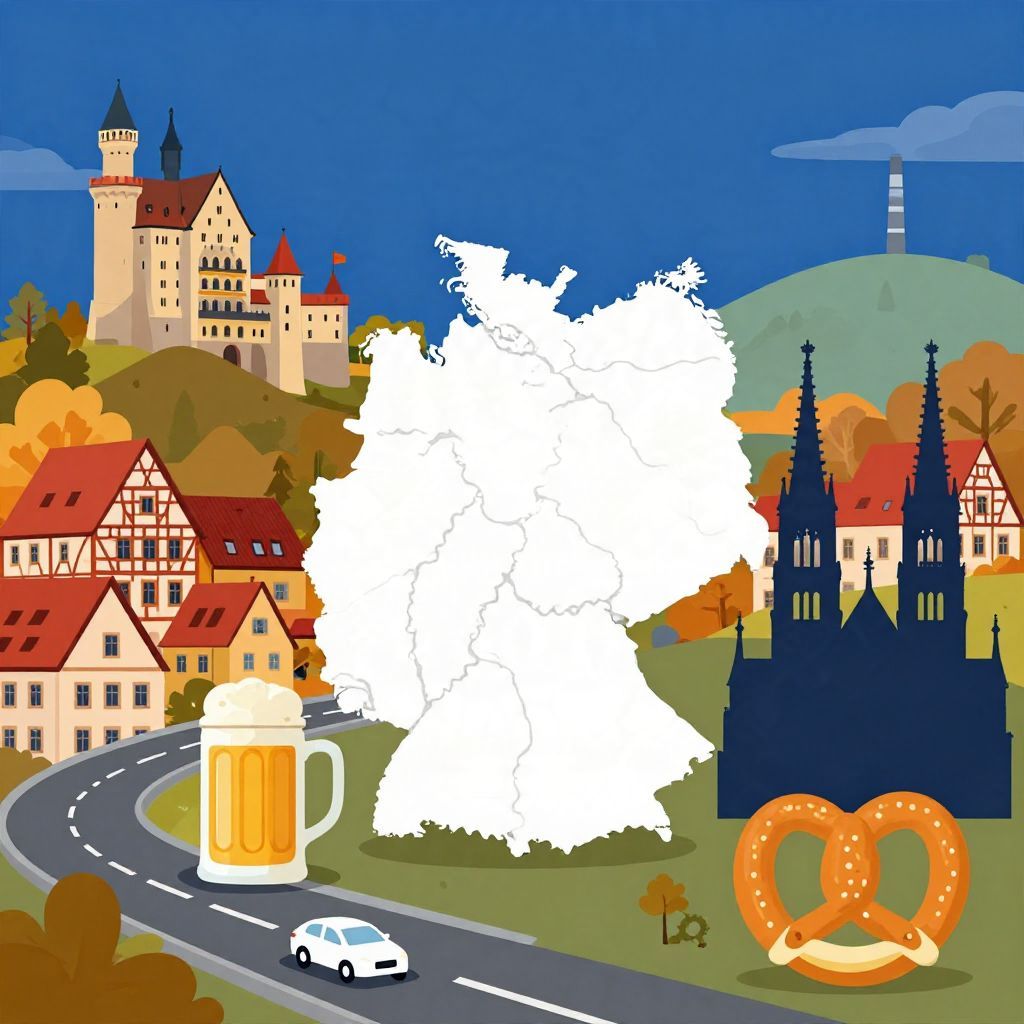
Outside politics and history, Germany is often linked with traditions such as beer culture, Christmas markets, castles, classical music festivals, and regional foods like sausages, pretzels, and bread varieties. Some of these associations are old, while others are modern tourist images. They are part of Germany’s public image, but they should not obscure the country’s deeper historical significance.
Why Germany Matters in World History
Germany matters because its history helps explain some of Europe’s biggest turning points: the Reformation, the rise of modern state power, industrialization, nationalism, the world wars, and European integration. Few countries have influenced philosophy, music, science, and politics so broadly while also experiencing such dramatic upheaval.
So, what is Germany known for? It is known for great cultural and intellectual achievements, for unification after centuries of division, for its central role in the most consequential conflicts of modern history, and for its postwar transformation into a leading democratic and economic power. That combination of creativity, tragedy, and renewal is what makes Germany historically distinctive.