
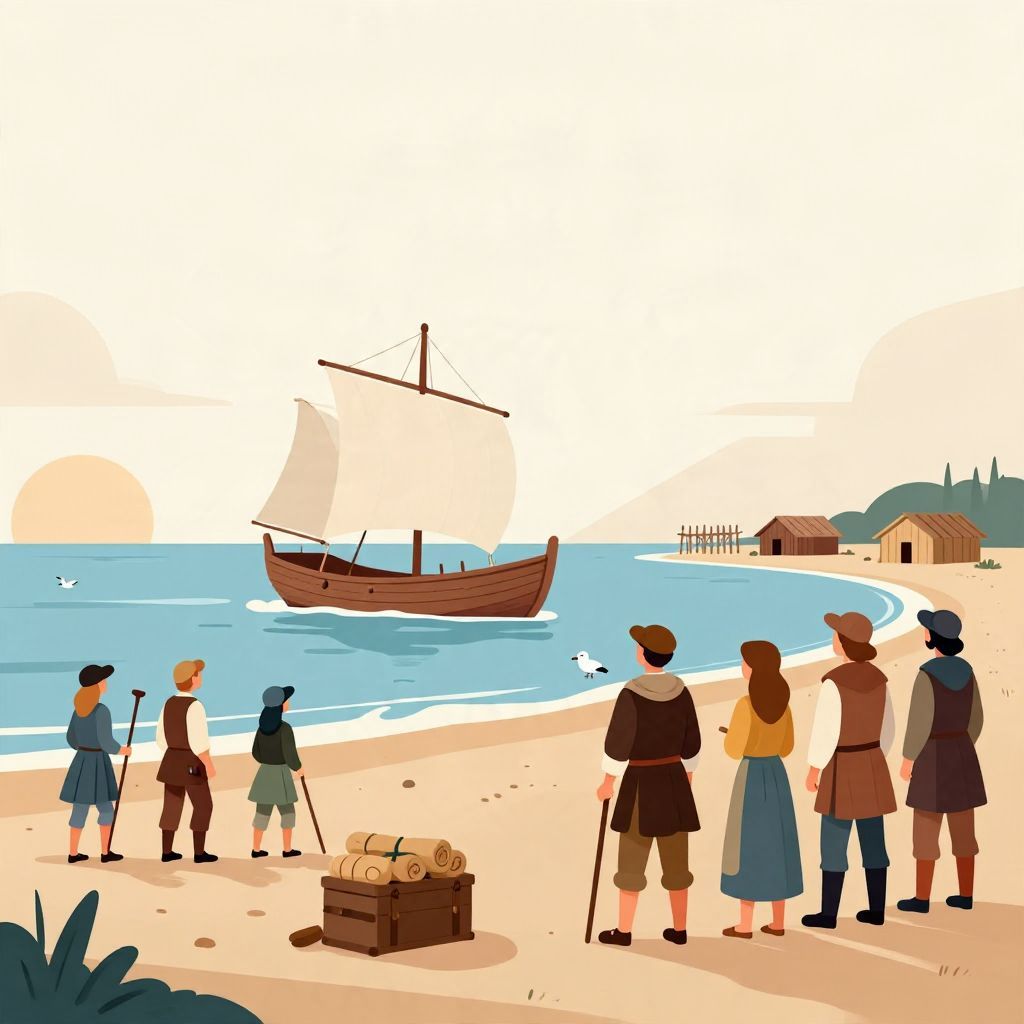
What is one reason colonists came to America? One major reason was the search for religious freedom. For some settlers, especially groups like the Pilgrims and later Puritans, leaving Europe offered a chance to worship in ways they believed were more faithful to their faith and less controlled by government or established churches.
That was not the only motive. Colonists also came for land, profit, adventure, and political opportunity. But religion was a powerful force in the early settlement of North America, shaping where people settled, how communities formed, and what kind of society they hoped to build.
What is one reason colonists came to America?
One reason colonists came to America was to escape religious restrictions and build communities where they could practice their faith more freely. In the 1600s, many English settlers believed the New World offered a chance to create a more godly society, away from the pressures of church authority and state control in Europe.
Religious freedom and the early English colonies
Religious motives were especially important in the early English colonies of the 17th century. England had a state church, and many dissenting Protestants faced fines, harassment, or social exclusion if they refused to follow official religious practices. Some emigrants hoped America would provide a refuge; others wanted to establish their own religious communities.
Pilgrims and Separatists
The best-known example is the Pilgrims, a group of English Separatists who believed the Church of England was beyond reform. They first went to the Netherlands, then crossed the Atlantic in 1620 aboard the Mayflower. Their goal was not simply to start over economically, but to preserve their religious identity and govern themselves according to their beliefs.
Puritans and the Massachusetts Bay Colony
A larger wave of settlers, the Puritans, arrived in New England in the 1630s. Unlike the Separatists, many Puritans wanted to reform the Church of England from within, but they too found England’s religious climate frustrating. In Massachusetts Bay, they hoped to create a model Christian society. Their migration was shaped by faith, family, and politics, not by religion alone.
Why religion mattered so much in the 1600s
To modern readers, “religious freedom” may sound like a broad, universal ideal. In the 17th century, however, it often meant something narrower: the freedom to worship according to a particular Protestant tradition without interference. Many colonists did not support liberty for all religions. Some colonies were more tolerant than others, but even settlers seeking freedom often imposed strict religious rules on their own communities.
Not all colonists came for the same reason
It is important not to oversimplify colonial migration. English, Spanish, French, Dutch, and other European settlers came to North America for different reasons, depending on time and place. Some came as missionaries, some as traders, some as indentured servants, and some as enslaved people brought against their will. The phrase “colonists came to America” covers a wide range of experiences.
- Religious motives: seeking a place to worship freely or build a faith-based community.
- Economic motives: hoping for land, jobs, trade, or wealth.
- Political motives: escaping conflict, persecution, or instability.
- Forced migration: including enslaved Africans brought to the Americas involuntarily.
Economic opportunity was another major reason
While religion was central for some groups, economic opportunity was just as important for many others. The English colonies were part of a broader Atlantic world shaped by trade, competition, and empire. Investors hoped colonies would produce profit. Poorer settlers hoped for land they could not easily obtain in Europe. For many families, the promise of a better material life was reason enough to cross the ocean.
Land and social mobility
In England, landownership was limited and often concentrated among the wealthy. In America, some settlers believed they could improve their status by farming their own land. That possibility attracted laborers, tenants, and younger sons who had fewer prospects at home. Even when religious language filled colonial sermons and letters, practical concerns often stood behind the decision to migrate.
Trade and imperial expansion
European states also viewed colonies as strategic assets. Control of ports, resources, and trade routes mattered greatly in the 17th and 18th centuries. Colonists sometimes arrived as part of these larger imperial projects, whether they were settling tobacco plantations in Virginia, building trading networks in the Caribbean, or establishing towns in New England.
How religion and economics worked together
In real life, motives rarely came in isolation. A family might leave Europe because of church conflict, but they would still need farmland, tools, and a way to survive. A colony might begin with a religious purpose and later become more commercially focused. Over time, the practical demands of settlement often blended with the ideals that inspired migration in the first place.
Example: Virginia and New England
Virginia, founded at Jamestown in 1607, is often remembered more for economic motives than religious ones. Investors expected profit from resources and trade, and settlers struggled to survive in the early years. New England, by contrast, is more closely associated with religious migration. These differences show that “colonists” were not one single group with one single purpose.
The meaning of “colonists came to America”
The phrase can be misleading if taken too broadly. It suggests a simple journey with one clear motive, but the history of colonization was more complicated. People arrived in North America at different times, from different countries, and under very different circumstances. Some came voluntarily, some under pressure, and some in chains. The reasons ranged from faith to profit to survival.
Different colonial powers, different goals
Spanish colonization in the Americas began earlier than English settlement and was often tied to conquest, conversion, and imperial control. French colonization frequently focused on trade and alliances with Indigenous peoples. English colonization included all of these elements in different combinations, depending on the colony and period. So one reason can be named, but it should not be treated as the only one.
What happened after colonists arrived?
The arrival of colonists changed Indigenous societies, European empires, and the Atlantic world. New settlements brought new crops, new diseases, new forms of labor, and new conflicts over land. Religious colonies did not remain isolated from politics or economics. Over time, colonial communities developed their own identities, laws, and hierarchies, many of which were shaped by both belief and self-interest.
Religious communities and social control
In some colonies, the same people who sought freedom of worship also enforced strict moral and religious rules on others. Dissenters, women, Indigenous peoples, and enslaved Africans often had far less freedom than the founders claimed for themselves. This tension is one of the most important features of early colonial history: ideals of liberty often coexisted with exclusion and coercion.
Why this answer matters
When historians ask why colonists came to America, they look for a mix of motives rather than a single dramatic cause. Religious freedom is a strong and accurate answer, especially for the English settlers in New England. But the broader story includes economics, politics, empire, and forced migration. Understanding that complexity gives a clearer picture of how colonial America actually formed.
So, one reason colonists came to America was to seek religious freedom, but that reason sat alongside many others. If you want to explore the subject further, you may also be interested in why the Pilgrims came to America and more on why colonists came to America.