
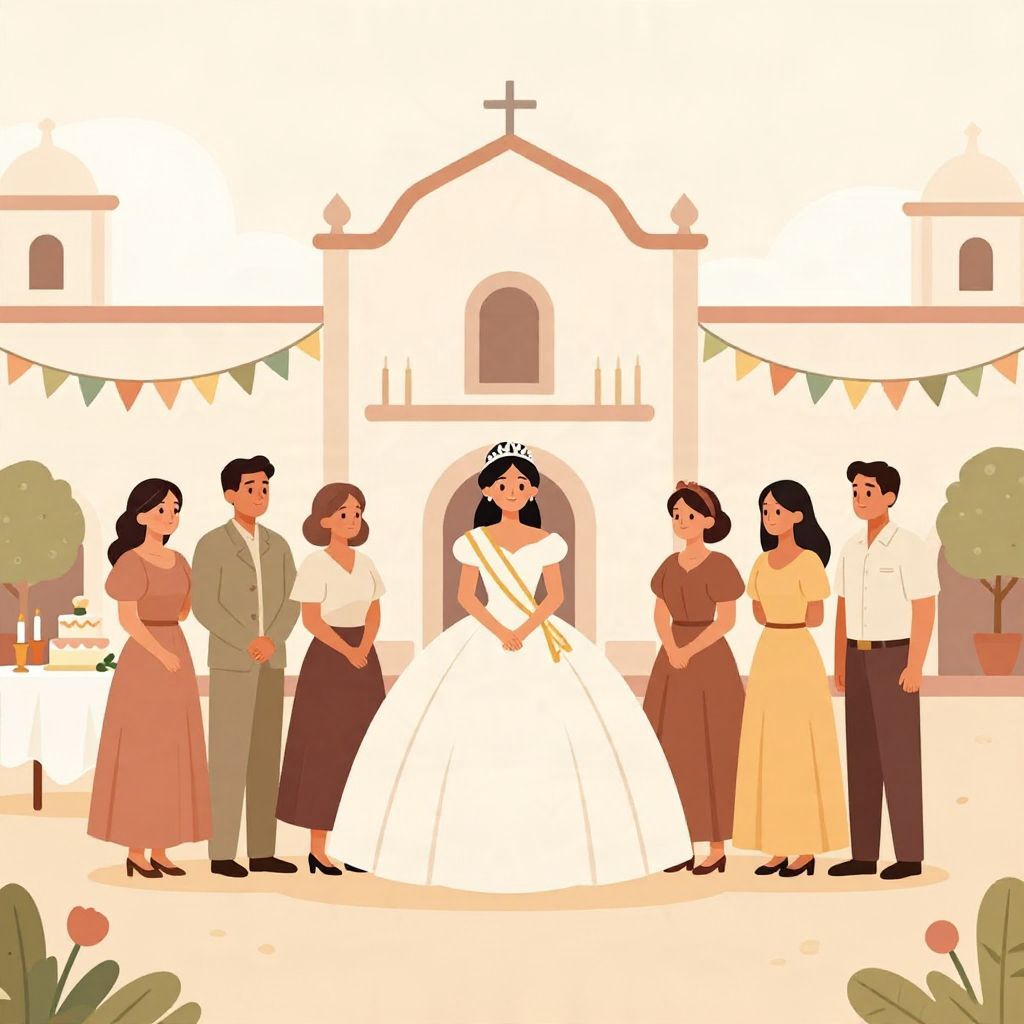
What is quinceañera? It is a traditional Latin American coming-of-age celebration for a girl’s 15th birthday, marking her transition from childhood toward young womanhood. The custom blends Indigenous, Spanish Catholic, and modern family traditions, so its meaning can vary by country, community, and family.
Today, quinceañera is both a religious and social event, often centered on a church service, formal dress, family gathering, and symbolic rituals. Its history is longer and more complex than many people realize, reaching back to colonial-era Latin America and older European ideas about age, gender, and status.
What Is Quinceañera?
A quinceañera is a celebration of a girl turning 15, especially in Mexico and across Latin American communities. Historically, it signaled readiness for new responsibilities in society. In modern practice, it is usually a family-centered ceremony and party that honors maturity, identity, and cultural heritage rather than a literal marriage marker.
Where Did the Quinceañera Tradition Come From?
The quinceañera did not begin as one single invention on one exact date. Historians generally trace it to a blend of pre-Columbian Indigenous rites of passage and Spanish Catholic customs brought to the Americas after the 16th century. Over time, these traditions merged into a distinctive Latin American celebration.
Indigenous roots before Spanish colonization
In several Indigenous societies in Mesoamerica, adolescence was already treated as an important life stage. Young people were trained for adult responsibilities, and ceremonies could mark social maturity. The details differed from one culture to another, so it is better to speak of a broader tradition of coming-of-age rites rather than a single “original quinceañera.”
Spanish colonial influence
After the Spanish conquest, Catholic rituals and European social customs reshaped local traditions. In colonial society, elite girls were often presented formally to the community when they reached an age considered suitable for adult social life. The number 15 became culturally important because it aligned with ideas about female maturity in Spanish and Catholic society.
Why Age 15?
Age 15 became central because it symbolized the transition from girlhood to young womanhood in many Hispanic communities. In earlier centuries, this age could be linked to social readiness for adult roles, courtship, and marriage. The modern quinceañera no longer means marriage is expected, but the age still carries symbolic weight.
From social debut to family ritual
In some places, the quinceañera resembled a social debut, especially among wealthier families. A young woman was introduced to the community in formal dress, sometimes with music, dancing, and guests. Over time, the custom spread beyond elites and became a broadly shared family celebration across many social classes.
How the Quinceañera Tradition Developed Over Time
The quinceañera evolved gradually rather than appearing all at once. Colonial Catholic practice, local family customs, and changing ideas about youth all shaped it. By the 19th and 20th centuries, the celebration had become more recognizable as the quinceañera known today: a mix of religious observance, ceremony, and festive reception.
19th century changes
As Latin American societies changed after independence, family celebrations became more visible in urban life. European fashions, ballroom customs, and middle-class ideals influenced the event. The quinceañera increasingly featured formal dresses, dances, and public presentation, especially in cities where social status could be displayed through ceremony.
20th century popularization
During the 20th century, migration, mass media, and consumer culture helped standardize the modern quinceañera. Photographs, films, magazines, and later television spread a recognizable style: a formal gown, court of honor, choreographed dance, and a large reception. At the same time, families adapted the tradition to their own budgets and beliefs.
What Happens at a Quinceañera?
Although practices vary, a quinceañera often includes a church Mass or blessing, a formal entrance, symbolic gifts, speeches, dancing, and a party. The event may be religious, secular, or both. Its meaning comes not just from the birthday itself, but from the public recognition of growth and family support.
Common symbolic elements
- Mass or blessing: In Catholic families, the celebration often begins with a religious service thanking God for the girl’s life and asking for guidance.
- Formal dress: The quinceañera usually wears a gown, often white or pastel, symbolizing elegance, purity, or a new stage of life.
- Court of honor: Friends or relatives, sometimes called damas and chambelanes, accompany her in the ceremony and dance.
- Changing of shoes: A symbolic switch from flat shoes to heels can represent moving from childhood to maturity.
- Last doll: In some families, a doll is presented to symbolize the end of childhood play.
- Father-daughter dance: This can represent family bonds and the girl’s transition into a new life stage.
Religious and secular meanings
For Catholic families, the quinceañera can emphasize faith, gratitude, and moral responsibility. For others, it may be more cultural than religious, focusing on family unity, identity, and celebration. In many communities, the event has become flexible enough to include both traditional and modern elements.
How Is Quinceañera Different From a Sweet 16?
Quinceañera and Sweet 16 are both coming-of-age celebrations, but they come from different cultural traditions. Sweet 16 is more common in the United States and does not usually have the same religious or historical structure. Quinceañera is older, more formal in many families, and more closely tied to Hispanic cultural heritage.
The two celebrations can overlap in style today, especially among bilingual or multicultural families. Still, quinceañera remains distinct because it carries a deeper historical connection to Latin American Catholic and colonial traditions.
What Does Quinceañera Mean in Modern Latin America?
In the modern era, quinceañera means different things to different people. For some families, it is a religious milestone. For others, it is a cultural affirmation, a major social event, or a treasured family memory. In many places, it also reflects class, migration, and the desire to preserve tradition across generations.
Identity and community
For Latin American and Latino communities, the quinceañera can serve as a powerful expression of identity. It connects young people to family history and cultural memory. In immigrant communities, especially in the United States, the celebration can also help preserve language, customs, and ties to ancestral heritage.
Changing gender expectations
Historically, the quinceañera reflected older gender norms, including expectations about modesty, maturity, and marriageability. Today, many families reinterpret the event. Some emphasize education, independence, and personal goals rather than courtship. This shows how traditions can survive by changing their meaning over time.
Regional Variations in Quinceañera Traditions
There is no single universal quinceañera. Customs differ across Mexico, Central America, South America, the Caribbean, and Latino communities abroad. Local history, religion, and class all influence the details. Some families hold large church-and-reception events; others prefer smaller gatherings or adapt the tradition to fit their beliefs.
Mexico
Mexico is often the country most associated with the quinceañera, though the tradition is shared widely across the Spanish-speaking world. Mexican quinceañeras often include a Mass, a choreographed dance, and elaborate ceremonial details. In many families, it is one of the most important celebrations of a young woman’s life.
Other Latin American countries
In countries such as Guatemala, El Salvador, Colombia, Peru, and others, the celebration may take different names or forms, but the central idea is similar: marking the passage into young adulthood. Some regions place more emphasis on church rites, while others focus more on the party and family gathering.
United States and diaspora communities
Among Mexican American and other Latino families in the United States, quinceañera has become both a heritage tradition and a modern social event. It can be a way to honor family roots while adapting to local customs. In some cases, it blends with American party culture, producing a hybrid celebration.
Is Quinceañera an Ancient Tradition?
Not in the simple sense. The quinceañera as people know it today is not a direct survival from one ancient ceremony unchanged through time. Instead, it is a historical blend that developed over centuries. Its roots are older than modern nations, but its present form is the product of colonial and postcolonial history.
This matters because popular accounts sometimes describe the quinceañera as if it were a single ancient ritual. The evidence supports a more careful view: Indigenous rites of passage, Spanish Catholic influences, and modern family customs all contributed to the tradition’s shape.
Why Does Quinceañera Still Matter Today?
Quinceañera matters because it is more than a birthday party. It expresses family continuity, cultural pride, and the social importance of growing up. For many families, it is also a rare moment when generations gather around a shared tradition that connects the past with the present.
Its endurance shows how customs can adapt without disappearing. The quinceañera has survived colonial rule, modernization, migration, and changing ideas about gender because it remains meaningful to the people who practice it. That flexibility is one reason it continues to thrive.
So, What Is Quinceañera?
Quinceañera is a Latin American coming-of-age celebration for a girl’s 15th birthday, rooted in a long history of Indigenous rites, Spanish Catholic influence, and family tradition. It marks a transition into young womanhood, but its meaning today is shaped by culture, religion, and personal choice.
To understand the quinceañera is to see how history lives inside everyday celebrations. If you want to explore more cultural traditions with deep historical roots, you may also enjoy reading about what Carnival is and what Cinco de Mayo is celebrating.