
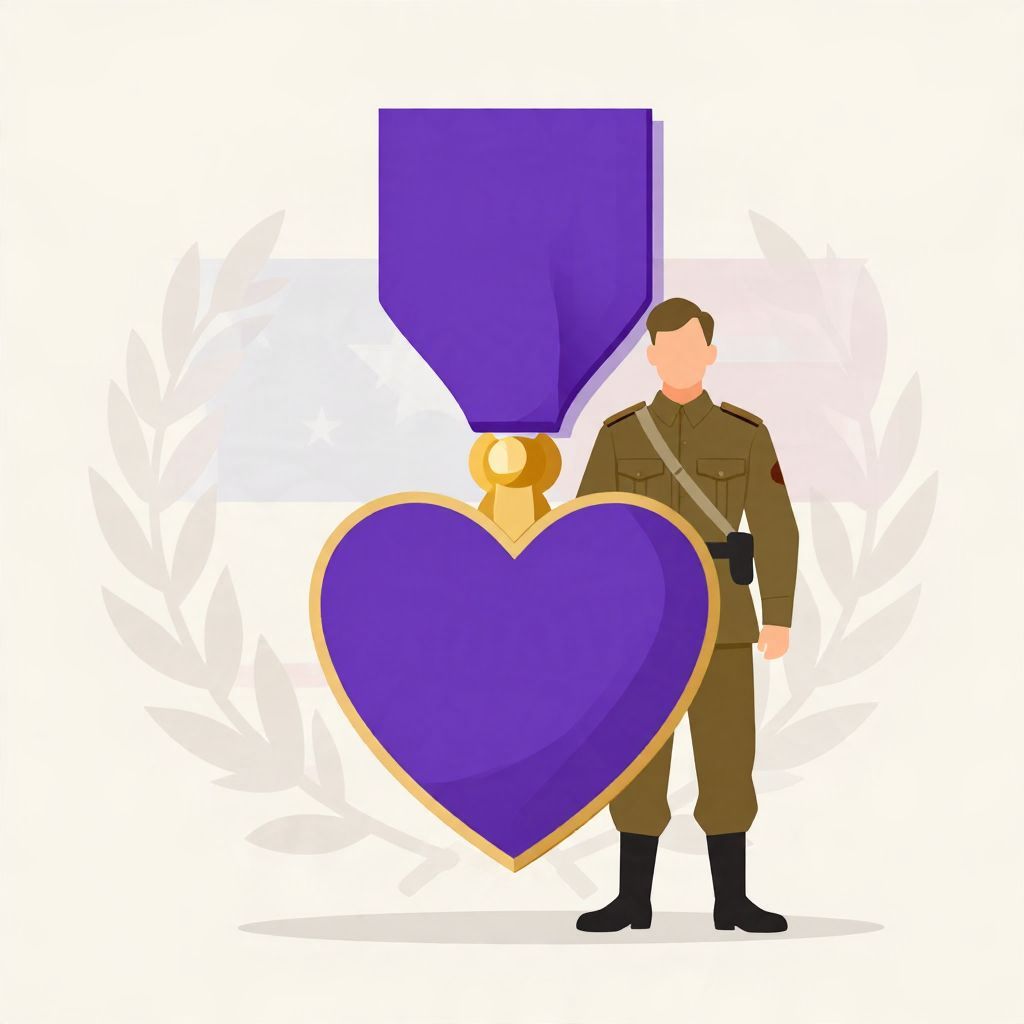
The Purple Heart is one of the best-known U.S. military decorations, awarded to service members who are wounded or killed by enemy action. Today it is closely associated with sacrifice, combat injury, and remembrance, but its history is longer and more complex than many people realize.
Its origins reach back to the American Revolution, when George Washington created a badge for merit in 1782. The modern Purple Heart was revived in the 20th century, redesigned as a medal for those wounded in battle, and later expanded to cover those killed in action. Its meaning has changed over time, but it remains a powerful symbol of military sacrifice.
What Is the Purple Heart?
The Purple Heart is a U.S. military decoration awarded to members of the armed forces who are wounded or killed as a result of enemy action. It is not a medal for valor in the usual sense, but a recognition of suffering in combat and the cost of military service. It is one of the oldest military awards still in use in the United States.
Where Did the Purple Heart Come From?
The Purple Heart began as the Badge of Military Merit, created by George Washington on August 7, 1782, during the American Revolutionary War. Washington intended it as a way to recognize noncommissioned officers and enlisted soldiers for “singularly meritorious action” and faithful service. Unlike many European honors, it was meant to be relatively democratic in spirit, not limited to officers.
The Revolutionary War Badge
Very few soldiers received the original badge, and records are incomplete. The surviving examples and references suggest that it was not widely issued. After the Revolution, the badge largely disappeared from use, and for more than a century it was not a regular part of U.S. military awards. That long gap is important: the modern Purple Heart is inspired by Washington’s idea, but it is not a direct, uninterrupted continuation of the 18th-century badge.
Why Was It Revived in the 20th Century?
The Purple Heart was revived in 1932, the 200th anniversary of Washington’s birth. The U.S. Army created it as a new decoration to honor soldiers who had been wounded or killed in action. The revival reflected a broader effort in the early 20th century to formalize military honors and to give visible recognition to battlefield sacrifice.
From Merit to Wounds in Battle
The modern medal differed from Washington’s original badge in a crucial way. The 1782 award was for merit and faithful service, while the 1932 Purple Heart was designed specifically for combat wounds. This shift shows how military culture changed over time: the United States wanted a way to honor not just achievement, but the physical cost of war.
How Did the Purple Heart Change Over Time?
At first, the revived Purple Heart was limited to Army personnel and to those who had served in earlier conflicts under certain conditions. Over time, the award became more inclusive and standardized. Today it is awarded across the U.S. armed forces, including the Army, Navy, Marine Corps, Air Force, Space Force, and Coast Guard when serving under the appropriate authority.
Key Milestones in the Medal’s History
- 1782 — George Washington creates the Badge of Military Merit.
- 1932 — The Purple Heart is revived on Washington’s bicentennial.
- 1942 — Eligibility expands during World War II, and the award begins to be used more broadly for combat wounds and deaths.
- 1962 — The Purple Heart is extended to service members wounded or killed while serving under certain peacekeeping or hostile-fire conditions.
These changes reflect the realities of modern warfare. As combat became more global and military operations more complex, the United States adjusted the criteria to match the kinds of injuries and deaths service members faced.
What Does the Purple Heart Mean?
The Purple Heart symbolizes sacrifice, injury, and death caused by enemy action. It is often described as a medal for those who have “paid a price” in war. Because it is awarded for wounds rather than for a specific act of heroism, it carries a different meaning from medals such as the Medal of Honor or the Silver Star. Its significance lies in recognition of suffering endured in service to the country.
Why Purple?
Purple has long been associated with honor, dignity, and rank in many cultures. In the case of the Purple Heart, the color also helps distinguish the medal visually from other military decorations. The heart shape and purple enamel create an image that is both solemn and distinctive, reinforcing the idea of personal sacrifice.
Who Can Receive the Purple Heart?
Eligibility is based on injury or death caused by enemy action. This can include wounds from bullets, shrapnel, explosions, mines, chemical agents, or other hostile acts. The injury must generally require medical treatment and be documented. The award is not given for all injuries in military service, only those directly linked to hostile force.
Common Misunderstandings
People sometimes assume the Purple Heart is a general “service medal” or that it is awarded for bravery alone. In fact, it is specifically tied to being wounded or killed by the enemy. Another misconception is that it is only for visible injuries. In reality, some combat wounds may not be obvious at first, especially in cases involving concussions or other internal trauma, though eligibility rules can be strict and have changed over time.
How Is the Purple Heart Different from Other Military Awards?
The Purple Heart is unusual because it recognizes injury rather than achievement. Many military decorations celebrate leadership, heroism, or meritorious service. The Purple Heart acknowledges that military service can leave lasting physical and emotional harm. It is therefore both a medal and a memorial of sorts, marking the human cost of war.
Comparison with Valor Awards
- Medal of Honor — awarded for extraordinary heroism.
- Silver Star — awarded for gallantry in action.
- Purple Heart — awarded for wounds or death caused by enemy action.
This distinction matters historically. The Purple Heart does not rank above or below medals for valor in a simple moral sense; it serves a different purpose. It records sacrifice rather than bravery alone.
The Purple Heart in American Memory
Over time, the Purple Heart has become one of the most recognized symbols of military service in the United States. It appears in museums, memorials, family histories, and public ceremonies. For many families, the medal is a tangible connection to war and to a relative’s experience in combat. It can represent both pride and grief.
Why It Resonates So Strongly
The medal resonates because it is personal. Unlike some honors that feel abstract or distant, the Purple Heart speaks directly to the body and the consequences of war. It reminds people that military conflict leaves scars, visible and invisible. That emotional power has made it an enduring part of American military culture.
Is the Purple Heart Still Relevant Today?
Yes. The Purple Heart remains an active and important U.S. military decoration. Its criteria have been updated over time to reflect changing forms of warfare, but its core meaning has stayed the same: recognition of those wounded or killed by hostile action. In a modern era of long deployments, irregular warfare, and new technologies, the medal still marks the reality that war exacts a human cost.
Why the Purple Heart Matters Historically
The Purple Heart matters because it connects the Revolutionary era to the modern military. It shows how a nation remembers sacrifice, how awards evolve with changing warfare, and how symbols can carry meaning across centuries. From Washington’s 1782 badge to the modern medal, the Purple Heart reflects both continuity and change in American history.
In the end, the Purple Heart is more than a decoration: it is a historical symbol of wounds endured in war and a reminder that military service can demand profound personal sacrifice. For readers interested in the wider world of wartime experience, related topics include war bonds and what a POW is.