
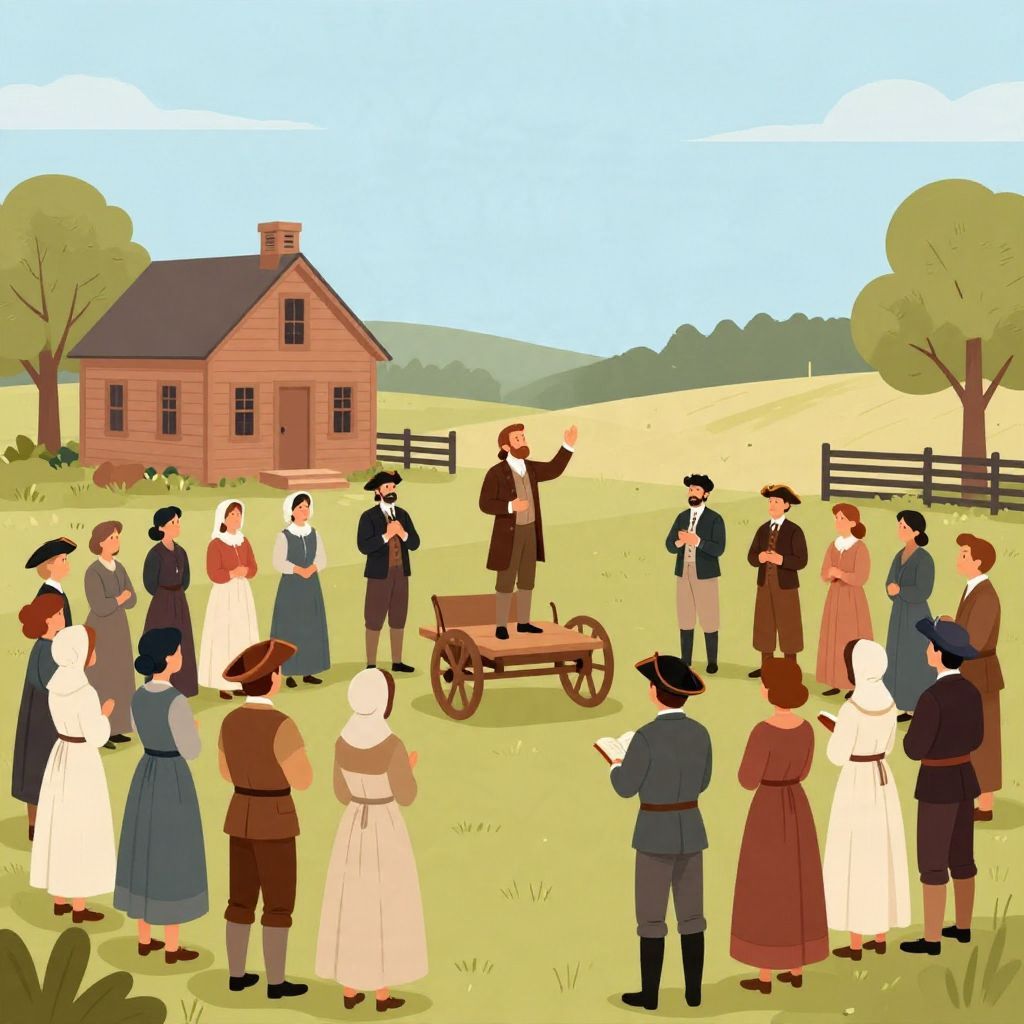
What was the First Great Awakening? It was a wave of Protestant religious revival that swept through Britain and its American colonies in the 1730s and 1740s. Preachers emphasized personal conversion, emotional faith, and a direct relationship with God, challenging the more formal religion of established churches.
The movement did not create a new denomination by itself, but it profoundly changed religious life, especially in colonial North America. It helped shape evangelical Christianity, encouraged new forms of preaching and worship, and influenced ideas about authority, individual conscience, and community.
What Was the First Great Awakening?
The First Great Awakening was an 18th-century Protestant revival movement, roughly dated from the 1730s to the 1740s, that spread across the American colonies and parts of Britain. It stressed heartfelt religion over routine church attendance, and it is remembered for reviving Protestant faith while also dividing congregations and reshaping colonial society.
Origins of the First Great Awakening
The revival grew out of dissatisfaction with what many believers saw as spiritually dry church life. In the colonies, some ministers worried that Christianity had become too formal, too intellectual, and too dependent on social custom. At the same time, Protestant churches in Britain and America were being influenced by Enlightenment ideas, urban growth, and changing social conditions.
Many historians also connect the movement to broader Protestant traditions of revivalism. Earlier waves of renewal in Europe, especially within Pietist and Puritan circles, had already emphasized conversion and inner faith. The First Great Awakening built on those traditions rather than appearing out of nowhere.
Why did it begin when it did?
Several factors helped the revival spread. Colonial populations were growing and becoming more mobile. New settlements often lacked strong church structures. Print culture was expanding, making sermons and religious accounts easier to circulate. And many people were receptive to messages that promised spiritual certainty in a changing world.
Who Were the Main Leaders?
Several prominent ministers became the public faces of the First Great Awakening. The most famous was the English evangelist George Whitefield, whose dramatic preaching drew huge crowds in Britain and the colonies. In New England, Jonathan Edwards became known for sermons that combined Calvinist theology with vivid appeals to personal repentance.
Other important figures included John Wesley and Charles Wesley in Britain, whose revival work helped lay the foundations for Methodism. In the colonies, ministers such as Gilbert Tennent also pushed revival preaching and criticized clergy they believed lacked genuine spiritual experience.
Jonathan Edwards and George Whitefield
Edwards is often associated with the intellectual side of the revival. His famous sermon Sinners in the Hands of an Angry God captured the urgency and emotional force of revival preaching, though it was only one part of his broader theological work. Whitefield, by contrast, was known for theatrical delivery, wide travel, and mass audiences that crossed denominational lines.
What Did the Revival Teach?
The First Great Awakening taught that salvation required a personal experience of conversion, not just membership in a church or respectability in society. Revival preachers urged listeners to examine their souls, repent of sin, and seek evidence of true faith. This emphasis on inward transformation became central to later evangelical Protestantism.
The movement also challenged religious authority. Many revivalists argued that ministers should be judged by their spiritual vitality, not only by education or ordination. That made the revival both religious and social: it questioned who had the right to speak for God and how believers should recognize authentic faith.
Emotion, conversion, and “new birth”
Revival preaching often described conversion as a “new birth,” a dramatic turning point in a person’s life. Supporters believed strong emotion could be a sign of genuine religious awakening. Critics, however, feared that emotional outbursts could lead to disorder, deception, or shallow enthusiasm. That tension became one of the defining features of the movement.
How Did It Spread in the American Colonies?
The revival spread through itinerant preaching, printed sermons, and networks of churches. Whitefield’s tours were especially influential because he preached outdoors to large crowds and traveled widely from New England to the southern colonies. His visits helped connect scattered communities into a shared religious conversation.
In New England, the revival was particularly intense. Towns that had long been shaped by Puritan traditions became battlegrounds over church authority, conversion, and membership. In the Middle Colonies and the South, revivalism also spread, though it took different forms depending on local church structures and social conditions.
Old Lights and New Lights
Supporters and critics of the revival often came to be called New Lights and Old Lights. New Lights welcomed revival preaching and emotional conversion experiences. Old Lights worried that the movement undermined order, discipline, and traditional clergy authority. This split appeared in sermons, church debates, and even local politics.
What Was the Impact on Colonial Society?
The First Great Awakening had effects far beyond the church. It encouraged ordinary people to question established authority, including ministers and, indirectly, other social elites. Because revival preaching crossed class and regional boundaries, it helped create a sense that shared beliefs could unite people beyond local loyalties.
It also increased religious diversity. Some people left established congregations and joined newer groups such as Baptists and Methodists, or embraced more open forms of evangelical Christianity. In some places, the revival weakened older church establishments; in others, it renewed them by attracting new members and energy.
Education and new institutions
The revival contributed to the founding or strengthening of several colleges and seminaries, as different denominations sought to train ministers who supported their views. It also encouraged a more print-driven religious culture, with pamphlets, sermons, and religious narratives circulating widely among colonial readers.
Did the First Great Awakening Lead to the American Revolution?
Historians have long debated this question. The First Great Awakening did not cause the American Revolution directly, and it should not be treated as a simple rehearsal for independence. However, it may have helped create habits of questioning authority and valuing individual judgment that later appeared in political life.
That influence should be understood carefully. Revivalists were not united on politics, and many remained loyal to monarchy and social hierarchy. Still, the culture of debate, dissent, and personal conviction that the movement encouraged may have made colonial society more open to later political challenges.
How Was It Different from the Second Great Awakening?
The First Great Awakening is often compared with the Second Great Awakening, but they were distinct movements. The first occurred in the 1730s and 1740s and was tied to colonial Protestantism in the Atlantic world. The second took place mainly in the late 18th and early 19th centuries and spread through the young United States with different social and political contexts.
The First Great Awakening was more closely associated with Calvinist theology, especially in New England, while the Second Great Awakening placed even greater emphasis on mass conversion, democratized religion, and reform movements. Both were revivalist, but they belonged to different historical moments.
Why Does the First Great Awakening Matter?
The First Great Awakening matters because it changed how many Protestants understood faith, authority, and religious experience. It made personal conversion a defining feature of evangelical religion and helped spread the idea that ordinary people could encounter God directly, without relying entirely on formal church structures.
It also left a lasting mark on American religious history. The movement contributed to the growth of evangelical denominations, strengthened transatlantic religious connections, and set patterns of revival that would reappear again and again in later centuries. In that sense, it was not just a moment of enthusiasm but a turning point in the history of Protestant Christianity.
Quick Chronology of the First Great Awakening
- Early 1730s: Revival preaching begins to gain momentum in Britain and the American colonies.
- 1734–1735: Jonathan Edwards’s ministry in Northampton, Massachusetts, becomes an early center of revival activity.
- 1730s–1740s: George Whitefield tours widely through the colonies, drawing large crowds.
- 1740s: Debates intensify between New Lights and Old Lights over revival methods and authority.
- Late 1740s: The main wave of the First Great Awakening fades, though its influence continues.
Conclusion
The First Great Awakening was an evangelical Protestant revival that transformed religious life in the 18th-century Atlantic world. It emphasized conversion, emotional preaching, and personal faith, while also challenging old religious authorities and reshaping colonial culture. For a broader look at related historical beginnings, see what was the first and, for a wider background on European power and religion, what was the Holy Roman Empire.