
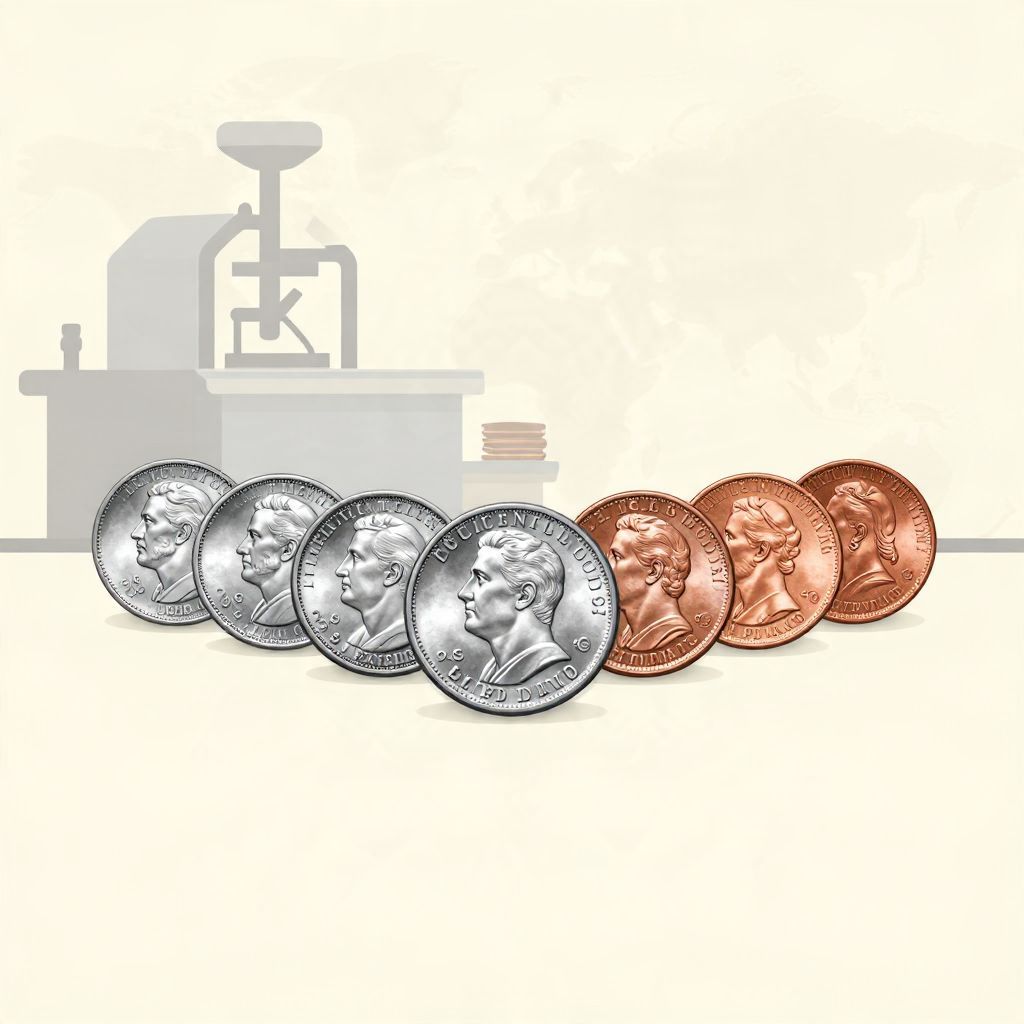
If you are asking what year half dollars are silver, the short answer is that U.S. half dollars were made in silver for most of their history, with the key modern cutoff in 1970. Regular circulation half dollars dated 1964 and earlier are silver, while most half dollars from 1965 through 1970 contain reduced silver, and 1971 and later are generally copper-nickel clad.
The exact answer depends on the type of half dollar and the minting issue, because some special collector coins were struck in silver after 1970. But for everyday circulation coins, the date is the most important clue, and it reflects major changes in U.S. coinage, silver prices, and public demand.
What Year Half Dollars Are Silver?
For regular U.S. circulation half dollars, all dates through 1964 are 90% silver. Half dollars dated 1965, 1966, and 1967 are 40% silver, and some special 1968–1970 collector issues are also 40% silver. From 1971 onward, half dollars made for circulation are copper-nickel clad, not silver.
The Silver Half Dollar Timeline
The history of the silver half dollar is tied to the changing metal content of U.S. coinage. Silver was long part of American money because it had intrinsic value and fit the monetary system of the 18th and 19th centuries. That changed in the 1960s, when rising silver prices made it too expensive to keep minting large numbers of silver coins for everyday use.
Key dates at a glance
- 1794–1964: Regular U.S. half dollars were made in silver, usually 90% silver and 10% copper.
- 1965–1967: Half dollars were made in 40% silver during the transition away from full silver coinage.
- 1968–1970: Circulating half dollars were still 40% silver, but production was more limited and tied to specific minting policies.
- 1971–present: Standard circulation half dollars are copper-nickel clad, not silver.
Why Were Half Dollars Made of Silver for So Long?
Silver was a standard coin metal in the early United States because it was familiar, widely accepted, and legally linked to the nation’s monetary system. The half dollar, introduced in the 1790s, was one of the larger silver coins used in commerce. For generations, its silver content helped establish trust in the coin’s value.
In the 19th and early 20th centuries, the half dollar remained a practical denomination for larger purchases. The coin’s silver content was not just decorative; it was part of the economic logic of the time. A coin’s metal value mattered much more than it does today, especially before modern fiat currency and electronic payments became dominant.
The classic silver standard: 90% silver
Most U.S. half dollars made before 1965 contain 90% silver and 10% copper. This alloy was used because pure silver is too soft for circulation, while the copper made the coin more durable. The famous silver half dollars of this era include the Walking Liberty, Franklin, and early Kennedy half dollars.
Why Did Silver End in 1964?
The end of 90% silver half dollars came from a combination of economics and policy. By the early 1960s, the market price of silver was rising, and people began hoarding silver coins because their metal value was becoming more attractive. This created shortages in circulation and pushed the federal government to change the coinage system.
The Coinage Act of 1965 marked the transition. It reduced the silver content of dimes and quarters to none for circulation coinage and changed half dollars to 40% silver for a limited period. The goal was to preserve the half dollar as a circulating coin without making it too costly to produce.
The Kennedy half dollar and the silver transition
The Kennedy half dollar was introduced in 1964, shortly after President John F. Kennedy’s assassination. The first 1964 Kennedy half dollars were struck in 90% silver, which made them especially popular with the public. As silver prices rose, however, the coin quickly became part of the broader shift away from full silver money.
Which Half Dollars Are 90% Silver?
In general, all half dollars dated 1964 and earlier are 90% silver. That includes several major designs issued over more than 170 years. If you have a half dollar from that period, it is usually silver unless it is a very unusual altered or counterfeit piece.
Major 90% silver half dollar series
- Flowing Hair Half Dollar — 1794–1795
- Draped Bust Half Dollar — 1796–1807
- Capped Bust Half Dollar — 1807–1839
- Seated Liberty Half Dollar — 1839–1891
- Barber Half Dollar — 1892–1915
- Walking Liberty Half Dollar — 1916–1947
- Franklin Half Dollar — 1948–1963
- Kennedy Half Dollar — 1964
These coins are historically important not only because of their silver content, but also because they reflect changing artistic styles, political symbolism, and minting technology across American history.
Which Half Dollars Are 40% Silver?
Half dollars dated 1965, 1966, and 1967 are 40% silver. This was a transitional composition adopted after the Coinage Act of 1965. These coins were intended to keep the half dollar in use while reducing the government’s silver costs. They are still silver coins, but they are not as valuable in metal content as earlier 90% silver pieces.
There are also special 40% silver half dollars from 1968, 1969, and 1970, but these were not standard circulation issues in the same way as earlier coins. Some were made for collectors and special sets, which is why the date alone is not always enough to identify every example perfectly.
How to think about 1965–1970 half dollars
- 1965–1967: 40% silver circulation coins.
- 1968–1970: 40% silver issues mainly associated with collector and special mint products.
- 1971 and later: standard clad coins with no silver in regular circulation strikes.
What About 1971 and Later Half Dollars?
1971 and later half dollars are generally not silver when referring to standard circulation coins. They are made with a copper core and outer layers of copper-nickel, the same basic clad structure used for modern U.S. dimes and quarters. This change reflected the practical reality that silver was no longer suitable for everyday coinage at face value.
That said, the U.S. Mint has occasionally produced special collector half dollars in silver after 1970, especially in proof or commemorative formats. These are not the same as ordinary bank-wrapped circulation coins. If you are sorting pocket change, the date is still the fastest and most reliable first check.
How to Tell If a Half Dollar Is Silver
Date is the easiest clue, but there are a few other ways collectors identify silver half dollars. These methods are useful because some coins have been worn, cleaned, or stored in ways that make them harder to identify at a glance.
Simple identification methods
- Check the date: 1964 and earlier usually means 90% silver.
- Look for 1965–1970: these are the transitional 40% silver years.
- Examine the edge: silver coins often show a more uniform silver-colored edge, while clad coins usually show a copper stripe.
- Weigh the coin: silver and clad half dollars have different weights, though wear can slightly affect this.
- Know the type: special collector issues may not follow the same rule as circulation strikes.
Because counterfeits and altered coins exist, serious collectors use more than one test. Still, for most people, the date is enough to answer the question quickly.
Why Silver Half Dollars Matter Today
Silver half dollars are popular with collectors, investors, and history enthusiasts because they connect modern America to earlier monetary systems. They also survive as tangible reminders of a time when precious metals were still built into everyday money. Their silver content gives them both numismatic and bullion interest.
Some dates are especially sought after for rarity, condition, or historical significance. The 1964 Kennedy half dollar, for example, is widely collected because it combines the first year of the series with full silver content and strong emotional appeal after Kennedy’s assassination. Earlier half dollars can be valuable for their age, design, and mintage history as well as their metal content.
Historical Takeaway
If you want the shortest accurate answer to what year half dollars are silver, use this rule: 1964 and earlier are 90% silver, 1965–1970 are transitional silver issues, and 1971 onward are generally clad. The shift away from silver half dollars was not just a change in metal, but a major turning point in U.S. coinage history. For related context, see what year quarters stopped being silver and what makes a 1964 Kennedy half dollar rare.